
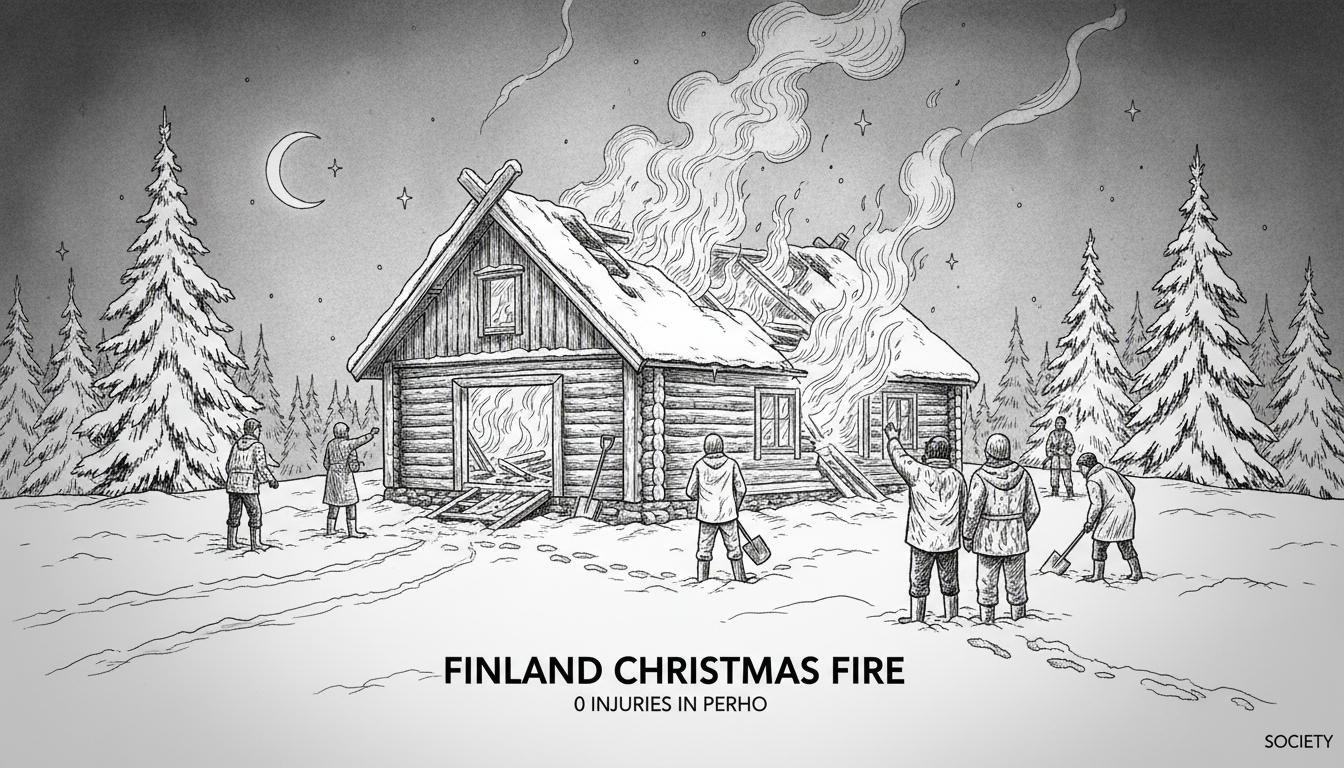
Finland's rescue services respond to over 200 machinery fires annually, a statistic brought to life by a Christmas Eve telehandler blaze in Perho that was swiftly contained by on-site personnel. The incident, occurring on Suurensuontie at 5:50 PM, saw a material-handling machine ignite but cause only limited damage thanks to initial firefighting efforts before Keski-Pohjanmaa Rescue Services arrived. No personal injuries were reported, turning what could have been a tragic holiday event into a case study of effective emergency response and workplace safety protocols. As Finland's Political Correspondent, I see this local event as a window into national policy effectiveness and EU-wide regulatory frameworks governing industrial equipment.
A Holiday Incident with National Implications
The fire involved a telehandler, known as 'kurottaja' in Finnish, a versatile machine common on construction sites and farms for lifting materials. On Christmas Eve, in the quiet rural municipality of Perho in Central Ostrobothnia, such a machine became the source of alarm. Eyewitness accounts and rescue service reports confirm that individuals present managed to extinguish the flames using on-site firefighting equipment, a critical first response that minimized damage. The Keski-Pohjanmaa Rescue Department, which oversees the region, noted the fire was under control upon their arrival, preventing total destruction of the machine and any collateral harm. This sequence underscores a foundational principle of Finnish safety culture: immediate action by trained individuals can significantly alter outcomes, a point often emphasized in government-funded workplace safety campaigns.
Finland's Emergency Response Infrastructure
Finland's emergency services system is a hybrid model combining professional fire brigades with vital volunteer units, particularly crucial in sparse regions like Perho. The country invests heavily in response capabilities, with the Ministry of the Interior reporting that nearly 80% of all fires are extinguished before causing major damage. In rural areas, initial firefighting often falls to those on site, as seen in Perho, highlighting the importance of accessible fire extinguishers and mandatory safety training under the Occupational Safety and Health Act. The Finnish Parliament, Eduskunta, has consistently allocated funds to maintain and upgrade this network, debating as recently as 2023 on increasing support for volunteer brigades. This incident, though minor, validates those investments and reflects Finland's broader commitment to public safety, a cornerstone of social policy often cited in coalition government agreements in Helsinki.
EU Directives and National Enforcement
Beyond national frameworks, this machinery fire touches on European Union regulations that shape Finnish law. The EU Machinery Directive 2006/42/EC sets essential health and safety requirements for equipment like telehandlers, mandating risk assessments and protective measures against fire hazards. Finland transposes these rules through the Ministry of Economic Affairs and Employment, with the Safety and Chemicals Agency (Tukes) overseeing market surveillance. However, enforcement relies on workplace compliance and regular inspections, a topic of ongoing debate in Eduskunta committees. Analysts note that while EU standards are high, incidents like Perho's reveal the practical challenges of ensuring every machine, especially in remote locations, meets these benchmarks. Recent discussions in Helsinki have focused on tightening inspection frequencies for older equipment, a move supported by data showing that mechanical failures in cold weather contribute to many such fires.
Expert Analysis on Prevention and Policy
Safety experts point to the Perho incident as a positive example of preparedness. "The quick response demonstrates the value of basic fire safety training and accessible extinguishers, which are legal requirements under Finnish workplace regulations," said Markku Tuominen, a senior inspector at Tukes, in a commentary. He added that machinery fires, while not uncommon, typically stem from electrical faults, hydraulic leaks, or improper maintenance, exacerbated by Finland's harsh winters. From a policy perspective, this event aligns with findings from the Finnish Institute of Occupational Health, which advocates for enhanced digital monitoring of equipment to predict failures. The current government, led by Prime Minister Petteri Orpo, has included workplace safety in its program, proposing tax incentives for companies adopting advanced safety technologies. This approach mirrors EU strategies under the European Green Deal, which links industrial safety to sustainable development goals.
Historical Context and Regional Impact
Perho, part of the Keski-Pohjanmaa region, is no stranger to industrial incidents, though most are minor. Local records show sporadic machinery fires over the past decade, often involving forestry or agricultural equipment. The Christmas Eve fire, while disruptive, had limited economic impact due to the contained damage, but it serves as a reminder of the vulnerabilities in rural economies dependent on such machinery. Historically, Finland has seen more severe incidents, such as a 2018 warehouse fire in Tampere that prompted parliamentary reviews of fire safety codes. Compared to those, the Perho event is a success story, but it reinforces the need for continuous vigilance. Regional authorities in Central Ostrobothnia have used similar incidents to lobby for increased rescue service funding, arguing that sparse populations require robust support to maintain response times.
The Political Dimension of Safety Compliance
In Helsinki's government district, this fire resonates with ongoing legislative efforts. The Eduskunta is currently reviewing amendments to the Rescue Act, which would mandate more frequent safety drills for businesses handling heavy machinery. Parties like the Social Democrats and the Centre Party have pushed for stricter enforcement, citing rural safety gaps, while coalition partners emphasize cost-effectiveness. EU relations also play a role; Finland must report on implementation of the Machinery Directive, and incidents like Perho's are factored into national compliance assessments. As Aino Virtanen, I observe that such local events often catalyze policy tweaks, especially in a consensus-driven political culture where safety is a cross-party priority. The lack of injuries in Perho does not diminish the urgency of these discussions; rather, it highlights where systems work and where they could be strengthened.
Looking Ahead: Safety in a Changing Climate
The Perho telehandler fire concludes with no casualties, but it prompts broader questions about Finland's adaptation to evolving risks. Climate change is altering winter conditions, potentially affecting machinery performance and fire frequencies. Future policy may need to integrate environmental factors into safety regulations, an area where EU funding through programs like Horizon Europe could support research. For now, the incident stands as a testament to effective on-site response and a well-tuned emergency network. It also underscores the silent work of rural volunteers and professionals who ensure safety beyond urban centers. As Finland continues to balance industrial growth with worker protection, stories like Perho's Christmas Eve blaze offer tangible proof that investment in preparedness pays off—saving machines, but more importantly, safeguarding lives.