
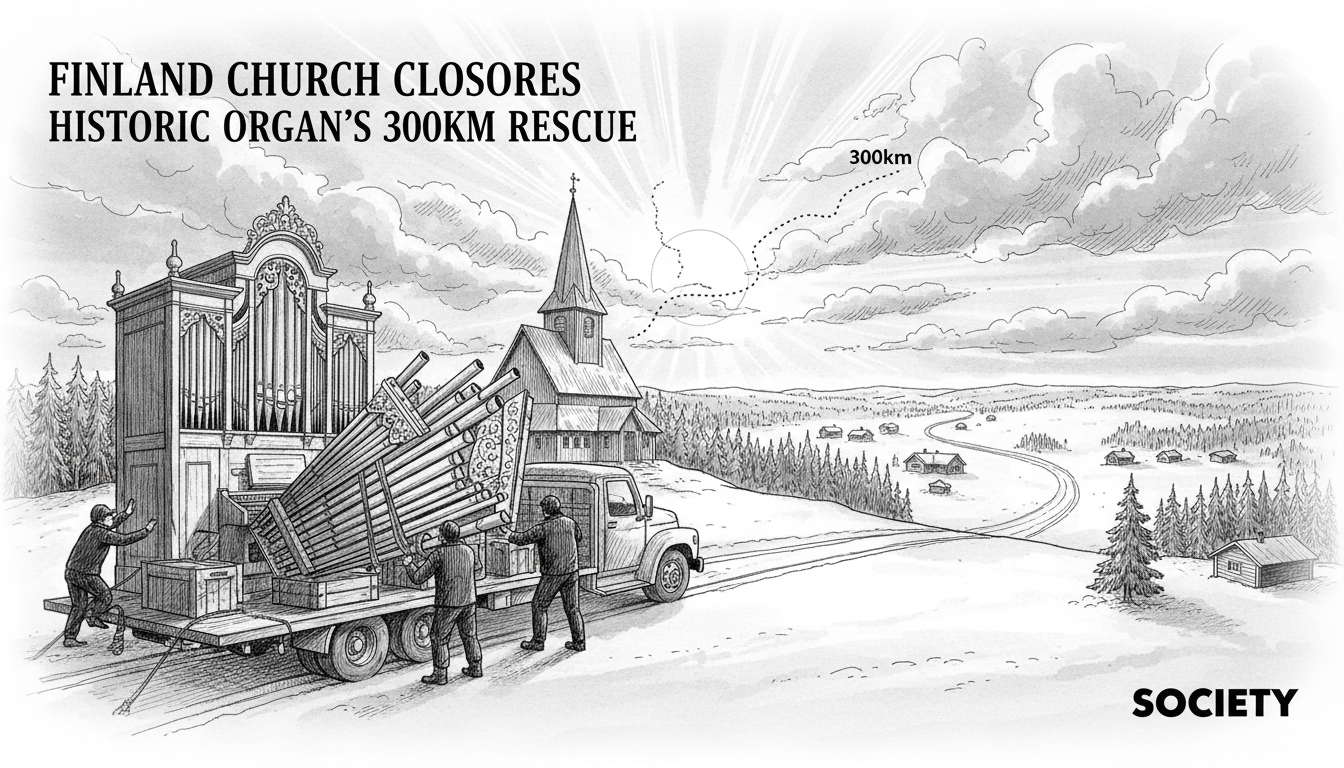
Finland's Lutheran parishes are navigating a quiet cultural salvage operation as declining membership forces difficult decisions about historic church buildings. The Lohja parish in Uusimaa is now considering a proposal to rescue the pipe organ from the condemned Imatrankoski church over 300 kilometers away in Imatra. This potential transfer highlights the practical and emotional challenges Finnish congregations face when maintaining their architectural and artistic heritage becomes unsustainable.
Pasi Tiimo, the financial manager for the Imatra parish, confirmed the ongoing discussions in a statement. "The parish is currently waiting for a decision from the Lohja parish on the matter," Tiimo said. The organ would be transferred to Lohja free of charge, offering a cost-effective solution for one parish and a preservation victory for another. The instrument remains in its original location for now, silent within the walls of a church slated for demolition.
A Race Against the Wrecking Ball
The Imatrankoski church's fate is sealed. The local parish board has moved forward with plans to demolish the structure, with the tender process for the demolition work expected to begin this spring. This timeline creates urgency for any salvage operations. The building has already been emptied of its movable contents in a process that concluded during 2025. Among the items relocated was significant 'siirtokarjalainen' or displaced Karelian heritage, artifacts originally from the Jääski parish that were evacuated during the wars and later entrusted to the Imatrankoski congregation.
A notable piece, the altar painting 'Tulkaa minun tyköni' (Come to Me) by artist Arvid Liljelund, has found a new home in the Tainionkoski church in Imatra. The organ, however, presents a different logistical challenge. Its value is both cultural and functional, but its size and complexity make it far more difficult to move than paintings or furniture. The pending demolition adds pressure, as the instrument must be carefully dismantled by specialists before the heavy machinery arrives.
The Complex Calculus of Church Asset Management
This proposed organ transfer is not an isolated incident but part of a broader trend across the Finnish Evangelical Lutheran Church. With an aging population, secularization, and population shifts from rural areas to growth centers, many parishes find themselves responsible for more church buildings than their congregations can support. Maintenance costs for historic structures are substantial, and heating alone for a large, infrequently used church can drain a parish's finances.
"These decisions are never taken lightly," explains a church asset management consultant who has worked with several dioceses. "A church building is a spiritual home for its congregation. But when the congregation shrinks to a handful of members, the financial reality forces a reassessment. The priority becomes responsible stewardship: ensuring valuable artifacts, especially those with historical or artistic significance, are preserved and can continue to serve the church community elsewhere."
Transferring assets between parishes is a common strategy. It allows struggling parishes to divest themselves of maintenance liabilities for specific items while enabling wealthier or larger parishes to acquire meaningful pieces at little or no cost. The organ from Imatrankoski, if moved to the Karjalohja church in Lohja, would follow this pattern. It gives the instrument a second life in an active worship space and saves the Lohja parish the immense cost of purchasing a new organ, which can easily run into hundreds of thousands of euros.
The Delicate Task of Moving a Musical Monument
The physical transfer of a pipe organ is a highly specialized undertaking. It is not simply furniture; it is a complex machine comprising thousands of individual pipes (each tuned to a specific note), wind chests, action mechanisms, and console electronics. Dismantling it requires meticulous documentation—every pipe must be labeled, every connection mapped. The process is slow, expensive, and requires craftspeople with specific knowledge of organ building.
Once moved, the instrument must then be reassembled, voiced, and tuned in its new environment. The acoustics of the Karjalohja church will differ dramatically from those of the Imatrankoski church. An organ builder must adjust the instrument so it sounds harmonious in its new home, a process that can take weeks or months. The total cost for moving and reinstalling an organ can reach tens of thousands of euros, a sum the Lohja parish would need to bear despite receiving the instrument itself for free. This hidden cost is a critical factor in their final decision.
Preservation Versus Practicality in Finnish Parishes
The story of the Imatrankoski organ sits at the intersection of cultural heritage and pragmatic resource management. For the Imatra parish, donating the organ is the most dignified outcome. It ensures a piece of their church's history lives on and continues to be used for its intended purpose: enhancing worship. It is a preferable alternative to seeing the instrument destroyed with the building or sold into an uncertain private future.
For the Lohja parish, the calculation involves weighing the benefit of acquiring a quality instrument against the significant cost and effort of moving it. They must also consider whether the organ's tonal characteristics are suitable for the Karjalohja church's architecture and liturgical needs. The proposal began as an initiative from within the Lohja congregation, suggesting there is local support for the project, which is often a decisive factor in such community-driven decisions.
This micro-level asset shuffle reflects macro-level changes in Finnish society. Church attendance has been in steady decline for decades, though the church remains a major cultural and social institution. The network of beautiful, often remote, wooden and stone churches built across Finland in previous centuries now represents a formidable conservation challenge. Not every building can be saved, forcing a focus on saving what is inside them.
A Model for Future Church Transitions?
The outcome of the Lohja parish's decision may serve as a model for other Finnish communities facing similar dilemmas. A successful transfer would demonstrate that inter-parish cooperation can effectively preserve important elements of religious cultural heritage even when specific buildings cannot be sustained. It turns a story of closure and loss into one of renewal and continued use.
The process also underscores the importance of planning. The Imatra parish's proactive approach—relocating artifacts ahead of demolition and seeking a new home for the organ—is crucial. It prevents last-minute scrambles and ensures items are treated with care. The pending spring demolition tender has created a clear, if tight, deadline for this cultural salvage operation.
As Finnish parishes continue to consolidate and rationalize their property portfolios, stories like this will become more common. Each closed church represents a difficult farewell for a local community. Yet, through actions like transferring an organ, a tangible link to that community's history and faith can be preserved. The music that once filled the Imatrankoski church may yet resonate in Karjalohja, a testament to both the enduring value of these artifacts and the difficult, necessary adaptations of a modern church. The final decision from Lohja, expected in the coming weeks, will determine if this particular instrument gets that second chance.