
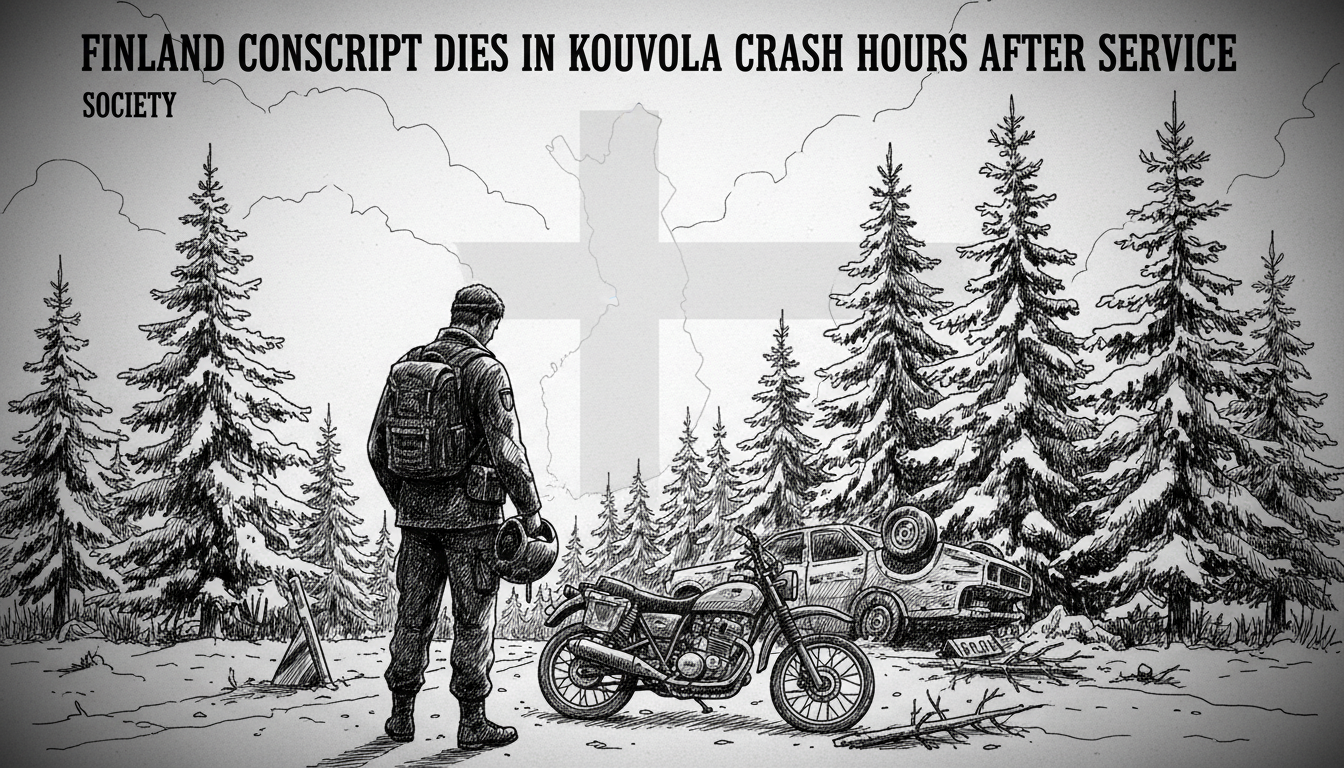
Finland's mandatory military service system faced a somber moment as a conscript completing his 165-day term died in a traffic collision just hours after leaving his base. The fatal crash occurred Thursday at approximately 4:00 PM on Valtatie 6 at its intersection with Karjalankatu in Kouvola. It involved a van and a truck. The conscript had been formally discharged from the Karelia Brigade that same day. Police have launched an investigation into the precise causes of the collision. This incident highlights the vulnerable transition period for thousands of young Finns leaving structured military life each year.
A Tragic End to Service
The young man's death casts a shadow over the standard conclusion of Finland's compulsory military service. The Karelia Brigade, headquartered in Vekaranjärvi, confirmed the conscript's discharge prior to the accident. Military service is a foundational civic experience in Finland, required for all adult men. Service lengths are typically 165, 255, or 347 days. The brigade announced it would hold a flag-raising ceremony at half-mast beginning at noon on Friday to honor the deceased. Military chaplains and support personnel are providing crisis counseling to affected soldiers within the unit. The sudden loss of a comrade, especially at the moment of returning to civilian life, creates a profound shock within the tight-knit conscript community.
Investigation and Immediate Aftermath
Finnish police are now meticulously reconstructing the events that led to the fatal collision on the major highway. Valtatie 6 is a significant transport route connecting Kouvola to other regions. The intersection with Karjalankatu is a known traffic point within the city's road network. Authorities have not released details regarding speed, vehicle conditions, or potential driver error. The involvement of a heavy truck suggests the investigation will closely examine commercial vehicle standards and highway safety protocols. The police report is expected to take several weeks as experts analyze physical evidence and witness statements. Road safety experts frequently note that intersections on high-speed highways present complex risk scenarios, particularly during afternoon traffic periods.
The Conscription System and Transition Support
This tragedy brings focus to the support systems for conscripts before and after service. The Finnish Defence Forces maintain structured programs during service, but the immediate transition home is a personal process. Dr. Lauri Kivinen, a researcher specializing in military sociology, notes the psychological shift involved. “The final day of service is emotionally charged. There's relief, celebration, and fatigue, all while re-adjusting to autonomous civilian decision-making,” Kivinen explained. “The military provides a highly regulated environment. The sudden return to full personal responsibility, including long drives home, can be a significant cognitive load.” The Defence Forces do provide general safety briefings, but the responsibility for the journey home ultimately rests with the individual.
Context of Finnish National Service
Finland's conscription model is a cornerstone of its national defense policy, with approximately 21,000 conscripts beginning training annually. The system enjoys broad public support and is seen as a unifying societal institution. The Karelia Brigade is a key Army unit responsible for training conscripts for mechanized warfare in the eastern region. A death occurring so proximate to the completion of duty is a rare and grievous event. It resonates deeply within the Defence Forces, where the principle of looking after one's own extends beyond active service. The incident prompts quiet reflection on whether additional transition protocols, particularly regarding immediate travel, need evaluation without compromising the autonomy of serving citizens.
Community and National Reaction
News of the accident has been met with solemnity across Finland. Comments on social media and discussion forums express national sympathy, often referencing the shared experience of service. The phrase "sininen tunic" – referring to the iconic blue conscript's uniform – has been used in many tributes, symbolizing the collective identity of those who have served. The Mayor of Kouvola, Marita Toikka, expressed condolences on behalf of the city. While not a political event, the story touches a common national experience. It underscores the inherent risks of everyday life that continue even after the structured risks of military training conclude. The nation's attention now turns to the police investigation and the private mourning of the soldier's family and friends.
A Broader Look at Road Safety
Beyond the military context, the crash renews discussion on road safety in Finland. The country has an internationally recognized safe road system, yet fatal accidents persist. Heavy vehicle mix, seasonal weather changes, and driver alertness are constant factors. Data from the Finnish Transport and Communications Agency (Traficom) shows that a majority of serious accidents occur on main highways like Valtatie 6. Intersection design and traffic flow management are continual areas of engineering focus. This single incident will likely become a data point in ongoing safety analyses. It serves as a stark reminder that safety is a shared responsibility between infrastructure planners, vehicle operators, and individual drivers.
What Comes Next?
The immediate procedures are clear: a police investigation and military mourning. The longer-term implications are less defined. Will this lead to any formal review of discharge-day protocols by the Defence Forces? Military representatives state their current support systems are robust but are always reviewed after critical incidents. The family of the conscript will receive support from both social services and veteran's associations. For the public, the story fuses two core Finnish realities: the universal duty of national service and the mundane danger of road travel. It asks an unspoken question about how a society safeguards its young adults at a moment of celebrated transition. The answer, as often in Finland, will be sought through careful analysis and collective reflection.