
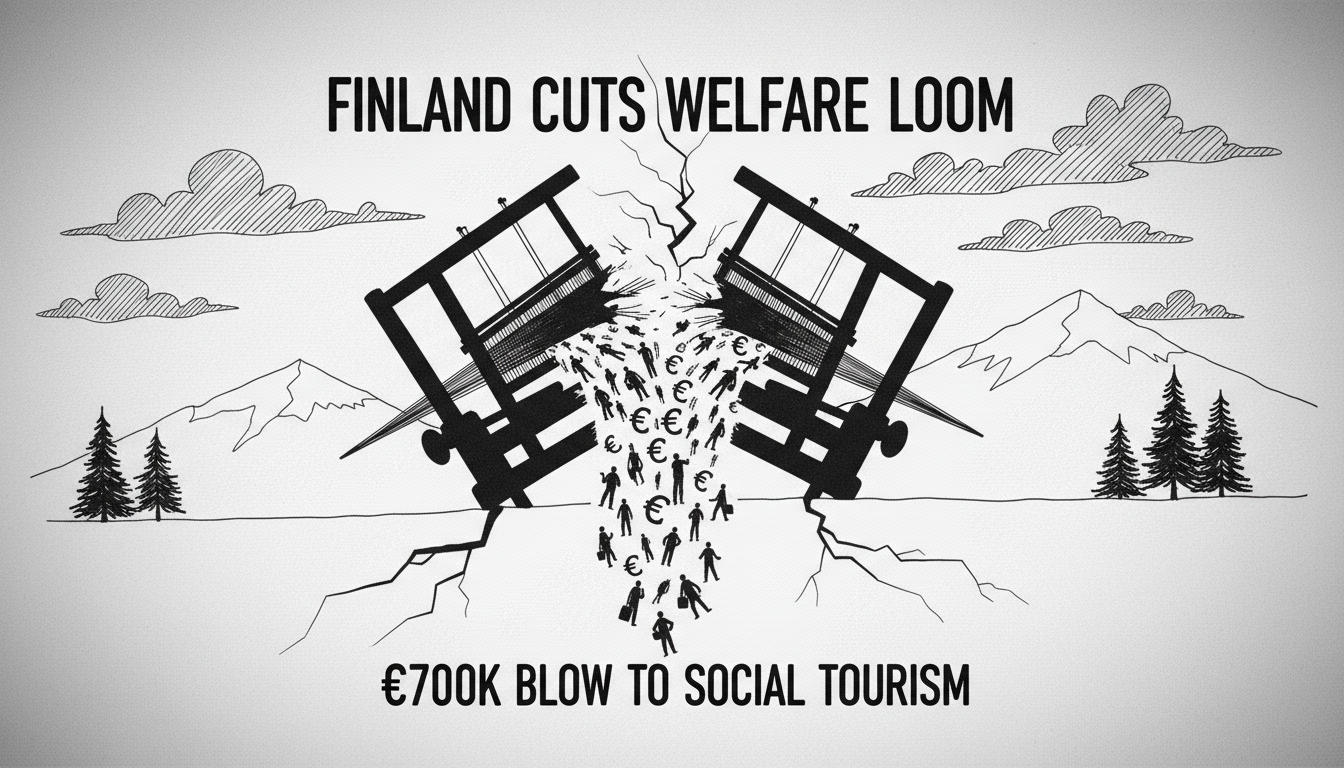
Finland's government will slash hundreds of thousands of euros from subsidized holidays for low-income citizens, a new austerity policy delivering a severe financial hit to businesses like the historic Imatra Spa. The spa resort anticipates a direct loss of €100,000 in turnover next year, soaring to an estimated €700,000 loss by 2027. This cut targets a long-standing social welfare tradition, ending state-funded breaks for disadvantaged families and adults who cannot otherwise afford a holiday.
The funding reduction represents a tangible shift in Finland's approach to social care. For decades, grants from the Ministry of Social Affairs and Health have enabled organizations to offer low-cost vacations at spas and resorts nationwide. The final decision on the complete termination of these grants will be made in early 2026, but a significant cut is already confirmed for the 2025 budget. This move leaves thousands of Finns without access to supported recreation and jeopardizes a steady income stream for the tourism sector.
A Spa's Calculated Losses
Imatra Kylpylä, operated by the South Karelia Rehabilitation Foundation, serves as a prime example of the policy's economic ripple effect. The spa has built part of its business model around this social tourism. Foundation Chairman Ilkka Nokelainen provided the stark financial forecast, noting the marginal but significant impact on the overall business. Lawyer Lassi Nyyssönen, who is preparing a corporate restructuring program for the spa, confirmed the figures while contextualizing them within the larger financial picture.
The immediate loss of €100,000 in 2026 is a serious blow. The projected €700,000 shortfall in 2027, however, threatens operational stability. These sums represent direct turnover from guests whose holidays were funded by the state via social and health organizations. Without this subsidy, the guests cannot afford the stays, and the revenue simply vanishes. This model is replicated at similar facilities across the country, suggesting wider industry distress is imminent.
The End of a Social Tradition
The policy change severs a thread in Finland's social safety net. Supported holidays were not framed as luxury but as a component of well-being and equality. They allowed children from low-income families to experience a holiday trip and provided respite for adults facing economic hardship or health challenges. The state, through ministry grants to NGOs, facilitated this access. Its withdrawal signals a re-prioritization where such social and recreational support is deemed non-essential.
This decision originates from wider government austerity measures aimed at balancing public finances. While the final call on grants for 2026 and beyond will be made by the Ministry of Social Affairs and Health in January-February 2026, the direction is clear. The writing has been on the wall for weeks, with stakeholders now calculating the damage. The move raises fundamental questions about what constitutes necessary welfare in a modern Nordic state.
Expert Analysis: Social and Economic Fallout
Experts point to a double consequence: eroded social equity and localized economic damage. From a social policy perspective, eliminating these subsidies reduces the quality of life for the most vulnerable. It removes a proven tool for mental and physical recuperation that can prevent broader, more costly health interventions later. Social workers have long advocated for these programs as preventative measures.
Economically, the impact is concentrated on specific regions and businesses. Spas in areas with fewer international tourists often relied on this predictable domestic demand. Imatra, located in South Karelia near the Russian border, is one such facility. The loss of this revenue stream forces a business model rethink and may lead to job losses or reduced services. The government's savings in the welfare budget are thus offset by losses in the tourism economy and potential increases in other social and healthcare costs down the line.
A Broader Pattern of Cuts
This cut does not exist in isolation. It fits within a series of recent adjustments to Finland's celebrated welfare system, including debates over housing benefits and unemployment security. Each decision reflects the current government's tighter fiscal stance. The EU's strict budgetary rules also exert pressure on member states to control public spending, influencing national policy choices in Helsinki.
The situation places social and health organizations in a difficult position. They must now inform their clients that a service once available will disappear. They also lose a mechanism for engagement and support. For businesses like Imatra Kylpylä, the path forward involves adaptation, possibly seeking new customer segments or adjusting pricing in a competitive market, all while managing a corporate restructuring process.
Looking Beyond 2026
The final decision in early 2026 will confirm whether this social tourism program ends entirely or survives in a diminished form. Until then, uncertainty looms for families and businesses alike. The case of Imatra Spa illustrates how national budget decisions manifest in local communities, turning abstract figures into real financial shortfalls and lost opportunities.
This policy shift challenges Finland's self-image as a nation that cares for all its citizens. It tests the limits of the welfare state in an era of economic constraint. The coming years will reveal not only the total financial damage to the tourism sector but also the broader human cost—the missed holidays, the lost moments of respite, and the widening gap in everyday experiences between those with means and those without. The ultimate question is whether the state's balance sheet will reflect the true price of these savings.