
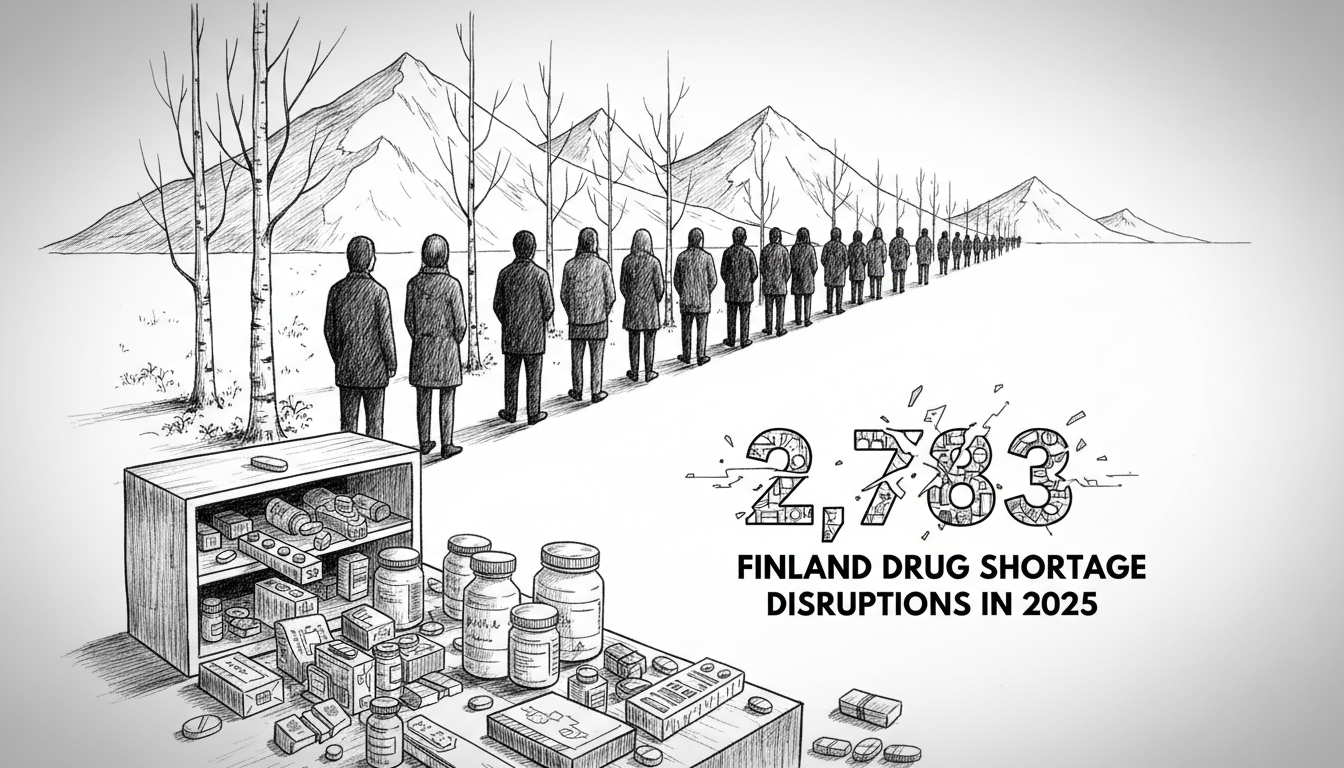
Finland's pharmaceutical supply chain is grappling with hundreds of drug availability disruptions, creating uncertainty for patients and challenging a system built on reliability. The Finnish Medicines Agency, Fimea, received 2,783 notifications of drug availability disruptions from pharmaceutical companies in 2025 alone. This high figure, nearly identical to the previous year's total, signals a persistent and systemic crisis affecting essential medicines for mental health, chronic pain, and cancer.
For a patient told their regular prescription is unavailable, the immediate reaction is often one of anxiety. The reality is frequently less dire, as pharmacists can often substitute an equivalent product. Yet this is not always possible, particularly for specialized medications. The scale of the problem, detailed in Fimea's annual data, reveals a vulnerable supply chain where late warnings from companies hinder effective crisis management.
A Crisis Concentrated in Critical Care
The most severe shortages in 2025 hit drugs affecting the nervous system. Medications for psychosis, depression, ADHD, and pain management topped the list of disruptions. These are not discretionary treatments but essential therapies for managing chronic conditions. Significant availability problems were also reported for cancer medications and drugs treating heart and vascular diseases.
Specific cases highlight the speed at which a shortage can escalate. Disruptions for the schizophrenia medication olanzapine and for mesalazine, used to treat ulcerative colitis and Crohn's disease, widened rapidly last year. Such trends force doctors and patients to make difficult adjustments mid-treatment. The situation creates particular strain within Finland's universal healthcare system, which prioritizes consistent, equitable access to care.
Why Are So Many Drugs Unavailable?
The reasons behind the shortages are complex and interconnected. According to Fimea, marketing authorisation holders most frequently cited production problems. These include capacity shortages and disruptions in manufacturing processes. Roughly one-fifth of disruptions were attributed to a surge in demand, a factor often beyond a single company's immediate control.
A more troubling finding involves corporate compliance, or the lack thereof. Finnish law requires companies to notify Fimea of an impending availability disruption at least two months in advance. This allows regulators and healthcare providers time to coordinate responses and source alternatives. In 2025, only about 5% of notifications met this legal deadline.
A staggering 48% of notifications arrived on the day the disruption began or even after it had started. This late reporting severely complicates mitigation efforts. "When notifications come too late, our ability to soften the impact for patients is dramatically reduced," a Fimea official said in a statement regarding the annual data. The agency has repeatedly emphasized this obligation falls squarely on the pharmaceutical firms.
Regulatory Tools and Systemic Gaps
Fimea does possess mechanisms to manage crises. It can grant exceptional and special licenses to secure critical treatments, allowing the import of non-standard products in emergencies. Pharmacies also have a legal obligation to maintain a two-week supply of medicines in regular use within their area. This buffer helps manage short-term disruptions but is ineffective against prolonged, widespread shortages.
Some shortages stem from deliberate corporate decisions to withdraw a product from the Finnish market. Last year, disruptions to nitrofurantoin products for urinary tract infections and the announced withdrawal of certain opioid substitution therapy medications were due to such commercial exits. These decisions, while legal, further shrink the options available within the country's pharmaceutical basket.
This situation places immense pressure on community pharmacists, who become the frontline interpreters of the shortage for worried patients. They must navigate substitution rules, communicate with prescribing doctors, and manage patient expectations, all while dealing with incomplete information from suppliers. The professional unions for pharmacists and doctors have both raised concerns about the administrative burden and clinical risks created by constant shortages.
Analysis: A Test for Finnish Resilience and EU Policy
The persistent drug shortage is a significant test for Finland's renowned healthcare model. The system is designed for predictability and equal access, principles undermined when essential medicines are sporadically unavailable. The crisis exposes a deep dependency on a globalized pharmaceutical supply chain that is prone to bottlenecks, from raw material scarcity to concentrated production in third countries.
Experts point to the need for stronger EU-level action. "This is not solely a Finnish problem; it is a European vulnerability," notes Dr. Elina Saari, a health policy researcher at the University of Helsinki. "National agencies like Fimea are managing symptoms, but the cure requires EU-wide strategies for strategic stockpiling, diversifying active pharmaceutical ingredient production, and enforcing stricter transparency rules on companies."
The data underscores a failure in corporate accountability. The near-total disregard for the two-month advance notice law suggests a lack of meaningful consequences for non-compliance. This forces the public sector to react to crises rather than prevent them. Some analysts argue for financial penalties or other market disincentives for companies that fail to provide timely warnings, shifting the cost of poor planning away from the public health system.
There are also calls for Finland to explore increasing domestic manufacturing capacity for critical generic medicines, though this would require significant investment. The long-term solution likely involves a combination of EU-level supply chain fortification, stronger national regulatory enforcement, and revised incentives for companies to maintain robust supplies for smaller markets like Finland.
The human impact remains the central concern. For a patient with ADHD, depression, or cancer, a drug shortage is not a statistical abstraction but a direct threat to their stability and health. As notifications of new disruptions continue to arrive at Fimea's Helsinki offices, the question becomes whether systemic reforms can outpace the next wave of shortages. Will 2026 see a repeat of 2,783 disruptions, or can regulators and policymakers finally secure the reliable supply that patients deserve?