
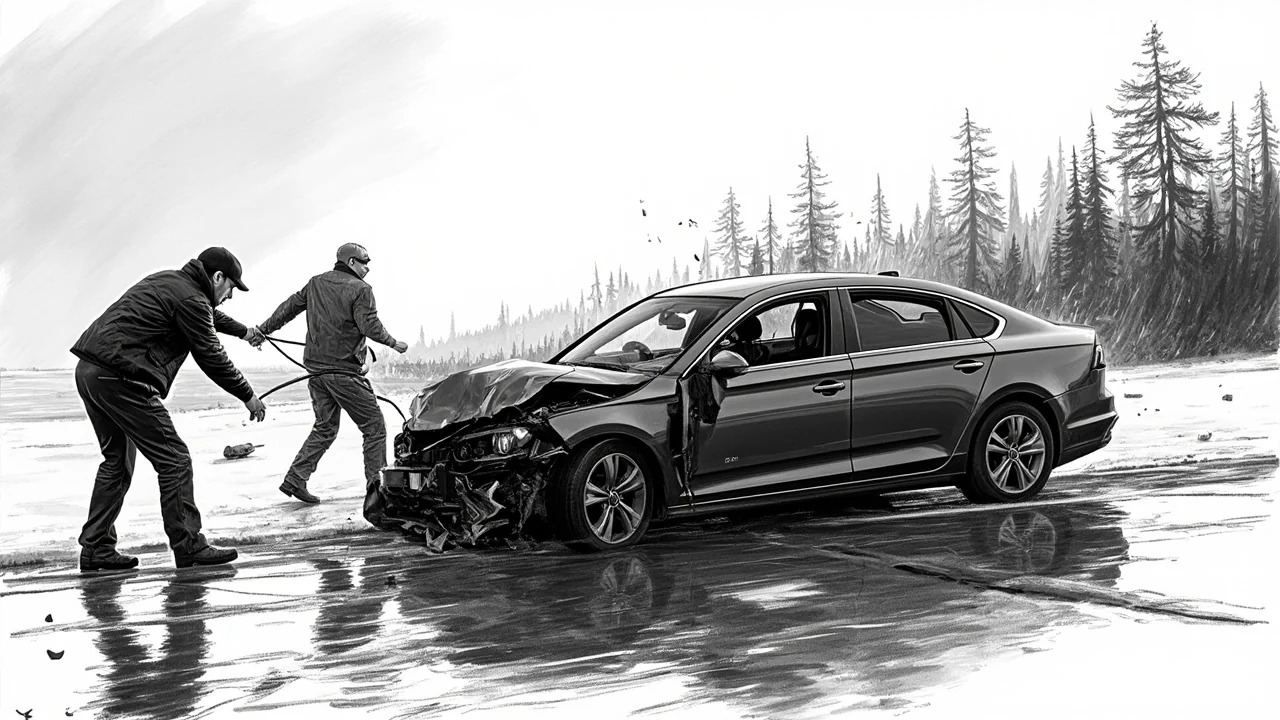
Finland's courts have delivered a prison sentence to a driver who operated a vehicle with a staggering 2.8 promille blood alcohol level last July. The man, whose case was heard in the Central Finland District Court, veered off the road twice in Saarijärvi before continuing his journey on a burst tire, highlighting the extreme dangers of impaired driving.
This severe sentence from the Keski-Suomen käräjäoikeus underscores Finland's strict legal stance on traffic safety violations. The incident occurred in the Central Finland region, an area where road safety remains a persistent challenge for authorities. The court's decision to impose imprisonment rather than a suspended sentence or heavy fines sends a clear message about the seriousness of the offense.
A Reckless Sequence of Events
The driver's actions last summer presented a cascade of poor decisions. After initially losing control and leaving the roadway in Saarijärvi, the intoxicated motorist did not stop. He returned to the road, only to depart from it a second time. The impact of these incidents caused significant damage to his vehicle, resulting in a tire blowout. Despite this clear mechanical failure and his severely impaired state, the individual chose to continue driving. This complete disregard for personal safety and the safety of others formed the core of the prosecution's case.
Finnish law treats drunk driving with extreme seriousness, with penalties escalating sharply based on blood alcohol content and the circumstances of the offense. A level of 2.8 promille is considered aggravated drunk driving, which typically triggers a mandatory prison sentence under Finnish penal code. The court considered the driver's repeated failures to stop after the accidents as aggravating factors, demonstrating a sustained period of dangerous conduct rather than a single mistake.
The Finnish Legal Framework on Impaired Driving
Finland employs a tiered system for drunk driving offenses, with 0.5 promille as the general limit for criminal liability. Penalties become notably harsher at 1.2 promille, which is classified as aggravated drunk driving. The defendant's 2.8 promille reading placed him far into this aggravated category. Sentences can range from heavy fines and license suspension for lower-level offenses to unconditional imprisonment for cases involving high alcohol levels, accidents, or reckless behavior.
The Eduskunta has consistently supported stringent measures to reduce traffic fatalities linked to alcohol. This legal approach is part of a broader Nordic model that prioritizes public safety and views driving as a privilege requiring strict responsibility. The Finnish government's traffic safety strategy, aligned with EU-wide goals, aims for zero road fatalities, making the prosecution of high-risk offenders a key component.
Analysis: Deterrence and Public Safety Policy
The prison sentence in this case is not an outlier but a reflection of consistent judicial practice for such extreme violations. Legal experts note that Finnish courts have little discretion when faced with evidence of such high intoxication combined with actual dangerous driving. The primary aims are deterrence, punishment, and protecting the public by removing dangerous drivers from the roads. A conditional discharge or suspended sentence is highly unlikely when the driver's actions demonstrate such a blatant and prolonged threat.
From a policy perspective, this case touches on ongoing debates in Helsinki about rehabilitation versus punishment. While Finland's justice system often emphasizes rehabilitation, crimes that pose an immediate physical danger to the public, like aggravated drunk driving, typically result in custodial sentences. The government's Ministry of Transport and Communications regularly reviews traffic law efficacy, and outcomes like this sentence reinforce the existing punitive framework for the most serious offenses.
The Broader Context of Nordic Road Safety
Finland's approach, while strict, is consistent with its Nordic neighbors. Sweden and Norway also impose severe penalties for drunk driving, including mandatory prison terms for high blood alcohol content. The Nordic countries frequently collaborate on road safety research and policy, sharing data to improve outcomes across the region. This cross-border alignment helps create a cohesive safety culture, though specific legal thresholds and sentencing guidelines can vary.
Within Finland, traffic safety campaigns repeatedly emphasize the dangers of mixing alcohol and driving. Public awareness is high, yet cases like this demonstrate that a small minority continue to engage in exceptionally risky behavior. The challenge for authorities is converting general public disapproval into complete behavioral change for all drivers. The government's continued investment in traffic policing, checkpoints, and public information campaigns is a direct response to this persistent issue.
The Human and Societal Cost
Beyond the legal technicalities, this incident forces a consideration of the potential human cost that was narrowly avoided. A driver with a 2.8 promille level has severely compromised reaction times, judgment, and motor skills. Driving on a burst tire further reduces vehicle control. The combination created a scenario where a fatal collision with another vehicle, a cyclist, or a pedestrian was a distinct possibility. The sentence implicitly acknowledges the catastrophic harm that could have resulted, punishing the immense risk created, not just the actual damage caused.
Every such case places a burden on public resources, from emergency services and police investigation to court proceedings and the correctional system. The societal cost of drunk driving encompasses medical care, property damage, insurance claims, and the profound emotional toll on victims' families. The Finnish system seeks to internalize these costs by holding offenders strictly accountable, aiming to shift the financial and moral burden back onto those who choose to break the law.
This sentencing from the Central Finland District Court serves as a stark reminder. Finland's legal system maintains a low tolerance for behavior that endangers public safety on its roads. As long as drivers choose to get behind the wheel while heavily intoxicated, the courts will continue to respond with the full force of the law, prioritizing the protection of the community over the freedom of the offender. The question for Finnish society is whether punitive measures alone can eradicate such deeply irresponsible decisions, or if a broader cultural shift is still needed.