
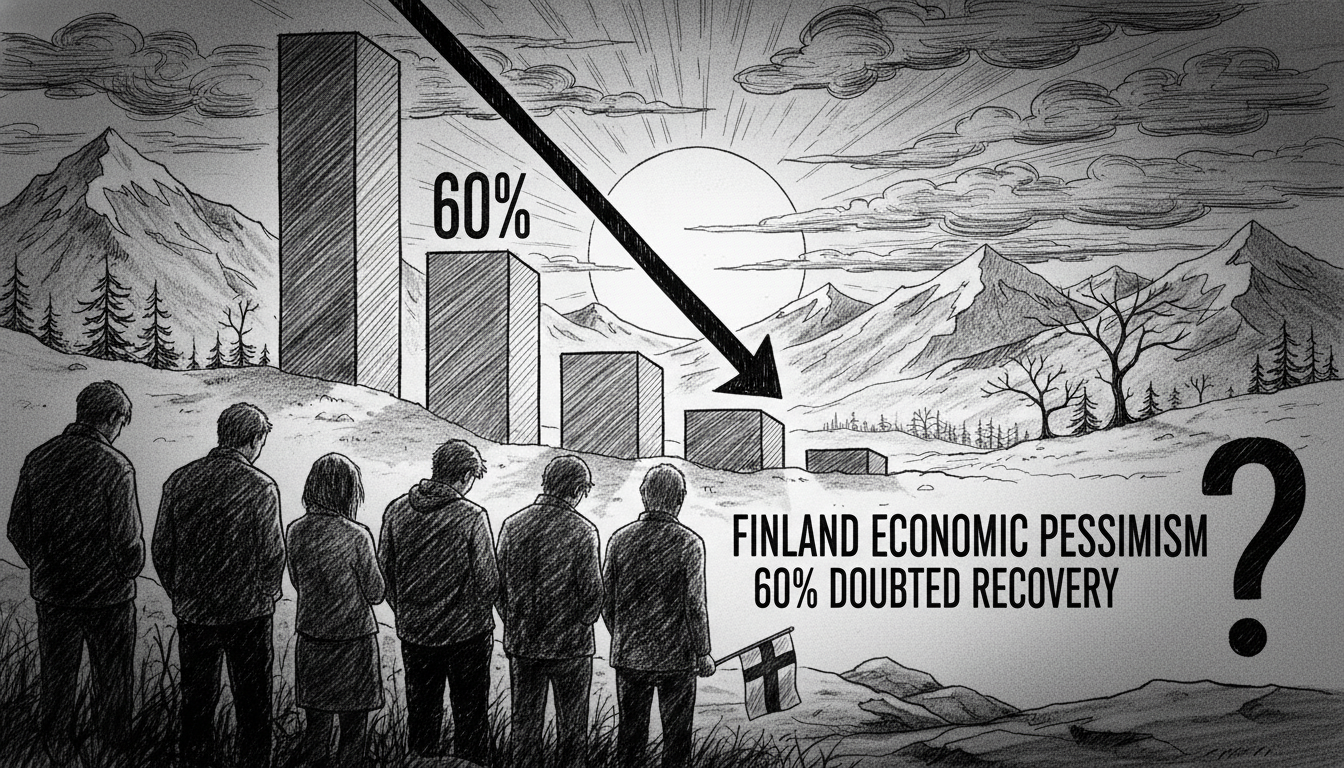
Finland's economic sentiment hit a low point in 2024 when a survey revealed 60% of citizens did not believe in a recovery that year. Only 25% were optimistic, while 15% remained uncertain, highlighting deep-seated public concern amid ongoing fiscal challenges. As of early 2026, that pessimism has left a lasting mark on policy debates and consumer behavior, shaping the nation's slow climb from recession. This article examines how those fears have evolved, the government's contested austerity measures, and whether brighter days are finally on the horizon.
The 2024 Confidence Crash and Its Echoes
A poll conducted by the newspaper Maaseudun Tulevaisuus in 2024 exposed a stark reality: three in five Finns had lost faith in an imminent economic turnaround. Professor Olli-Pekka Ruuskanen, a research director at Pellervo Economic Research, commented at the time, 'The people know, as the old saying goes.' That sentiment reflected a broader trend of weak consumer confidence, driven by personal financial worries and a gloomy national outlook. Two years later, the memory of that survey still informs discussions in the Eduskunta, Finland's parliament, and in cafes across Helsinki. While more recent data shows a gradual improvement in some indicators, the shadow of that 2024 pessimism underscores how long economic scars can take to heal.
Roots of the Recession: A Perfect Storm
Finland's economic struggles in the early 2020s stemmed from a confluence of global and domestic pressures. The war in Ukraine disrupted energy markets and trade, sending inflation soaring across Europe. High interest rates imposed by the European Central Bank to combat inflation further cooled demand, hitting Finland's export-dependent industries like forestry and technology. Domestic consumption slumped as households tightened belts. By 2024, the Bank of Finland forecast only a weak recovery, with meaningful growth pushed to 2025. Structural issues, including an aging population and high public debt, compounded these cyclical shocks. This context made the public's skepticism in 2024 a rational response to consecutive quarters of contraction and uncertainty.
Helsinki's Hard Choices: Austerity in Action
Prime Minister Petteri Orpo's coalition government, which took office in June 2023, responded to the crisis with a package of spending cuts and reforms aimed at stabilizing public finances. The strategy, still in effect as of 2026, focuses on reducing the deficit, incentivizing work through welfare adjustments, and boosting competitiveness. Key measures include cuts to social benefits, increases in working hours, and investments in green energy and digital infrastructure. Finance Minister Riikka Purra has consistently argued that this bitter medicine is necessary for long-term health. However, opposition parties and trade unions have criticized the approach, warning that austerity dampens short-term demand and exacerbates inequality. The political battle over these policies has been fierce, with regular protests outside the government district in Helsinki.
Expert Analysis: Diverging Views on Recovery
Economists remain divided on Finland's trajectory. Some, like Professor Ruuskanen, emphasize that consumer sentiment often leads economic reality, suggesting sustained pessimism can become a self-fulfilling prophecy by reducing spending and investment. Others point to signs of resilience: a gradual easing of inflation, strong performance in niche tech sectors, and the potential of new trade agreements within the EU. 'The government's reforms are painful but could improve productivity over the next decade,' said one analyst from the Finnish Business and Policy Forum. Critics counter that without stronger stimulus, the recovery will remain lopsided, benefiting exporters while leaving ordinary citizens behind. This debate highlights the delicate balance between fiscal discipline and growth stimulation.
The 2026 Landscape: Glimmers of Hope Amid Challenges
As we move through 2026, the Finnish economy shows mixed signals. Latest forecasts from institutions like the Bank of Finland and the Ministry of Finance indicate modest GDP growth, likely between 1% to 1.5% for the year, a slight improvement from the stagnant years. Unemployment has edged down, but remains a concern in certain regions. Consumer confidence indexes have recovered from their 2024 lows but are not yet at pre-crisis levels. The ongoing impact of geopolitical tensions, particularly in the Baltic region, and the need to meet ambitious EU climate targets add layers of complexity. Finland's economic fate is still tied to broader European trends, including the health of key trading partners like Germany and Sweden.
Beyond the Numbers: Social and Political Ramifications
The economic pessimism measured in 2024 has had tangible social consequences. Reports from Finnish welfare organizations indicate increased demand for food aid and mental health services, particularly among low-income families and young adults. Politically, the discontent has fueled support for opposition parties, keeping pressure on the Orpo government. Upcoming municipal elections will be a key test of public patience. Meanwhile, businesses report ongoing caution, with many delaying expansion plans until they see more consistent demand. This environment makes it harder for the government to implement its growth-oriented reforms, as public trust in institutions remains fragile.
Looking Ahead: Pathways to Renewed Confidence
For Finland to truly turn the corner, experts agree on several prerequisites. First, a rebound in global demand, especially for Finnish exports like pulp, machinery, and clean technology, is essential. Second, successful implementation of structural reforms to the labor market and pension system could enhance competitiveness. Third, managing the green transition through investments in wind power and battery production offers a significant opportunity. Finally, restoring public confidence requires clear communication from leaders and evidence that policies are delivering shared prosperity. As Professor Ruuskanen's adage implies, the Finnish people are astute observers of their economy; their belief in recovery will be both a indicator and a catalyst for real change. The question for 2026 and beyond is whether the government can bridge the gap between austerity and optimism.