
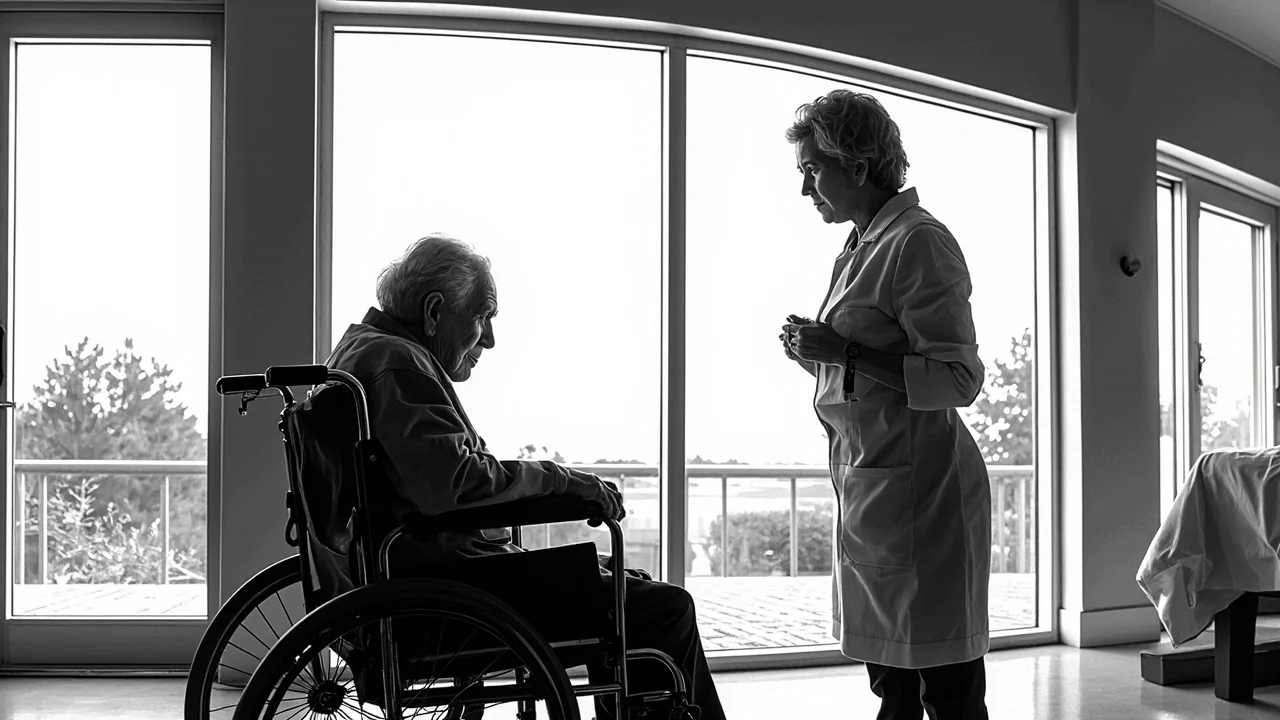
Finland's elderly care system faces a profound legal and ethical crisis, as the absence of specific legislation governing physical and chemical restraints leads to preventable deaths and systemic rights violations. A recent death in a Turku care home, where an Alzheimer's patient reportedly died from strangulation after being tied to a chair, has ignited urgent calls for reform from researchers and rights advocates. The case underscores a national failure to protect some of society's most vulnerable citizens within a system operating in a legislative gray zone.
Henna Nikumaa, a doctoral researcher in elderly rights, states that Finland lacks comprehensive laws regulating restraint use in 24/7 care. "Nine out of ten restraint situations could be solved by other means," Nikumaa argues, pointing to chronic understaffing as the primary driver for resorting to restrictive practices. She emphasizes that these measures violate the constitutional right to personal liberty, yet staff are often left with impossible choices during night shifts with minimal personnel.
A System Reliant on Restriction
The tragic incident in Turku is not an isolated event but a symptom of systemic failure. Restrictive practices, including physical tying and chemical sedation, have become routine tools for managing complex care needs, particularly for patients with dementia. Nikumaa draws from her own experience as a former care worker, describing scenarios where she felt compelled to use restraints. "On those occasions when I had to resort to restriction, it was usually night. I was working a night shift alone and had to quickly make some decision," she recalls. This environment forces caregivers into ethically fraught positions, balancing patient safety against their fundamental rights with inadequate support.
Common situations leading to restraint include managing what staff perceive as disruptive wandering by dementia patients or preventing individuals from removing incontinence products. Nikumaa describes the use of hygiene overalls with back zippers that patients cannot remove themselves. "It is put on, for example, so that the person does not rip off their diaper and soil themselves," she explains. While intended to maintain hygiene and dignity, such garments fundamentally restrict autonomy. Chemical restraint, using medication to sedate and immobilize, remains another widespread but poorly documented practice.
The Legislative Void and Constitutional Conflict
Finland's current legal framework provides no clear boundaries for when and how restraints can be applied in elderly care, creating a dangerous vacuum. "We are in trouble with the current legislation," Nikumaa states bluntly. Restraint measures infringe upon the Finnish Constitution's strong protections for personal liberty and integrity. Without specific statutes, care providers operate without standardized protocols, consistent training requirements, or mandatory reporting mechanisms for restraint use. This lack of oversight makes it difficult to monitor frequency, justify necessity, or review incidents for improvement.
This legislative gap places Finland behind several other Nordic and European nations that have enacted specific laws or strict guidelines. The absence of a legal framework means there is no uniform definition of what constitutes a restraint, no requirement for less restrictive alternatives to be attempted first, and no independent review process for serious incidents. Consequently, practices vary wildly between municipalities and private care providers like Esperi Care, where the Turku death occurred. The company now faces scrutiny over its procedures and staff training protocols.
Understaffing: The Root Cause, Not an Excuse
Persistent understaffing in the care sector is the overwhelming factor pushing facilities toward restrictive practices. Nikumaa acknowledges the immense pressure on workers but is clear on the principle: "But the lack of staff is not a sufficient reason to restrict." Caregivers are frequently responsible for too many patients with high needs, leaving no time for the person-centered, de-escalation techniques that could prevent restraint. These alternative methods require more hands-on time and specialized training, resources that are consistently scarce.
This chronic shortage is a political and budgetary failure years in the making, exacerbated by an aging population and difficulties in recruiting and retaining care professionals. The work is physically and emotionally demanding, with low pay and high burnout rates. When a single night worker is responsible for dozens of residents, a crisis with one individual can necessitate a quick, restrictive fix simply to ensure the safety of others. The system is designed to fail both the worker and the resident, creating a cycle where rights are violated out of perceived necessity.
Seeking Solutions Beyond Legislation
While new laws are urgently needed to define, limit, and monitor restraint use, legal reform alone will not solve the crisis. Effective legislation must be coupled with significant investment in the care workforce. This means funding for more staff, better pay to improve retention, and mandatory, ongoing training in non-restrictive dementia care and de-escalation. Models from other countries show that reducing restraints requires a cultural shift within care institutions, moving from a model of control to one of support and accommodation.
Technology and environmental design also offer alternatives. Secure but open garden spaces can allow for safe wandering. Sensor mats and monitoring systems can alert staff to falls or movement without constant physical observation. Personalized activity plans can reduce agitation and the need for chemical sedation. However, all these solutions require upfront investment that many municipalities and private operators are unwilling or unable to make without state support and regulatory pressure.
A Question of National Values
The ongoing crisis in elderly care poses a fundamental question about Finnish society: how does a nation renowned for its social welfare system and human rights record tolerate such conditions for its elders? The contrast between Finland's progressive international image and the reality within some care homes is stark. As the population continues to age, the number of people with dementia will rise, increasing the potential for rights violations unless systemic change occurs.
The death in Turku is a wake-up call. It highlights the human cost of political inaction and budgetary neglect. Researchers like Henna Nikumaa provide a clear analysis of the problem and a path forward, combining legal clarity with practical support for care workers. The Eduskunta now faces the task of translating this urgency into law. The coming parliamentary debate will test Finland's commitment to upholding the dignity and liberty of every citizen, even at life's most vulnerable stage. Without swift action, the constitutional promise of personal freedom remains empty for thousands in 24-hour care, and preventable tragedies will continue to occur.