
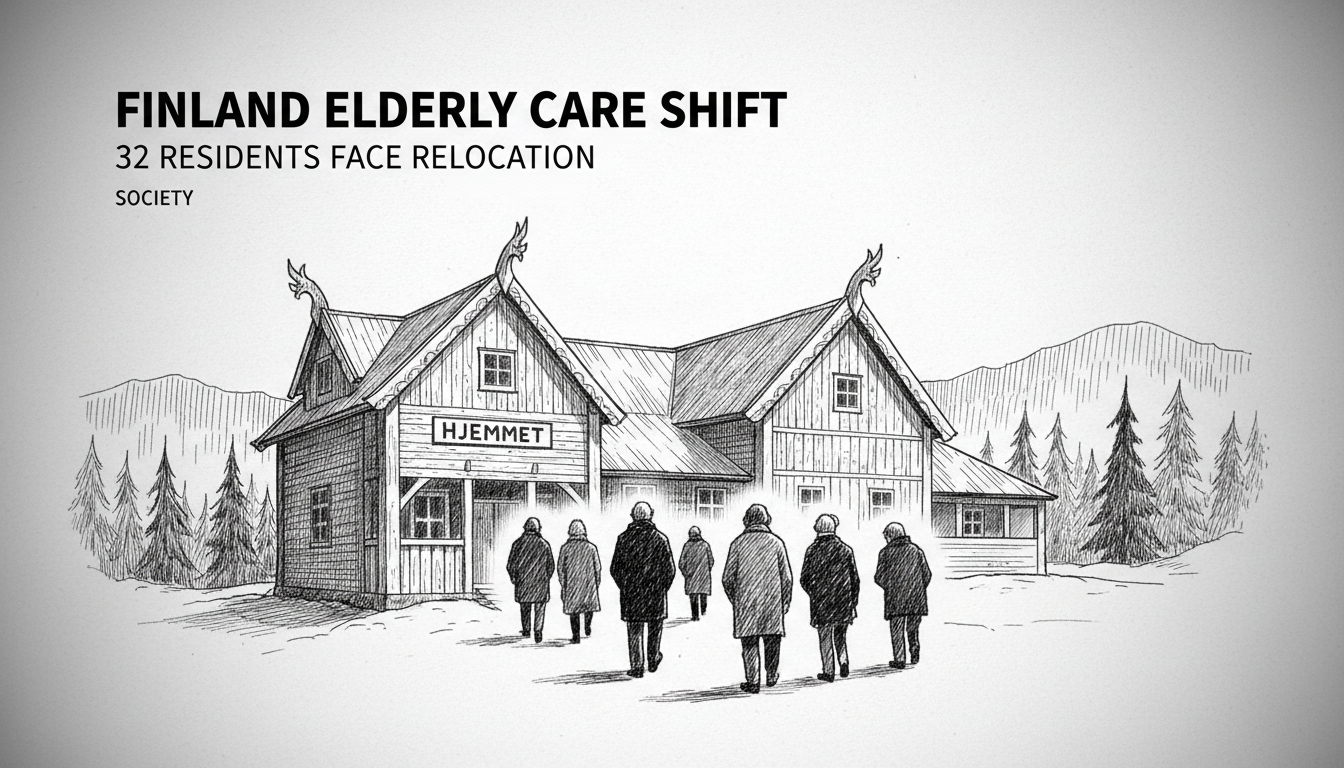
Finland's Central Finland wellbeing region will close the Konginkangas service center for the elderly in May 2026, forcing 32 residents to find new homes in other care facilities. The decision, part of a broader service network reform, highlights the difficult balance between financial sustainability and compassionate care in a rapidly aging nation.
"The end of operations is a situation that raises concern and emotions. It affects residents, relatives, staff, and the entire locality," said service manager Maarit Raappana in a wellbeing region statement. "A new home will be arranged according to the wishes of the resident and their close ones." The closure process will begin with an information and discussion session for residents and their families in January.
A Delicate Transition for Vulnerable Residents
For the 32 individuals residing in Konginkangas, the next 18 months will be a period of profound uncertainty. The center provides 24/7 service housing, a form of assisted living for elderly Finns who require constant support. The wellbeing region's client guidance team will now work with each resident and their family to identify a suitable new unit. Options include other facilities owned by the Central Finland wellbeing region, such as those in Eerolanranta, Kuhnamo service house, and Kotisatama in Äänekoski, or units operated by private service providers like Esperi Pukkimäki and the soon-to-open Mainiokoti Koskentupa.
Residents may also transfer to a unit in another locality within the wellbeing region if they wish. This flexibility is a double-edged sword; it offers choice but also risks severing long-standing local ties. The emotional toll of relocation for elderly individuals, many of whom may be coping with cognitive decline, is a primary concern for families and care experts. The process demands meticulous individual planning to minimize distress.
Financial Pressures Drive Service Network Reform
The closure is not an isolated event but a direct result of the first-phase service network change approved by the Central Finland wellbeing region council in June 2024. Officials cite the poor condition of the Konginkangas facility, which the region operates in a rented space, as a key factor. The broader reform aims to secure the availability and continuity of services while considering "economic constraints and staff availability."
This language points to the central dilemma facing Finland's 21 wellbeing regions, established in the 2023 healthcare and social services reform. They are tasked with providing comprehensive care to an aging population amid tight budgetary limits. The Konginkangas closure represents a move toward consolidation, shuttering older, potentially inefficient facilities in favor of newer or larger units. The region states a goal of aligning its coverage of 24/7 service housing closer to the national average. In 2024, coverage in Central Finland was 7.1% of those aged 75+, slightly above the national average of 6.5%.
Finland's Elderly Care at a Crossroads
Finland possesses one of Europe's most rapidly aging demographics, a trend acutely felt in regions like Central Finland. This creates intense pressure on the service housing system. Experts note that consolidating services can theoretically improve care quality through economies of scale and modern infrastructure. Newer facilities may be better designed for contemporary care needs and more attractive to a workforce facing widespread staff shortages in the care sector.
However, critics of such closures argue they often prioritize balance sheets over community. Shutting local centers forces vulnerable residents to move away from familiar surroundings, potentially distancing them from family and lifelong social networks. The human cost of efficiency is a recurring theme in municipal and regional politics. The success of the Konginkangas transition will be measured not just by the physical relocation of 32 people, but by how well their psychosocial well-being is maintained.
The National Context of Regional Responsibility
The decision-making power now lies with the wellbeing region, a significant shift from the previous municipal-based system. This case tests the region's ability to manage sensitive service changes transparently and empathetically. The promise to involve residents and families in the selection of a new home is a standard ethical requirement, but its execution will be closely watched. Will residents have genuine, meaningful choices, or will decisions be heavily guided by bed availability and cost?
The closure also reflects a national push toward a mixed service model, explicitly mentioned in the region's statement referencing both its own units and those of private providers like Esperi. This aligns with broader Finnish policy encouraging private service production in welfare sectors. The opening of a new private facility, Mainiokoti Koskentupa, in May 2026—coinciding with Konginkangas's closure—suggests a planned transfer of capacity rather than a simple reduction.
Looking Ahead: A Test Case for Finland's Aging Future
The two-year timeline for the Konginkangas closure provides a crucial grace period. It allows for careful, individualized transition planning, something often lacking in more abrupt service cuts. The January information session will be the first real test of the region's communication strategy. How clearly are options presented? How effectively are anxieties addressed?
This story from Äänekoski is a microcosm of the challenges facing the entire Nordic welfare model. Finland is renowned for its high-quality elderly care, but sustaining it requires difficult, localized decisions that weigh financial realities against deep-seated social values of dignity and community. The closure of the Konginkangas service center is more than an administrative change; it is a real-time experiment in managing the human dimension of structural reform. The wellbeing of its 32 residents will serve as a key indicator of whether Finland can navigate its demographic shift without sacrificing the core principles of its care system. The nation's eyes, particularly those of other wellbeing regions facing similar choices, will be on Central Finland to see if this transition is handled with the compassion it demands.