
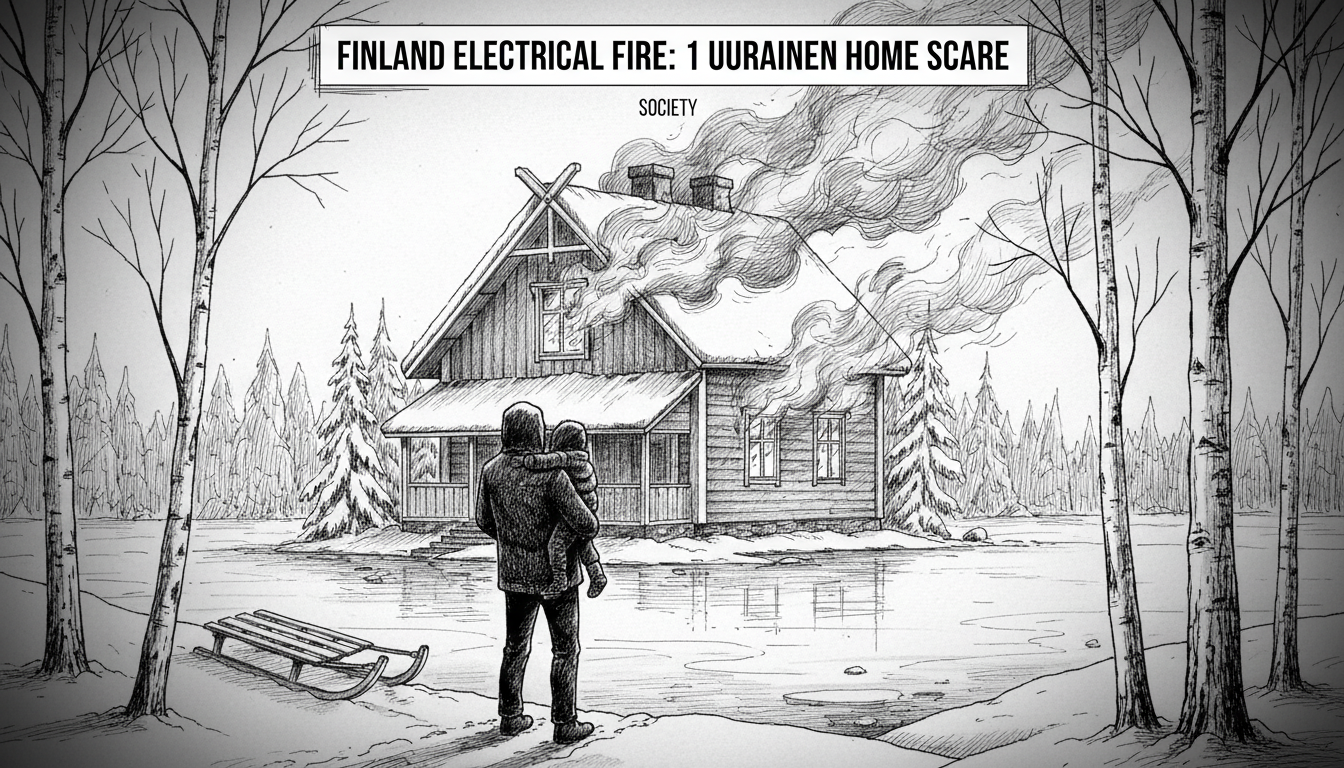
Electrical faults cause approximately 15% of Finland's house fires, a persistent risk underscored by a Boxing Day blaze in Uurainen. On December 26th, an electrical appliance ignited in a detached house's sauna dressing room, prompting an emergency response at 12:41 PM. The local rescue service extinguished the flames on Virtasalmentie street, preventing structural damage and injuries by 1:30 PM. This incident highlights the silent hazard lurking in countless Finnish homes despite stringent national safety codes.
The Uurainen Incident: A Holiday Close Call
The fire occurred in Uurainen, a municipality in Central Finland, during St. Stephen's Day, a traditional holiday. Flames were confined to the sauna's pukuhuone, or dressing room area, with smoke ventilation operations concluding swiftly. No residents were injured, a testament to rapid emergency intervention and the fire's limited scope. However, the event disrupts the peaceful post-Christmas period for the affected household. It serves as a stark reminder that fire risks do not pause for holidays.
Finland's rescue services responded with efficiency, reflecting well-drilled protocols for residential calls. The quick containment likely prevented a more severe outcome, given the wooden structures common in Finnish omakotitalot, or detached houses. Homeowners often overlook sauna spaces during routine safety checks, considering them low-risk. This fire challenges that assumption, pointing to the need for vigilance in all home areas.
Finland's Rigorous Fire Safety Framework
Finland's approach to fire prevention is embedded in strict building codes and proactive legislation. Since 1999, smoke detectors have been mandatory in all residences, a law passed by the Eduskunta, Finland's parliament. These regulations align with broader EU directives on product safety and construction standards, ensuring appliances meet certification requirements. The Ministry of the Interior oversees fire safety campaigns, emphasizing electrical maintenance and circuit management.
The Finnish government consistently updates these codes, reflecting lessons from incident data and technological advances. For instance, recent debates in Helsinki have focused on integrating smart smoke detectors and promoting regular electrical inspections for older homes. This regulatory environment aims to mitigate risks, yet as the Uurainen case shows, compliance and awareness gaps remain. Electrical systems in homes built before current standards may pose hidden dangers.
Electrical Fires: A Statistical Reality
In 2022, Finland recorded 3,364 building fires across residential, industrial, and other structures. Electrical faults rank among the leading causes of residential blazes, accounting for around 15% of house fires annually. This translates to hundreds of incidents each year, often stemming from outdated wiring, overloaded sockets, or faulty appliances. The data underscores a national challenge beyond isolated events.
Comparative analysis shows Finland's fire rates are relatively low in the Nordic region, thanks to robust prevention measures. However, electrical fires present a disproportionate threat during winter months when heating devices and holiday lighting increase demand on home systems. The Uurainen fire on December 26th fits this pattern, occurring amid cold weather and heightened electrical usage. Public authorities like the Finnish Safety and Chemicals Agency (Tukes) run awareness campaigns, but consumer behavior remains a key variable.
Expert Insights: Prevention and Preparedness
Fire safety experts stress that most electrical fires are preventable with proper maintenance. 'Regular inspections of wiring and appliances, especially in older homes, are critical,' says a senior instructor from the Finnish Rescue Services. 'Using certified products and avoiding circuit overloads can significantly reduce risks.' They also highlight the lifesaving role of smoke detectors, which provide early warnings even in minor incidents like the Uurainen blaze.
From a policy perspective, experts advocate for enhanced public education, particularly targeting rural areas where homes may have aging electrical systems. The EU's CE marking ensures appliance safety, but experts note that user error or neglect can compromise even certified devices. Recommendations include annual checks by licensed electricians and immediate replacement of frayed cords or malfunctioning items. The sauna dressing room fire exemplifies how specialized spaces require specific attention, given their humidity and heat exposure.
Analysis: Policy Implications and Homeowner Responsibility
The Uurainen incident reinforces the need for continuous evaluation of Finland's fire safety strategy. While regulations are comprehensive, enforcement and homeowner diligence are equally vital. The government could consider subsidies for electrical upgrades in older properties, a topic discussed in Helsinki's political circles. Additionally, integrating fire safety into digital platforms, such as public service announcements via social media, might improve outreach.
From an EU standpoint, Finland often exceeds baseline safety standards, serving as a model for neighboring countries. However, cross-border data sharing on appliance recalls or fire causes could enhance regional prevention efforts. Domestically, political parties like the Social Democrats and National Coalition Party generally support strengthening rescue services, as seen in recent budget allocations. The Uurainen fire, though minor, may catalyze discussions on funding for community safety programs.
For Finnish homeowners, this event is a wake-up call to audit their electrical systems, particularly in less-frequented rooms like saunas. Proactive measures, such as installing fire extinguishers and testing smoke detectors monthly, are simple yet effective steps. The absence of injuries in Uurainen is fortunate, but not guaranteed in future cases. As technology evolves, so must personal and policy responses to hidden household hazards.
Ultimately, the Boxing Day fire in Uurainen is a microcosm of a broader national issue. It underscores the balance between regulatory frameworks and individual action in safeguarding homes. Will Finland's high safety standards keep pace with evolving risks, or will complacency lead to more severe outcomes?