
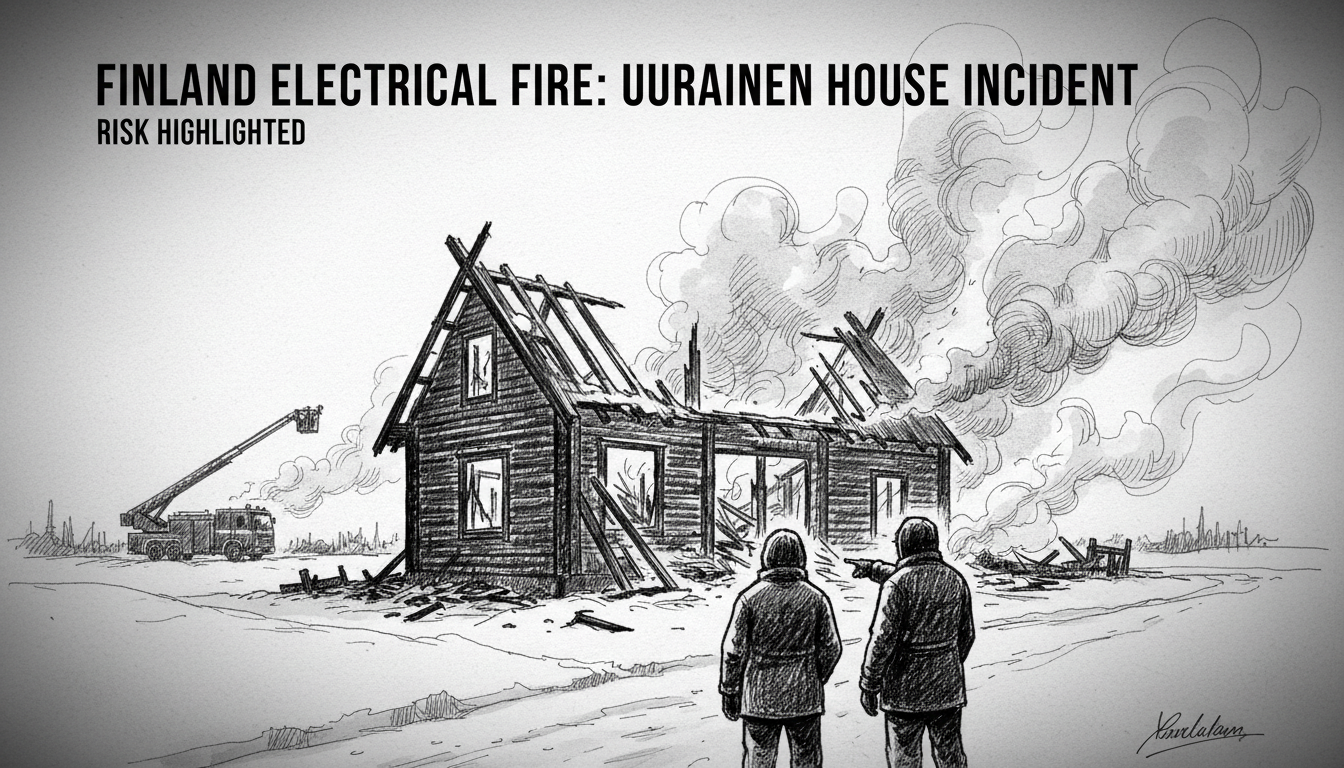
Finland electrical fires remain a persistent threat to homeowners, as demonstrated by a recent incident in Uurainen where a device ignited in a sauna dressing room. The fire on St. Stephen's Day, December 26th, was quickly contained by local rescue services, preventing structural damage and injuries. This event serves as a critical reminder of the hidden dangers posed by household electrical systems, even in a nation renowned for its stringent safety codes.
Emergency services received the call from the property on Virtasalmentie street at 12:41 PM. Firefighters extinguished the blaze, which was confined to a single room. By 13:30, crews were ventilating smoke from the premises. The efficient response limited the incident to a localized electrical fault, but the potential for a far more serious outcome was very real.
A Common Threat in Finnish Homes
While Finland's building regulations are among the most rigorous in Europe, aging wiring and faulty appliances continue to spark thousands of fires annually. Official statistics show there were 3,200 structural fires in residential buildings in 2022. Electrical faults are a leading contributor, estimated to be the cause of roughly 15% of all building fires nationwide. This translates to hundreds of preventable incidents each year.
"The Uurainen case is a textbook example of a near-miss," explains a veteran fire safety engineer familiar with residential risks. "The containment was successful, but the origin point—a sauna area—is particularly concerning due to typical humidity and temperature fluctuations that can stress electrical components. Homeowners often overlook these specialized spaces during routine checks." The expert, who advises municipalities on prevention, stresses that compliance with building codes during construction does not guarantee lifelong safety. Wear and tear on installations over decades is a major factor.
The Gap Between Regulation and Reality
Finland's National Building Code includes detailed specifications for electrical installations, mandating professional work and specific materials. However, a significant portion of the Finnish housing stock is aging. Many detached houses, like the one in Uurainen, were built during periods of rapid expansion in the 1960s, 70s, and 80s. Their original electrical systems may now be operating beyond their intended lifespan or under loads unimagined by their installers, thanks to the proliferation of modern electronics and appliances.
"The regulations are excellent for new builds and major renovations," says an electrical inspector from a large Finnish city. "The challenge lies in the existing stock. There is no nationwide mandatory periodic inspection regime for electrical systems in owner-occupied detached houses. It is largely left to homeowner awareness and initiative." This creates a patchwork of safety, where one household might be meticulously maintained while a neighboring property harbors deteriorating cables behind its walls.
Fire investigators note common culprits beyond just old wiring. These include overloaded power strips, damaged appliance cords, faulty installation of lighting fixtures, and defective consumer products. Saunas and laundry rooms, with their combination of heat, moisture, and electrical devices, are frequent sites of ignition.
Prevention and the Role of Homeowners
Authorities and insurance companies consistently advocate for a proactive approach. The most critical line of defense is a functioning smoke detector in every room, a legal requirement in Finland that is credited with saving countless lives by providing early warning. Beyond that, experts recommend visual checks of plugs, sockets, and cords for signs of damage, discoloration, or heat.
For older homes, a professional electrical inspection is strongly advised. "An electrician can assess the condition of the distribution board, grounding, and the fixed wiring," the fire safety engineer notes. "It's an investment that can prevent catastrophic loss. People service their cars regularly; their home's electrical system is just as important." Special attention should be paid to areas renovated by previous owners or by the current occupants themselves, as DIY electrical work often fails to meet code standards.
Appliance safety is another key factor. Using certified devices, unplugging non-essential electronics when not in use, and immediately replacing any item that sparks, smokes, or gives a shock are fundamental practices. The Finnish Safety and Chemicals Agency (Tukes) maintains recall lists for faulty products, a resource more homeowners should monitor.
Policy Considerations and Future Safety
The Uurainen incident, while minor, feeds into a broader discussion among safety professionals and policymakers. Some advocate for stronger measures, such as requiring an electrical condition certificate during real estate transactions, similar to mandatory energy performance certificates. This would bring hidden risks to light at a key moment of ownership change.
Others suggest public awareness campaigns targeting specific demographics, like elderly residents living in older properties who may be less likely to undertake disruptive inspection work. Municipalities could also consider incentivizing upgrades, especially for low-income homeowners, recognizing that fire prevention is a public good that reduces the burden on emergency services.
From an EU perspective, Finland's high standards align with broader European directives on product safety and construction. However, the persistence of electrical fires highlights a universal challenge: regulation can set a floor, but maintaining safety requires continuous vigilance, education, and investment by individual property owners. The Nordic model of strong public safety institutions works best when complemented by informed personal responsibility.
A Warning Without Casualties
The family in Uurainen experienced a frightening disruption on a holiday but escaped the worst consequences. Their story is a success for the local rescue service's rapid response. Yet, it also functions as an urgent, real-world alert. Every year, similar electrical faults in less fortunate circumstances lead to total property loss, severe injuries, and fatalities.
The data is clear—electrical systems are a leading fire starter in Finnish homes. The solution lies in a combination of unwavering adherence to safety codes for new work, systematic evaluation of existing installations, and a cultural shift towards treating home electrical systems as critical infrastructure requiring maintenance. As Finland continues to electrify its society with heat pumps, electric vehicles, and smart home technology, ensuring the underlying grid within our walls can handle the load safely becomes more important than ever. The quiet hum of electricity is a convenience we take for granted, but the Uurainen fire is a reminder that it demands our respect and attention.