
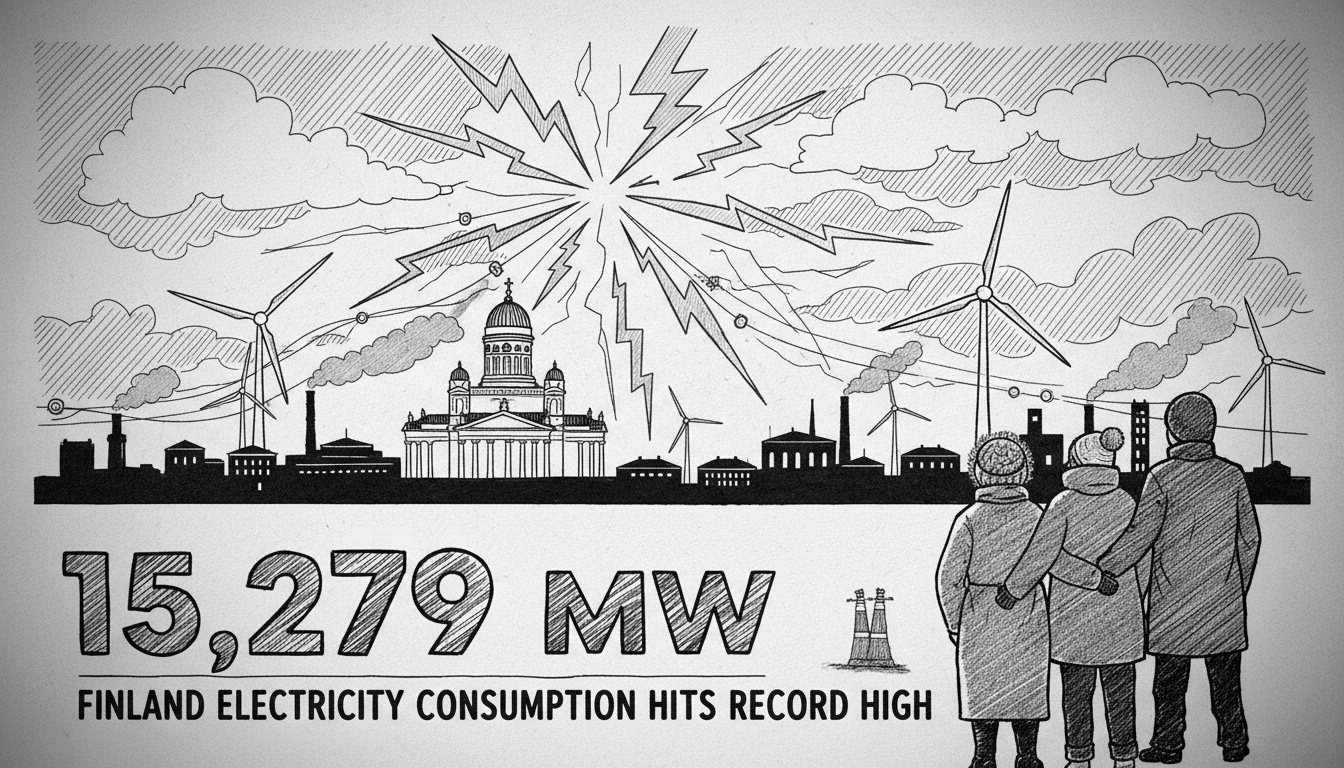
Finland's electricity consumption surged to an all-time record on Thursday, reaching 15,279 megawatts during the morning peak. The transmission system operator Fingrid confirmed the historic high occurred between 11:00 and 11:15, pushing the national grid to its operational limits. This unprecedented demand, occurring in a nation known for its energy-intensive industries and harsh climate, signals a critical stress test for Finland's energy security and its ambitious green transition. The record arrives amid a complex European energy landscape and a domestic political debate over the pace of new power generation investments.
A Perfect Storm of Cold and Industry
The immediate trigger for the consumption spike was a severe cold snap gripping the country, dramatically increasing demand for electric heating. However, experts point to a confluence of deeper factors. "This isn't just about a cold day," explains Dr. Elina Seppänen, an energy systems analyst at Aalto University. "We are seeing sustained high industrial activity, particularly in the forestry and chemical sectors, which are major electricity consumers. Simultaneously, our capacity for imports from Sweden and Norway was likely constrained, as those countries were also managing their own peak winter demands." This combination of high domestic demand and limited import options created the conditions for the record. Finland's energy mix, which includes a significant and steady baseload from nuclear power, was crucial in meeting this demand without resorting to emergency measures, though the margin was razor-thin.
Grid Stability and the Fingrid Challenge
For Fingrid, the state-owned grid operator, the record consumption represents both an achievement and a warning. The company successfully maintained grid stability without blackouts or significant disruptions, a testament to its infrastructure investments. Yet, the event highlights the growing pressure on the transmission network. "Our real-time monitoring showed the system operating at its very edge," a Fingrid control room engineer said, speaking on background. "Every megawatt of flexible consumption and every functioning power plant was essential in that moment." The incident will fuel ongoing discussions about the need for further grid reinforcements, especially to connect new wind farms in northern Finland to consumption centers in the south. It also underscores the importance of demand-side flexibility and energy storage solutions, which are still in nascent stages of development in the Finnish market.
Political Repercussions in the Government District
The record consumption has immediate political ramifications in Helsinki's government district. Minister of Economic Affairs Wille Rydman (Finns Party) acknowledged the strain while defending the government's energy strategy. "This record shows the Finnish economy is running hot, which is positive. Our task is to ensure the electricity supply keeps pace with demand. This is why we are streamlining permits for new nuclear and renewable projects," Rydman stated. Opposition politicians, however, seized on the event to criticize what they see as inadequate progress. Emma Kari, chair of the Green League's parliamentary group, argued, "This peak is a fire alarm for our climate and energy policy. We are still too reliant on fossil fuels for peak demand and imports. The government must accelerate the green transition, not hinder it with budget cuts to energy subsidies." The debate is set to continue in the Eduskunta, with the Social Democratic Party calling for a review of national energy security preparedness.
The European Context and Import Dependence
Finland's energy crisis cannot be viewed in isolation from the wider European market. Since severing most electricity imports from Russia, Finland has become more integrated with the Nordic Nord Pool market and the Baltic region. This integration offers security but also exposes the country to price and availability fluctuations across Northern Europe. During last Thursday's peak, the price of electricity in Finland spiked significantly, reflecting the scarcity of available power. Analysts note that while Finland has added substantial new wind capacity, its intermittency means it cannot always be relied upon during peak demand periods on windless, cold days. This reinforces the argument for a diverse energy portfolio. "The record proves we need everything: stable nuclear, flexible hydro where possible, rapidly deployable renewables, and strong interconnectors," says Professor Mikael Hildén of the Finnish Environment Institute. "The era of simple, single-source solutions is over."
Historical Context and Future Trajectories
To understand the significance of the 15,279 MW record, one must look at historical trends. Finland's electricity consumption has been on a slow but steady upward trajectory for decades, punctuated by economic recessions. The previous record was broken just a few years ago, indicating an acceleration. This growth is driven by three main factors: the electrification of heating as cities move away from district heating based on coal, the data center boom attracting major international investments, and the industrial sector's shift towards processes requiring more electricity, such as hydrogen production. The government's climate goal of carbon neutrality by 2035 implicitly requires even greater electrification of transport and industry. Therefore, experts agree that Thursday's record will not stand for long. "This is a milestone on a rising curve," Dr. Seppänen concludes. "The central question for policymakers is not if we will break this record again, but how we will ensure the power is clean, affordable, and reliable when we do."
The event serves as a stark national reminder. In the depths of a Nordic winter, the complex machinery of modern society—homes, hospitals, factories, and servers—hinges on the uninterrupted flow of electrons. Finland's successful navigation of this peak demonstrates resilience, but the narrow margin for error reveals a system under strain. The path forward demands difficult choices and significant investment. Will Finland's political consensus hold to build the necessary energy infrastructure of the future, or will short-term pressures derail the long-term transition? The stability of the grid, and the nation's economic health, depends on the answer.