
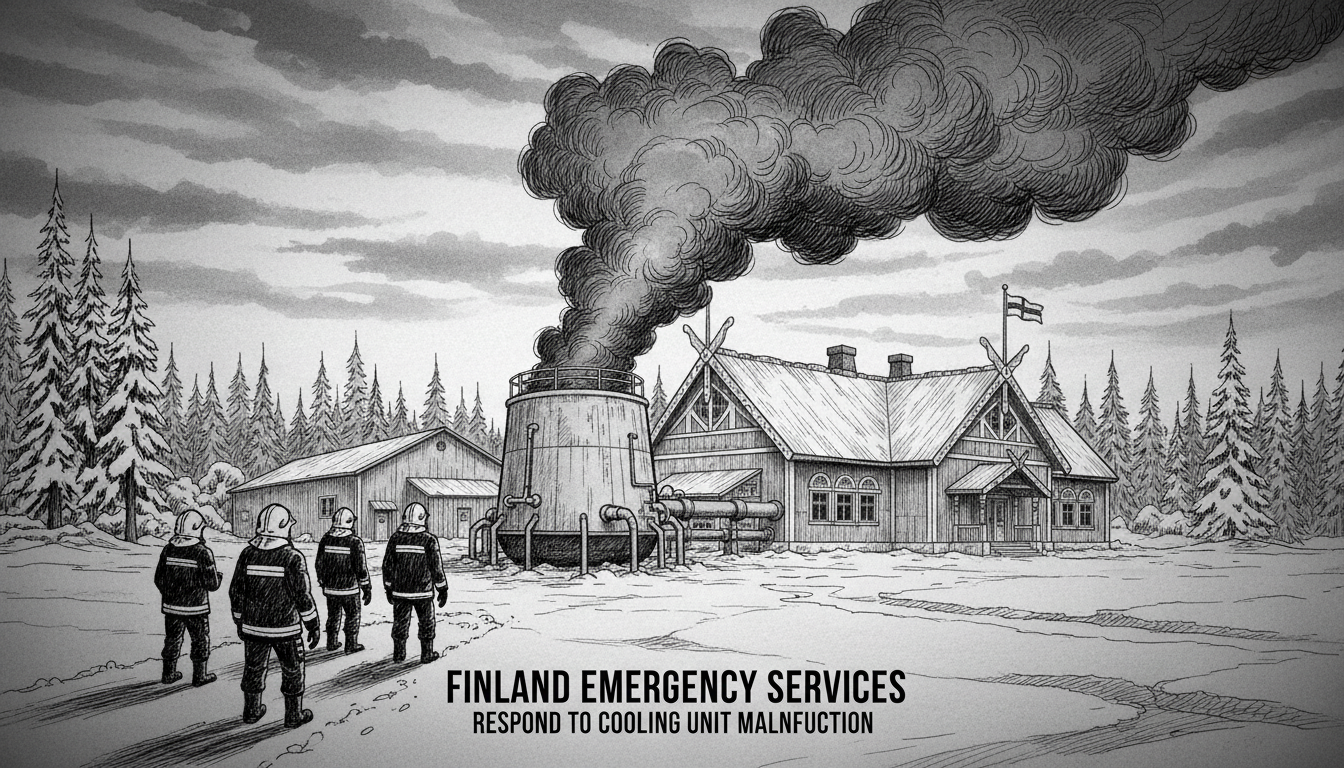
Finland's Central Finland Rescue Department responded to a technical fault in Jyväskylä on Monday afternoon. A cooling device malfunctioned and overheated in a building on Keljonkankaantie, prompting a call to emergency services at 3:50 PM. The incident, while minor, highlights the critical role of Finland's regional rescue departments in managing technical hazards that could escalate without prompt intervention.
Firefighters conducted a thorough inspection of the building and confirmed no fire had broken out. Their primary task shifted to performing mechanical ventilation to clear the air within the structure. No personal injuries were reported, and the incident caused no further damage. The swift resolution underscores the procedural efficiency for which Finnish emergency services are known.
A Routine Call with Underlying Risks
While the event in Keljonkangas district ended without consequence, experts point to the potential dangers inherent in such malfunctions. Cooling systems, particularly industrial or commercial units, often contain refrigerants that can be hazardous if released. These chemicals can displace oxygen or, in some cases, be flammable. An electrical fault causing overheating also presents a clear ignition risk.
"The response protocol is standard but vital," explained a veteran fire safety engineer from the Helsinki region, speaking on background. "Mechanical ventilation isn't just about comfort; it's a safety measure to ensure any potentially leaked gases are dissipated below dangerous concentrations. The fact that Jyväskylä crews implemented it shows a precautionary approach that prevents minor incidents from becoming major ones."
This operational philosophy is embedded in Finland's rescue services framework. The country is divided into 22 rescue departments, each responsible for fire and rescue services, emergency medical services, and environmental safety in their region. The Central Finland Rescue Department, which handled this call, covers 22 municipalities and a population of over 260,000 people.
The Infrastructure Behind the Response
Finland's emergency response system is a blend of municipal cooperation and professional readiness. The Central Finland Rescue Department operates with a central command in Jyväskylä and several local fire stations. Their fleet and personnel are trained for a wide array of incidents, from forest fires and traffic accidents to technical rescues and chemical hazards like the one potentially posed by a faulty cooling unit.
Jyväskylä itself, a city of 145,000, is a hub for education and technology. It is home to the University of Jyväskylä, which includes a strong Faculty of Information Technology. This academic presence fuels a local tech sector, meaning the city's building stock includes numerous server rooms, labs, and facilities where precise climate control is essential. A cooling system failure in such an environment could have significant operational and financial repercussions beyond immediate safety concerns.
"In a tech-heavy city, the reliability of infrastructure like cooling is directly tied to economic activity," said the engineer. "Data centers, research facilities, even modern office buildings rely on these systems. Emergency services understand that their role isn't just to put out fires, but to stabilize technical failures that threaten both people and property."
Comparing Nordic Emergency Response Models
Finland's rescue service model shares similarities with its Nordic neighbors but maintains distinct characteristics. Like Sweden and Norway, Finland operates a regional, publicly funded rescue service. However, Finland has a particularly strong emphasis on preventative safety inspections and public education, which contributes to a generally low number of serious fire incidents per capita.
A key metric is response time. In urban areas like Jyväskylä, the target response time for the first rescue unit is often under ten minutes. The Monday afternoon call, likely falling within a standard urban response window, allowed crews to assess and mitigate the situation before any secondary effects could develop. This efficiency is the result of strategic station placement, continuous training, and integrated alarm systems.
The Human Element in Technical Response
Behind the procedures and equipment are the rescue professionals themselves. A call for a "smelling of burning" or a malfunctioning device requires a crew to approach with caution, unsure if they are facing an electrical fire smoldering inside a wall, a chemical leak, or simply a burnt-out motor. The initial assessment on scene is a critical skill.
"You treat every call as a potential threat until you prove otherwise," shared a rescue department captain from the Tampere region, who requested anonymity as he was not directly involved in the Jyväskylä incident. "A cooling unit overheating could be a simple mechanical failure. It could also be a sign of a serious electrical fault that's about to ignite insulation material. Our job is to diagnose that on arrival, secure the area, and eliminate the hazard. The ventilation in this case was the final step in confirming the area was safe."
This mindset turns a seemingly minor event into a validation of training and preparedness. No injuries or damage is the optimal outcome, but it is an outcome achieved through professional action, not luck.
Broader Implications for Property and Facility Management
The incident serves as a reminder for building owners and facility managers across Finland, particularly in the commercial and industrial sectors. Regular maintenance of HVAC (Heating, Ventilation, and Air Conditioning) and cooling systems is not merely an operational cost; it is a core component of risk management. A scheduled service check can identify worn components, refrigerant leaks, or electrical issues long before they trigger an emergency call.
In the Finnish climate, where heating systems are rigorously maintained, cooling systems can sometimes be overlooked until the warmer months or until a failure occurs. Proactive maintenance aligns with the Finnish cultural principle of "varautuminen" – preparedness – which is evident in everything from personal emergency kits to national security policy.
A Testament to System Calibration
Ultimately, the event on Keljonkankaantie was a non-event in terms of consequences. But that is precisely what makes it noteworthy. It demonstrates a well-calibrated system functioning as designed: a hazard is reported, professional responders contain it efficiently, and public safety is maintained without disruption.
It contrasts sharply with emergency responses to major disasters, yet it forms the overwhelming majority of rescue department callouts. These routine interventions prevent the catastrophic fires and accidents that dominate headlines. They represent the daily, unheralded work of ensuring a safe living and working environment.
As Finnish cities continue to grow and their technological infrastructure becomes more complex, the role of rescue departments will increasingly intertwine with technical expertise. The response in Jyväskylä is a small-scale preview of that future—where firefighters and rescue specialists are not just extinguishing flames, but safeguarding the intricate systems that modern society depends on. The quiet efficiency of a Monday afternoon ventilation job in Keljonkangas is, in its own way, a marker of a resilient society. How many other potential incidents are prevented daily by this same network of vigilance and response?