
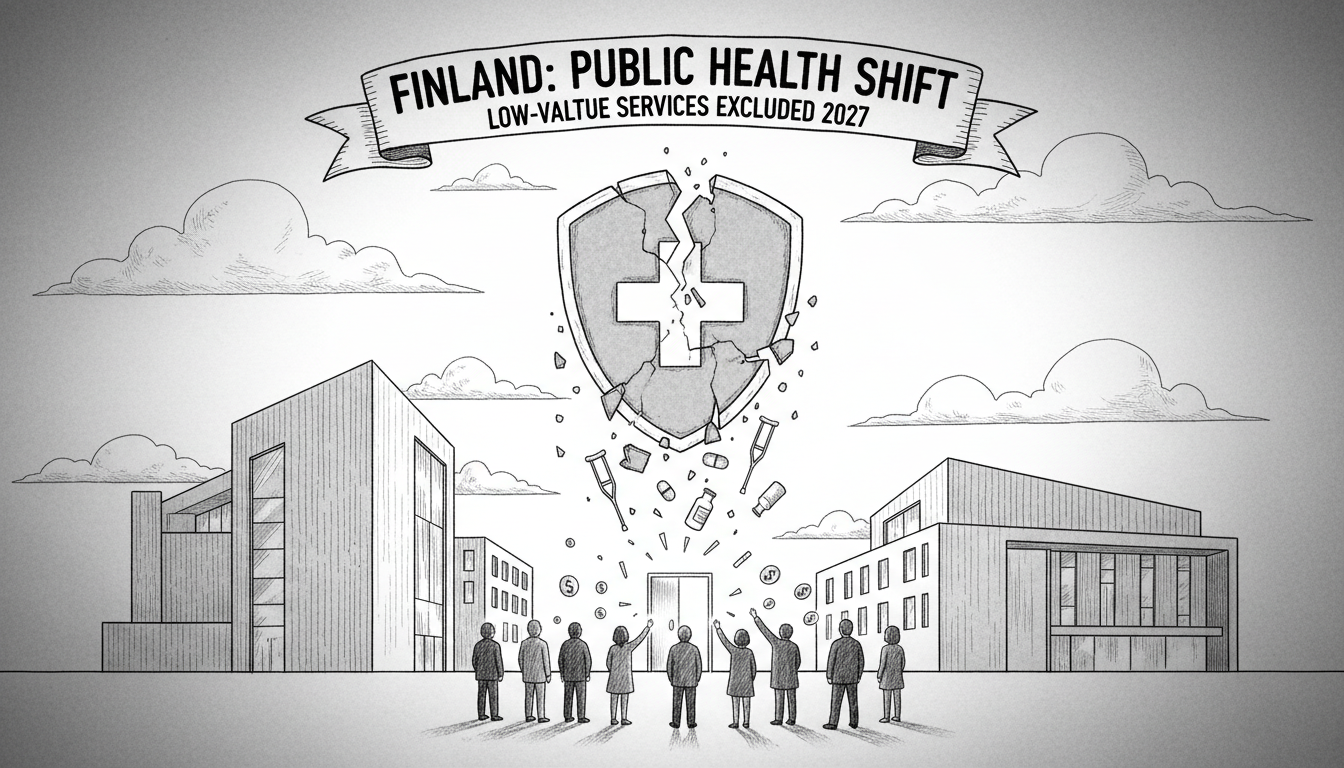
Finland's Ministry of Social Affairs and Health is preparing new legislation that will define principles for publicly funded healthcare services. The law aims to reduce treatments offering minimal health benefits that cost hundreds of millions annually. These services provide little health improvement or may even cause more harm than good.
The legislation would take effect in early 2027 and establish four key principles for public services. Treatments must address genuine healthcare needs with reasonable risks compared to expected benefits. Services must demonstrate proven effectiveness and offer reasonable costs relative to expected health improvements.
Officials cite full-body MRI scans for asymptomatic individuals as one example of low-benefit care. Such scans often detect harmless findings that then require unnecessary follow-up examinations. The proposed law would not affect private healthcare services that patients pay for directly.
The ministry conducted a survey among healthcare professionals before drafting the legislation. Most respondents believed patients currently receive better services when they demand them aggressively. The new principles aim to ensure care quality doesn't depend on how vocal patient advocacy groups become.
This represents a necessary cost-control measure for Finland's struggling public healthcare system, though patients may need clearer communication about what constitutes truly beneficial care.
Healthcare costs have risen significantly in specialized hospital care, draining resources from primary healthcare where early intervention could prevent more serious conditions. The legislation specifically emphasizes shifting focus toward preventive measures and early support.
The proposal includes principles of equality across regions and respect for human dignity. Treatment decisions won't consider a person's potential value to society. Many social services remain legally mandated regardless of these new principles.
Medical advancements constantly introduce new treatments like expensive cancer therapies and weight-loss medications. The framework aims to help healthcare providers make consistent decisions about which services deserve public funding as technology evolves.