
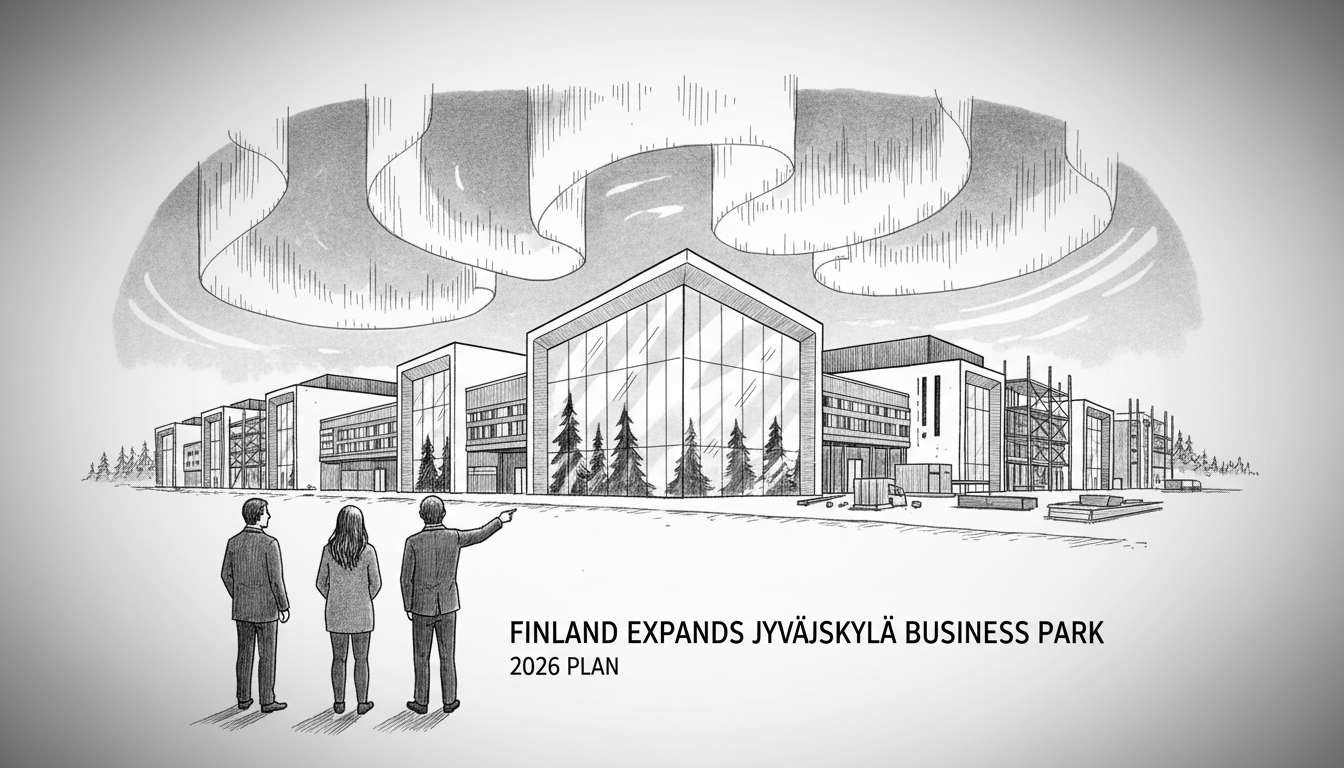
Finland's Jyväskylä is launching a major expansion of its Lintukangas business park, with a new zoning plan set to create space for environmentally compatible industry northwest of the Highway 4 interchange. The formal planning process began on December 9th, initiating a multi-year project that aims to bolster the central Finnish city's economic infrastructure and attract new investment. This strategic move underscores a regional push for growth beyond the capital region, focusing on sustainable industrial development in the heart of the country.
Jyväskylä, a university city and regional capital, has long positioned itself as a key economic and technological hub in Central Finland. The expansion of Lintukangas represents a concrete step in executing the city's economic development strategy, which prioritizes creating high-quality plots for businesses that generate employment without excessive environmental strain. The plan specifically targets operations classified as causing no significant environmental disturbance, aligning zoning with broader national sustainability goals.
A Deliberate Path to 2026
The timeline for the Lintukangas expansion is measured and deliberate. City planners estimate the draft zoning plan will be ready for initial review by late winter 2026. This lengthy process, common in Finnish municipal planning, involves detailed environmental assessments, traffic impact studies, and infrastructure planning for utilities like water, sewage, and electricity. The public will have two formal opportunities to provide feedback: first on the draft plan and later on the official zoning proposal, ensuring the process adheres to Finland's principles of open governance and public participation.
"This is not about rapid, speculative development," explains a city planning official familiar with the project. "It is about creating a well-planned, functional, and sustainable industrial area that will serve Jyväskylä's economy for decades. The 2026 timeline allows for thorough technical planning and meaningful public consultation, which ultimately leads to a better, more resilient end result." This approach contrasts with faster-track developments seen in some other countries, reflecting Finland's methodical and consensus-oriented planning culture.
Strategic Location and Economic Ambitions
The chosen location for the expansion is strategically significant. Situated northwest of the Highway 4 (E75) interchange, the new plots will offer excellent logistics connections. Highway 4 is a major north-south arterial route running from Helsinki to Lapland, providing direct access to national and international markets. This connectivity is a primary selling point for manufacturing, logistics, and export-oriented businesses that the city hopes to attract.
Economic analysts view the expansion as a necessary response to Jyväskylä's growing profile. The city is home to a strong cluster of expertise in information technology, clean technology, and health sciences, often spun out from the University of Jyväskylä. While Lintukangas traditionally hosts more traditional industry and logistics, its expansion is seen as providing essential space for the supporting industrial ecosystem that a modern knowledge economy requires. "Even the most digital companies often need physical space for prototyping, light assembly, or logistics," notes a regional development expert. "Lintukangas provides that crucial, connected industrial base."
The 'No Environmental Disturbance' Mandate
A defining feature of the planned expansion is its focus on accommodating business activity that does not cause significant environmental harm. This is not merely aspirational language but a specific Finnish land-use classification. It typically excludes heavy industries with major emissions, large-scale waste processing, or other operations with substantial local environmental impacts. Instead, the area is geared towards cleaner production, advanced manufacturing, warehousing, and technology services.
This environmental focus aligns perfectly with both Finland's and the European Union's stringent sustainability targets. The EU's Green Deal and Industrial Strategy push for a climate-neutral economy, influencing national and municipal planning decisions. By restricting new plots to low-impact businesses, Jyväskylä future-proofs the area against tightening environmental regulations and appeals to a growing segment of modern corporations for whom sustainability is a core operational requirement. It is a practical application of green policy at the municipal zoning level.
Navigating the Finnish Planning System
The journey from initial proposal to shovel-ready plots is governed by Finland's Land Use and Building Act. The process that began in December is the official start of detailed zoning, or "kaavoitukseen." The city council's decision to initiate planning sets the wheels in motion for planners and engineers. They will now survey the land, model traffic flows, plan drainage and utility corridors, and assess any natural or archaeological features on the site.
Public display periods are a legal requirement. Once the draft plan is ready, it will be publicly available for review and comment, often at the city's planning office and online. Feedback from residents, businesses, and organizations is collected and must be formally addressed by the planners before the proposal can be refined and sent for political approval. This transparent, though sometimes slow, system aims to balance development needs with community interests and environmental protection.
Regional Competition and Cooperation
Jyväskylä's expansion occurs within a competitive Nordic landscape for investment. Other Finnish cities like Tampere, Oulu, and Turku are also actively developing their business parks and offering incentives. Across the Baltic, Estonian and Swedish regions are equally aggressive. Jyväskylä's value proposition rests on its skilled workforce, high quality of life, central location, and now, the promise of new, sustainable industrial space.
Cooperation within the Central Finland region is also key. Jyväskylä acts as the economic engine, and its success benefits surrounding municipalities through employment and services. The Lintukangas expansion is likely to create jobs that attract workers from a wide catchment area, strengthening the entire region's economic fabric. Local business associations, such as Keski-Suomen Yrittäjät (Central Finland Entrepreneurs), have consistently advocated for more industrial land, arguing it is critical for retaining growing companies and attracting new ones.
The Long-Term View for Central Finland
The significance of the Lintukangas project extends beyond adding a few hectares of industrial land. It represents a vote of confidence in the economic future of Central Finland at a time when demographic and economic concentration in the Helsinki region is a national concern. For the Finnish government, supporting balanced regional development is a key policy objective. Projects like this, driven by a proactive city council, are essential for achieving that goal.
The 2026 completion target for the draft plan means actual construction on new plots may not begin until the late 2020s. This long horizon requires foresight. Planners must anticipate the needs of industries that may not yet exist and ensure infrastructure is adaptable. Will the area need enhanced digital connectivity for automation? Are charging infrastructures for electric freight vehicles necessary? These are the questions embedded in a planning process that looks decades ahead.
For businesses currently operating in Jyväskylä or considering a move to Finland, the message is clear: the city is preparing for future growth in a responsible, sustainable manner. The expansion of Lintukangas is a piece of critical economic infrastructure, planned with the deliberate care characteristic of Finnish society. Its success will be measured not just by the square meters of space filled, but by the quality of jobs created and its contribution to a resilient, green regional economy. As the planning machinery slowly and steadily advances toward 2026, it builds the physical foundation for Jyväskylä's next chapter of development.