
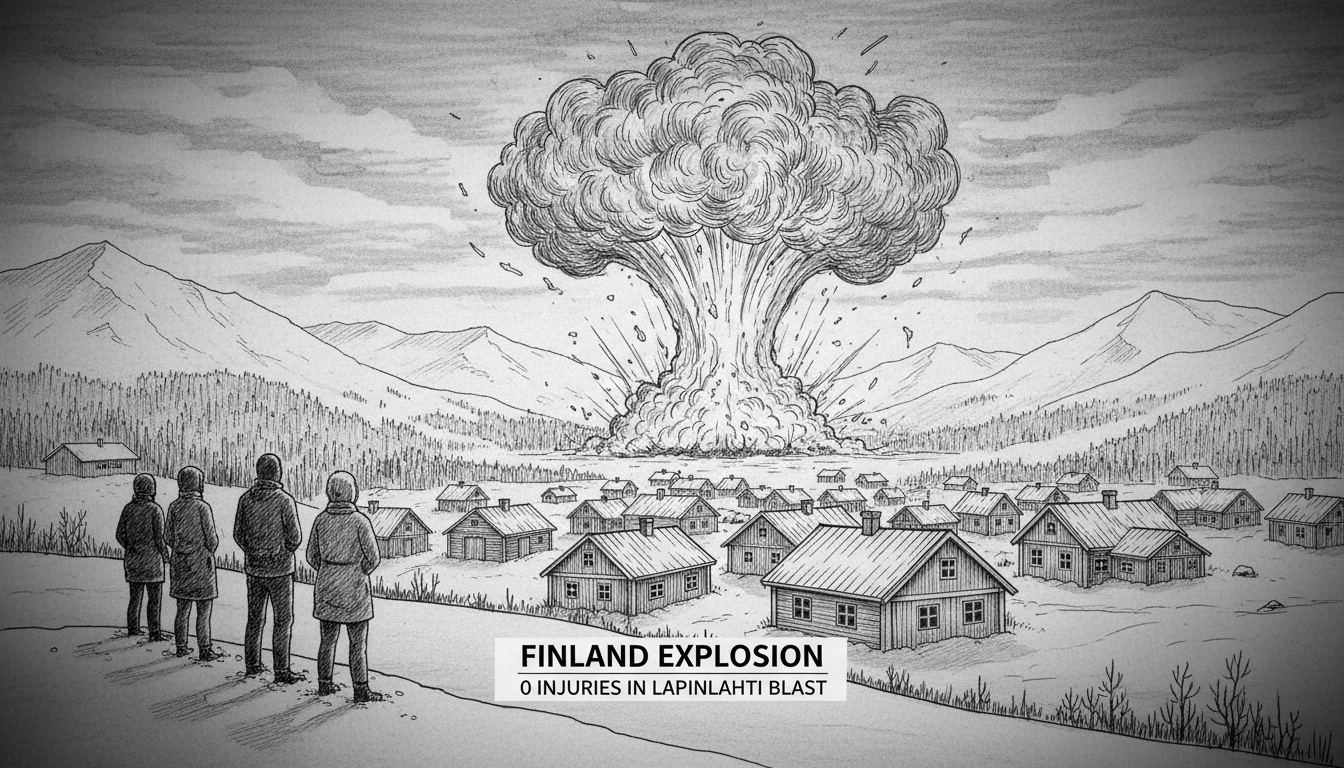
Finland explosion in Lapinlahti destroyed a detached house garage Saturday afternoon, yet caused no human casualties as the occupants were fortuitously absent. Emergency services received the call at 1:30 PM local time after a neighbor extinguished a small fire following the blast, which completely collapsed the structure. The North Savo Rescue Department and Eastern Finland Police Command are investigating the incident on Ahvenkuja street, with no immediate cause determined for the explosion that rattled the quiet municipality.
Scene of the Incident and Rapid Response
Ville Tuovinen, the on-duty fire chief, confirmed the garage was attached to the main house and had imploded from the force. His statement outlined that the quick action of a nearby resident prevented the initial fire from spreading. Police officers joined rescue personnel at the site to secure the area and begin a methodical examination of the debris. This coordinated response highlights Finland's well-practiced emergency protocols, which are frequently tested in rural areas where resources must be mobilized efficiently.
The absence of injuries is a stroke of luck in an event that could have been far more severe, given the garage's connection to the living quarters. Initial reports from authorities emphasize that the investigation will be thorough, focusing on potential sources like propane tanks, automotive chemicals, or other volatile substances commonly stored in such spaces. Finnish building codes, which mandate certain safety standards for attached structures, will likely form part of the preliminary review to assess if any regulations were breached.
Linking Local Safety to National Policy Frameworks
While this is a local incident, it immediately invokes Finland's national commitment to stringent safety regulations governing explosives and hazardous materials. The Ministry of the Interior and the Finnish Safety and Chemicals Agency (Tukes) maintain comprehensive rules that trace back to both national legislation and broader European Union directives on accident prevention. For instance, the EU's Seveso III Directive on controlling major-accident hazards involving dangerous substances influences how Finland monitors chemical storage, even in residential settings.
Experts in forensic engineering and public safety, such as those from the VTT Technical Research Centre of Finland, would stress the necessity of a meticulous site analysis. Dr. Elina Salminen, a risk assessment specialist familiar with such cases, noted in a past commentary that rural garage explosions often stem from ignored maintenance of heating systems or improper storage of fuels. 'The investigation must rule out every possibility, from simple gas leaks to more complex issues like homemade explosive materials, which are exceptionally rare but not impossible,' Salminen explained. Her perspective underscores the systematic approach Finnish authorities adopt.
Historical Context and Regional Profile
Lapinlahti, situated in the North Savo region, is characterized by its agricultural economy and dispersed population, making such incidents particularly disruptive to close-knit communities. The municipality has a low crime rate and is not typically associated with industrial hazards, which shifts focus toward domestic causes. Finland's history with explosives is largely defined by strict control; the Police Administration's licensing for fireworks and pyrotechnics is notoriously rigorous, reflecting a societal priority on accident prevention.
This event occurs against a backdrop of ongoing national discussions about updating building safety codes, especially in older detached houses that may not meet contemporary standards. Members of Parliament from the Centre Party, which holds strong support in rural areas like North Savo, have previously advocated for increased municipal funding for safety inspections. While no direct political statement has been issued yet, local MPs are likely to monitor the investigation's findings closely, potentially prompting questions in the Eduskunta about reinforcing prevention measures.
Potential Causes and Preventative Measures
Authorities are examining several plausible causes for the explosion. Common culprits in similar past incidents across Finland include leaking liquefied petroleum gas (LPG) cylinders used for grilling or heating, accumulations of gasoline vapors from lawn equipment, or even ammonium nitrate-based fertilizers stored improperly. Illegal manufacturing or storage of explosives is considered highly unlikely but must be investigated to comply with procedural rigor. The neighbor who extinguished the fire may provide crucial eyewitness accounts regarding any unusual odors or sounds prior to the blast.
Finland's rescue services have extensive guidelines for handling such scenarios, often developed in collaboration with the European Emergency Number Association (EENA) to ensure best practices. The quick containment of the fire prevented further damage to the main house, showcasing the value of community awareness and basic firefighting knowledge. This incident may renew calls from the Finnish National Rescue Association (SPEK) for broader public education campaigns on household chemical safety, particularly in rural districts where professional response times can be longer.
Implications for Housing and EU Compliance
From a policy standpoint, this explosion subtly tests Finland's adherence to the EU's General Product Safety Directive and construction product regulations, which aim to ensure materials used in homes do not pose undue risks. While the garage was a secondary structure, its collapse raises questions about the durability of building components in extreme events. The Ministry of Environment and the Finnish Transport and Communications Agency (Traficom) oversee relevant standards, and any discovered deficiencies could lead to tightened inspections nationwide.
As the investigation progresses, officials will compile a detailed report that could influence future safety directives from Helsinki. The Finnish government, currently led by Prime Minister Petteri Orpo's coalition, has emphasized regulatory efficiency without compromising public protection. This balance is critical in rural communities where residents value self-sufficiency but must navigate complex safety rules. The Lapinlahti case may become a reference point in ongoing debates about decentralizing safety enforcement while maintaining high uniform standards across the country.
Conclusion: A Narrow Escape and Ongoing Vigilance
The Lapinlahti garage explosion serves as a stark reminder of latent dangers in everyday environments, mitigated this time by chance and prompt neighborly action. With no injuries, the focus shifts entirely to prevention and understanding the root cause to avert future occurrences. The thoroughness of the Finnish investigative process, from local police to national experts, will provide answers that resonate beyond this quiet street. As authorities piece together the evidence, the community awaits reassurance that their homes remain sanctuaries, not hazards, under Finland's protective regulatory umbrella.