
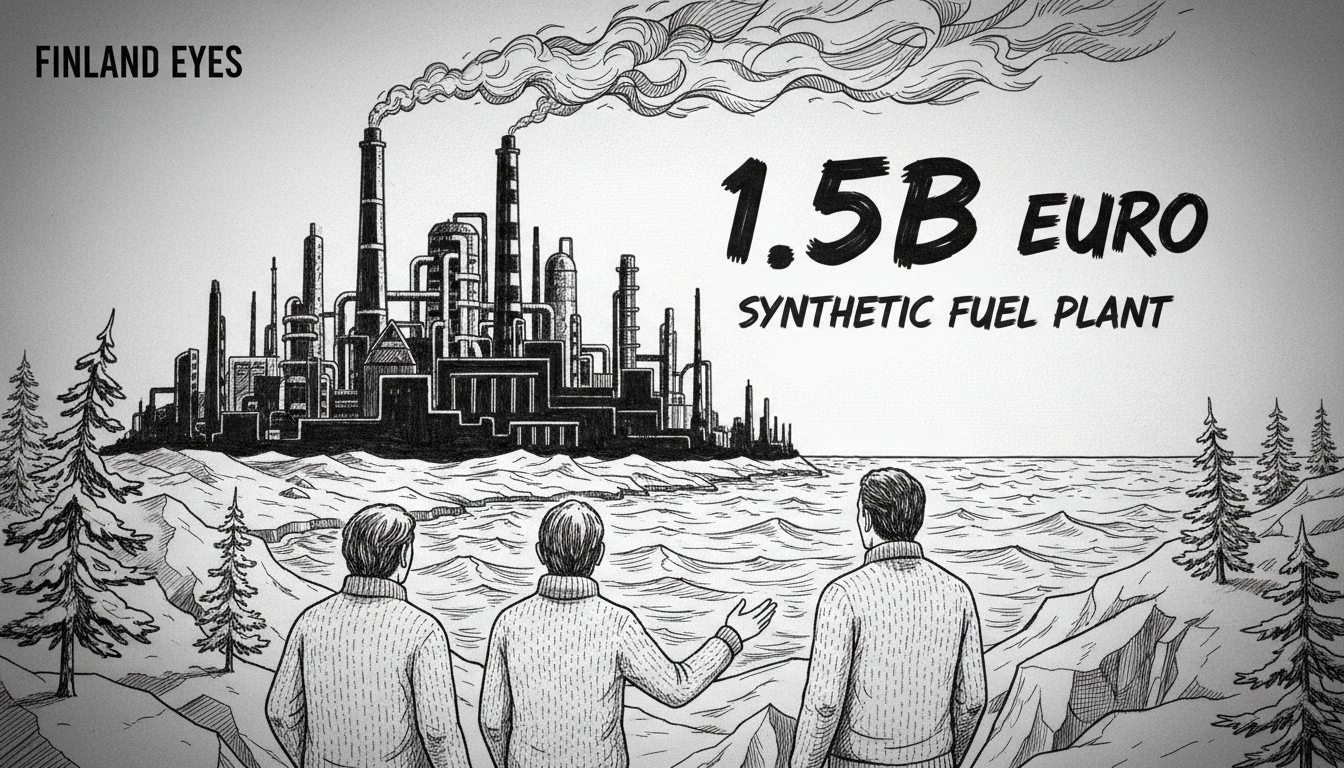
Finland could see a 1.2 to 1.5 billion euro investment in a synthetic aviation fuel facility, marking one of the largest green energy projects in recent Nordic history. Norwegian company Norsk e-Fuel has signed a preliminary agreement with Finnish steelmaker Outokumpu to explore constructing a massive production plant in Tornio, on the Gulf of Bothnia. The proposed plant would create approximately 250 local jobs and aims to start operations by 2032, pending a final investment decision in 2028. This move directly responds to escalating European Union climate mandates for the aviation sector, placing Finland at a strategic crossroads between industrial policy and environmental targets.
A Strategic Response to EU Climate Mandates
The initiative is not occurring in a vacuum. It is a direct consequence of the EU's ReFuelEU Aviation regulation, which mandates that sustainable aviation fuels (SAF) constitute 2% of all jet fuel uplift at EU airports by 2025. That requirement escalates sharply to 70% by 2050. Synthetic e-fuels, produced using renewable electricity, water, and captured carbon dioxide, are considered a critical component for decarbonizing long-haul flights where battery or hydrogen alternatives remain technologically distant. "Finland's government has been actively seeking investments that align with our carbon neutrality goals and the EU's Fit for 55 package," said a senior official from the Ministry of Economic Affairs and Employment, speaking on background. The Eduskunta, Finland's parliament, has recently debated national measures to support such ventures, recognizing the competitive advantage of Finland's abundant renewable energy resources.
The Tornio Location and Industrial Logic
The choice of Tornio is highly strategic. The plant is planned for integration with the existing Outokumpu stainless steel factory. This proximity offers potential collaborative benefits, particularly in terms of energy and heat exchange. The steel plant's operations could provide a stable base load or access to by-products like excess heat, improving the overall efficiency of the e-fuel production process. Outokumpu, in its statement, framed the partnership as part of its own sustainability journey. For the Tornio region, which has a strong industrial heritage, the project promises to counter demographic challenges and secure high-skilled employment. Local policymakers in Lapland have expressed cautious optimism, noting the need for detailed environmental impact assessments and community consultations in the coming years.
Scaling Up: The Path from Study to Production
Norsk e-Fuel's timeline is ambitious but deliberate. The company will conduct a feasibility study this year, with a multi-year gap before any final decision. This underscores the significant technical and financial hurdles facing e-fuel production at scale. The primary challenge is the enormous demand for renewable electricity required to power the electrolysis process that produces hydrogen, a key feedstock. "Finland's wind power capacity is growing, but a project of this magnitude would require dedicated renewable generation, potentially new grid connections, and a stable regulatory framework," noted an independent energy analyst based in Helsinki. The project's success hinges on the continued decline in renewable energy costs and the availability of generous EU innovation funds, such as those from the Innovation Fund or the Connecting Europe Facility.
Finnish Policy and the European Context
From the government district in Helsinki, the project is viewed through multiple lenses: energy security, industrial strategy, and climate leadership. Finland aims to be carbon neutral by 2035, a target that requires transforming all economic sectors. The transportation sector, and aviation in particular, remains a stubborn source of emissions. Minister of Transport and Communications Lulu Ranne has previously emphasized the need for domestic SAF production to secure fuel supply and create export opportunities. Furthermore, the EU's energy independence goals in the wake of geopolitical tensions add another layer of urgency. By hosting such a facility, Finland could position itself as a net exporter of green fuels within the Nordic-Baltic region, altering its traditional energy trade dynamics.
Expert Perspectives on Feasibility and Impact
Energy economists point out that while the investment figure is staggering, it aligns with the capital-intensive nature of pioneering energy technology. "The 250 jobs are significant for Tornio, but the real value lies in the technology spillovers and supply chain development," said a professor of environmental policy from the University of Helsinki. The project also tests the resilience of Finland's permit processes and public acceptance for large-scale industrial projects in the green transition. Critics argue that such massive investments in synthetic fuels might divert resources from more immediate emissions reductions in other sectors. Proponents counter that aviation needs a viable long-term solution, and early mover advantage could be substantial.
The Road Ahead to 2032
The coming years will be critical. The feasibility study must confirm the availability of renewable power, carbon dioxide sources, and economic viability under future fuel price scenarios. The Finnish government may need to consider specific policy incentives or guarantees to de-risk the investment for Norsk e-Fuel. This could include discussions on carbon contract for difference schemes or tailored tax arrangements. The project will also require meticulous navigation of both Finnish and EU environmental legislation. As the EU steadily raises its SAF blending mandates, the market pull for e-fuels will intensify. Finland's decision to facilitate this plant could signal a broader commitment to becoming a hub for green industrial innovation, moving beyond its forestry and metal traditions.
The proposed Tornio plant is more than a single industrial investment; it is a litmus test for Finland's ability to translate ambitious climate rhetoric into concrete, job-creating projects. If successful, it would weave a new thread into the nation's economic fabric, linking northern resources with European climate policy. The ultimate question for policymakers in Helsinki is whether they can create the conditions where such billion-euro bets on a green future are not just explored, but conclusively made.