
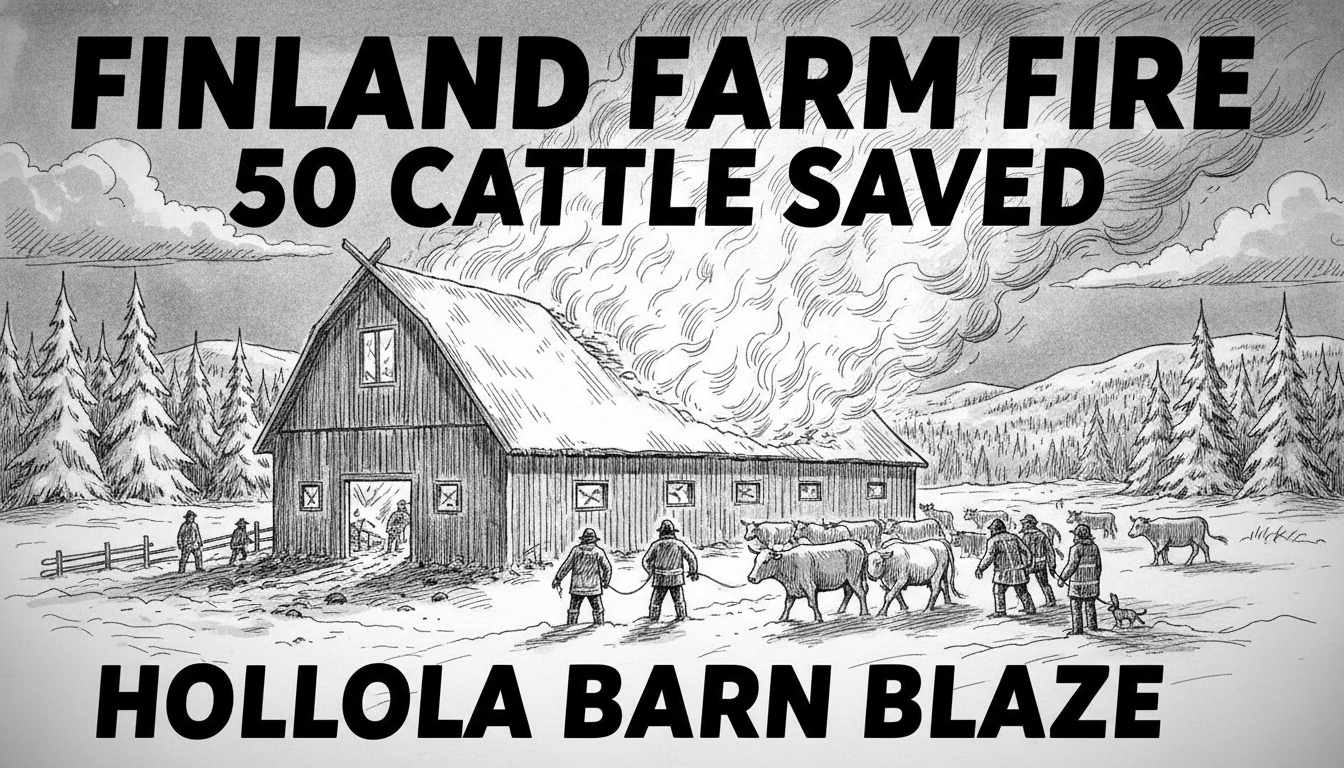
Finland farm fire in Hollola on December 10th destroyed a large cattle barn but spared nearly 50 animals in a dramatic rescue. Farm owner Mika Hämäläinen broke part of an outer fence with his own hands to release trapped bulls as flames engulfed the structure. The incident at the Tupala farm highlights the ever-present dangers facing Finland’s agricultural heartland and the resilience required to sustain it.
“It was a matter of minutes,” Hämäläinen said, describing the frantic rescue. “If the wind direction had turned, the hall would have been full of smoke – then the animals would not have been saved.” His quick action, coupled with the rapid response of a local contract fire brigade, prevented a total catastrophe. While a significant portion of the barn was lost, the farm's operations continue, a testament to the determination common among Finnish farmers.
A Night of Flames and Quick Action
The fire broke out at the Huljalan Tupala farm in the municipality of Hollola, located in the Päijät-Häme region. This area is part of Finland's vital agricultural belt, where family-run farms like Hämäläinen's form the backbone of rural communities. The barn, a substantial structure necessary for overwintering cattle, quickly became an inferno. The primary goal shifted from saving the building to saving the livestock inside.
Hämäläinen’s decision to break the fence was an instinctive move born of necessity. It allowed the largest animals, the bulls, a clear path to safety in a nearby pasture. The successful evacuation of all cattle is a rare positive outcome in such blazes, where loss of life is often devastating both emotionally and economically. The contract fire brigade’s ability to save part of the building may help mitigate rebuilding costs and logistical nightmares.
The Economic and Emotional Toll on Finnish Farms
A fire like this strikes at the core of a farming family's livelihood. For a cattle farm, the barn is not just a building; it is a central piece of infrastructure for daily operations, animal welfare, and feed storage. Its destruction disrupts everything. Finland has approximately 46,000 farms, with cattle operations representing a significant portion of the agricultural sector. Each farm is a small business, and such an event can threaten its viability.
“The immediate aftermath is chaos, followed by a long period of recovery,” explains a rural advisor from the Pro Agria association, which provides expert services to farmers. “Beyond the physical damage, there’s the profound stress on the farmer and the family. These animals are their daily responsibility. Saving them is the first priority, but then the reality of rebuilding sets in.” The advisor emphasized that while insurance is crucial, it rarely covers all indirect costs and never the emotional strain or lost time.
Fire Safety and Resilience in Rural Finland
The Hollola fire serves as a stark reminder of the importance of fire safety protocols on farms. Agricultural buildings can be vulnerable due to stored hay, dust, electrical systems, and machinery. Experts consistently advocate for regular checks of electrical wiring, the strategic placement of fire extinguishers, and clear evacuation plans for livestock. Having a plan for where to move animals in an emergency can save critical minutes.
Finland’s network of contract fire brigades, often serving rural areas, plays an indispensable role. Their local knowledge and rapid deployment are key factors in limiting damage. The resilience displayed by farmers like Mika Hämäläinen is supported by a broader ecosystem. This includes agricultural insurance schemes, support from cooperatives like Valio for dairy farmers, and the possibility of applying for business disruption aid under certain national and EU-funded rural development programs.
The Broader Context of Finnish Agriculture
This incident occurs against a backdrop of ongoing challenges for Finnish agriculture. The sector is vital for national food security and the maintenance of the countryside, but it faces pressures from climate change, input costs, and market fluctuations. EU Common Agricultural Policy (CAP) subsidies and national support are designed to ensure stability, but a single catastrophic event can overwhelm that safety net for an individual family.
The Finnish government and the Ministry of Agriculture and Forestry have policies aimed at maintaining a viable farm structure. The survival of individual farms after a crisis is seen as crucial for sustaining rural communities. The fact that the Tupala farm continues operating despite the fire is exactly the kind of resilience these policies aim to foster. It underscores a fundamental truth about Finnish farming: it is as much about perseverance and adaptation as it is about cultivation and animal husbandry.
Looking Ahead: Recovery and Reflection
For the Hämäläinen family, the path forward involves navigating insurance assessments, planning a new barn, and maintaining daily care for their rescued herd. The community in Hollola will likely rally around them, a common response in tight-knit rural areas. The physical rebuilding will take months, but the emotional impact of that night will last much longer.
The fire raises questions for the wider agricultural community about preparedness. Will this event prompt neighboring farms to review their own fire safety measures? How can technology, such as smoke alarms or thermal sensors in barns, be more widely adopted to provide earlier warnings? While Finland’s farm safety record is strong, every preventable loss is one too many.
Finland’s landscape is dotted with thousands of barns just like the one in Hollola, each holding the livelihood and legacy of a family. The story of the Tupala farm fire is not just one of destruction, but of narrow escape, swift action, and the unwavering will to carry on. It reminds us that the future of Finnish agriculture is secured not only by policy in Helsinki or Brussels, but by the courage of individuals on the ground when disaster strikes. As the clean-up begins, the saved cattle grazing in the winter pasture stand as a powerful symbol of what was preserved against the odds.