
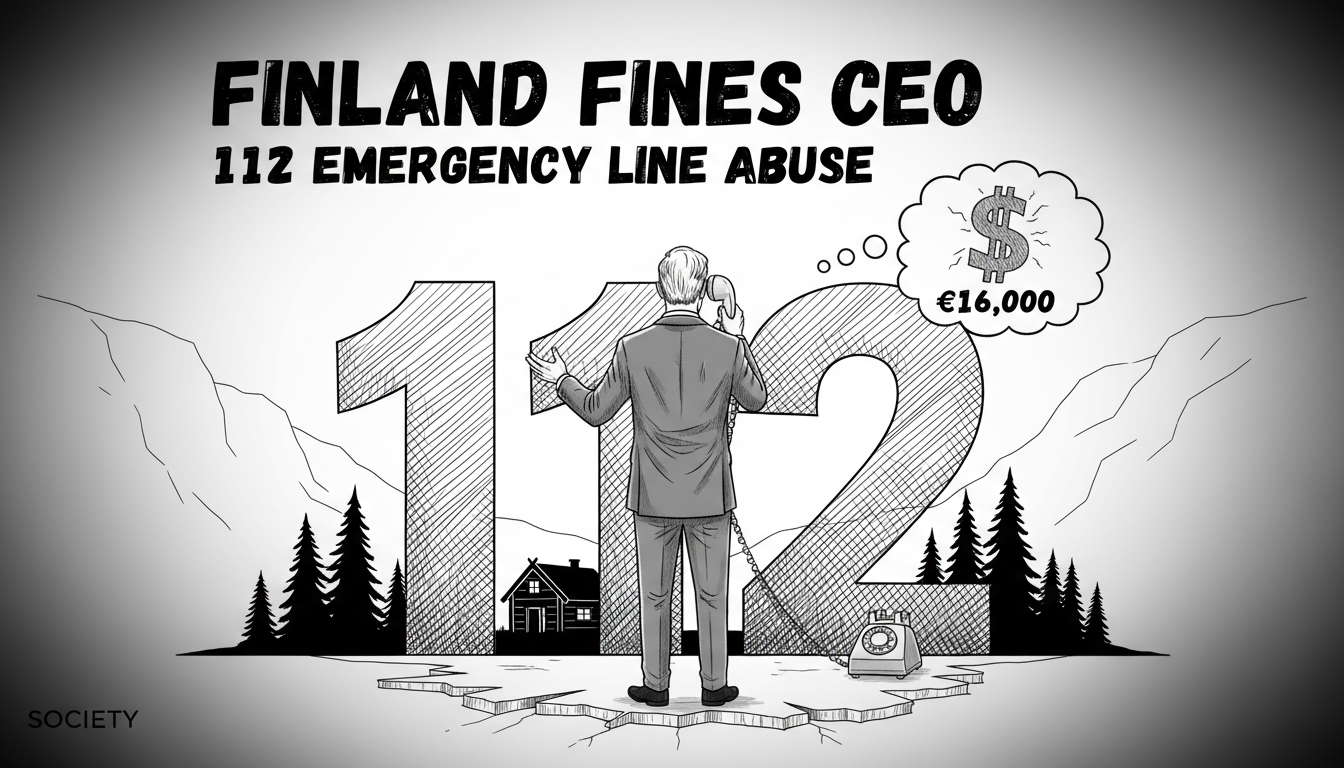
Finland's emergency number 112 is a critical lifeline, but its misuse by a drunk CEO has resulted in a landmark financial penalty. A Helsinki district court has convicted a 50-year-old company director and ordered him to pay over 16,000 euros in fines for making six abusive calls to the emergency services in half an hour. The case highlights the severe legal and operational consequences of harassing a system designed solely for life-threatening situations.
The incident occurred in the early hours of an April morning in Helsinki. According to court documents, the intoxicated man repeatedly dialed 112, the unified emergency number for police, fire, and medical services across Finland. During the calls, which were transcribed from the pre-trial investigation, he hurled insults at the emergency dispatchers and made baseless demands for police officers to be sent to his location. In one call, after boasting about founding a leisure business, he asked the dispatcher what they had founded, then called them a "zero guy" and threatened to beat them up.
A Costly Half-Hour of Harassment
The Helsinki District Court delivered its verdict, sentencing the CEO to 25 day-fines. Finland's day-fine system scales penalties to the offender's income, resulting in a total of 16,080 euros. The court found him guilty of telecommunications harassment, specifically for unlawfully obstructing or interfering with communications essential for safeguarding human life. The police investigation concluded that no clear motive or legitimate reason for the calls existed; there was no emergency, and the actions appeared purely malicious. Following the calls, police located and detained the man on the street using phone tracking. He initially denied any criminal wrongdoing.
Prosecutors argued that the unnecessary calls consumed valuable emergency center resources. Every second a dispatcher spends on a hoax or abusive call is a second they are not available to someone experiencing a heart attack, a fire, or a violent crime. The court's ruling explicitly acknowledged this danger, stating the calls were apt to delay help for someone in genuine need. This legal recognition of the systemic harm caused by such abuse is a cornerstone of Finland's strict approach to protecting its emergency response infrastructure.
The High Stakes of Emergency Line Integrity
Finland's 112 service is a model of centralized efficiency, but this centralization also makes it vulnerable to targeted abuse. A single individual can, in a short period, disrupt the workflow of a regional emergency center. Experts in emergency communications stress that these systems operate on a principle of prioritized urgency. A flood of nuisance calls can create queue delays, potentially with fatal outcomes. The Finnish legal framework reflects this acute sensitivity. The offense of "tietoliikenteen häirintä" (telecommunications harassment) in this context is treated with particular seriousness, precisely because it compromises public safety.
"The 112 line is not a customer service line for complaints or drunken rants," said a veteran emergency services coordinator, speaking on background about general protocol. "It is a dedicated channel for crises where seconds count. When someone deliberately blocks that channel, they are gambling with other people's lives. The substantial fine in this case sends a necessary message about the societal value we place on keeping this line clear." The penalty's size, directly tied to the perpetrator's high income, underscores the principle that the punishment must carry a deterrent weight proportionate to the offender's means.
Legal Precedent and Deterrent Value
This case is not about a simple prank call; it is about the willful impairment of a critical public safety function. The prosecution successfully demonstrated the illicit intent and the tangible risk created by the CEO's actions. While the final detailed court ruling is still awaited, the initial judgment confirms the prosecution's requested sentence was granted in full. This outcome reinforces a clear legal precedent: harassing emergency responders is a high-cost crime.
The Finnish model of income-based day-fines ensures that financial penalties are felt equally across economic strata. A fine that might be a minor inconvenience for a high-earning executive can be a significant deterrent. In this instance, the court converted the gravity of the offense into a financial penalty that matches the defendant's financial capacity, making the consequence personally substantial rather than symbolically small.
A Broader Lesson in Civic Responsibility
The story of the CEO's expensive half-hour extends beyond the courtroom. It serves as a stark public reminder of the social contract surrounding emergency services. These systems function on public trust and responsible use. Every citizen has a role in preserving their integrity. The case has sparked discussion in Finnish media about respect for public sector workers and the invisible costs of resource diversion. Emergency dispatchers, who already work in high-stress environments, should not have to endure verbal abuse while performing their duties.
Authorities hope the high-profile nature of this conviction will educate the public. The 112 number is a tool for salvation, not a venue for venting frustration. The police investigation's finding—that no rationale for the calls existed—highlights the senselessness of the crime. It was an act of pure disruption with no goal other than to harass. The system's design, which allowed for rapid location and arrest, also shows how seriously such incidents are pursued.
Looking Ahead: Protection and Prevention
Finland will continue to prioritize the security of its emergency communications. While technological solutions like improved call filtering are part of the ongoing strategy, the primary defense remains a well-informed public and a robust legal deterrent. This conviction demonstrates the judiciary's willingness to apply that deterrent at full strength. For emergency service professionals, the ruling offers a measure of vindication, affirming that the law recognizes the unique pressures and importance of their work.
Will this case reduce the number of abusive calls to 112? It certainly establishes a powerful example. The next time someone considers drunkenly dialing the emergency number to insult the operator, they might remember the CEO who paid more than sixteen thousand euros for the privilege. The ultimate cost of such actions, however, is never truly measured in euros. It is measured in the potential delay of a life-saving response to another citizen in desperate need. That is a cost the Finnish system is designed to prevent, and this ruling powerfully reinforces that design.