
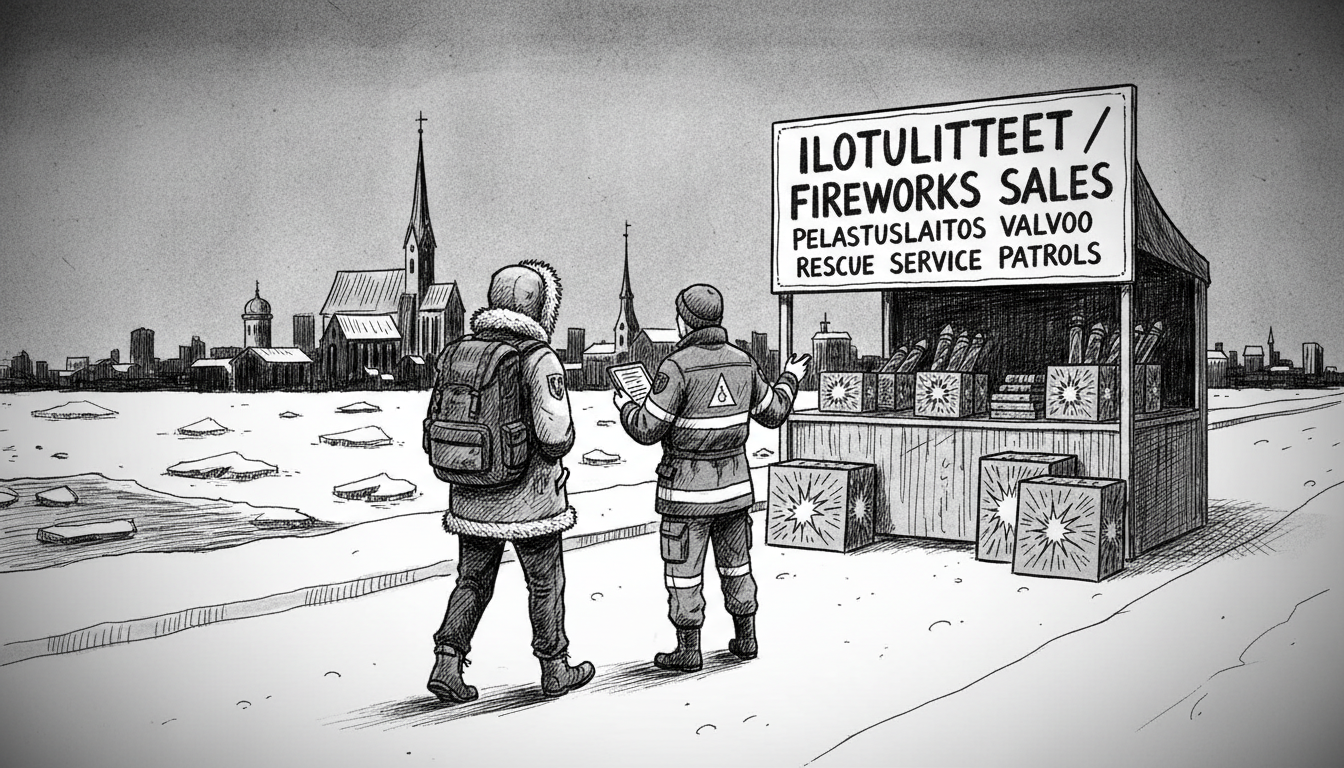
Finland fireworks sales are under strict surveillance this week as the Central Finland Rescue Department launches its annual enforcement operation. Keski-Suomen pelastuslaitos is conducting inspections at all licensed retail points across the region from December 27th to 31st, ensuring vendors comply with stringent safety and storage regulations. This coordinated effort represents the frontline of Finland's balanced approach to a beloved but potentially dangerous New Year's tradition, where regulatory oversight aims to prevent accidents before they happen.
"Our inspectors are visiting every sales location to verify licenses, check storage conditions, and ensure safety information is prominently displayed," a senior rescue department official said in a statement. The operation focuses on the five-day legal sales window, a period tightly controlled by national law. Officials confirm that only businesses holding a valid permit from the local rescue authority can legally sell fireworks to the public, with all products required to carry CE marking and Finnish safety instructions.
The Five-Day Window of Controlled Celebration
Finnish law creates a narrow corridor for fireworks commerce and use. Retail sales are confined exclusively to December 27-31, while public ignition is generally permitted only from 6:00 PM on New Year's Eve until 2:00 AM on January 1st. Municipalities, however, possess the authority to impose further restrictions, often banning fireworks entirely in dense urban centers, near hospitals, or in areas with vulnerable wildlife. This decentralized model allows for local risk assessment while maintaining a national framework.
The rationale behind this short sales period is deeply pragmatic. It limits the time fireworks are in public possession, reducing risks associated with improper storage in homes and curbing impulsive, non-celebratory use. Rescue services across Finland, not just in Keski-Suomi, ramp up public communications during this window, emphasizing the legal purchase age of 18 and the mandatory use of safety goggles. Their message is consistent: celebration should not come at the cost of personal safety or public harm.
Beyond the Sparkle: Safety Statistics and Real Risks
Behind the glittering displays lies a serious public safety concern. While comprehensive national injury statistics for the current year are still being compiled, historical data and medical reports consistently highlight eye injuries as the most common and severe risk. Every year, Finnish emergency departments treat individuals for burns, blast injuries, and traumatic eye damage caused by fireworks. These incidents often involve illegal or improperly used fireworks, or a failure to follow basic safety protocols.
"The most dangerous fireworks are often the ones that seem to have failed," explains a safety expert familiar with the campaigns. "People approaching a firework that hasn't ignited is a major cause of injury." The rescue department's inspections directly target the supply chain to mitigate these risks. By ensuring vendors sell only approved products and provide clear instructions, authorities aim to reduce accidents at their source. The enforcement action in Central Finland is a visible manifestation of this preventative strategy.
Environmental Echoes and the Quiet Shift in Tradition
Increasingly, the conversation around fireworks in Finland extends beyond immediate physical safety. Environmental impact is now a significant part of the policy debate. The explosive displays produce acute air pollution, releasing fine particulate matter (PM2.5) and metals into the atmosphere. The loud concussions also cause substantial distress to pets, wildlife, and individuals with PTSD or noise sensitivity.
This growing awareness is driving a quiet shift. Many Finnish municipalities now promote alternative celebrations, such as public laser light shows or "silent fireworks" displays that emphasize visual effects over sound. Some communities have instituted donation campaigns where funds typically spent on private fireworks are pooled for a single, professional public display, reducing overall environmental burden while maintaining communal festivity. The rescue department's regulatory work, therefore, operates within a broader societal reevaluation of how to mark the new year.
A Model of Proactive Prevention
The Central Finland Rescue Department's patrols represent a characteristically Finnish approach to risk management: proactive, systematic, and rooted in regulation. Unlike reactive models that focus solely on emergency response, this system intervenes at the point of sale. Inspectors check that fireworks are stored securely, away from heating sources and flammable materials, and that sales are not made to minors.
This model is effective because it treats safety as a shared responsibility. The state sets clear rules and enforces them, vendors must comply with licensing and sales conditions, and consumers are expected to purchase legally, follow instructions, and use protective equipment. The annual pre-New Year's enforcement operation serves as a public reminder of this chain of responsibility. It is a tangible demonstration that the tradition's enjoyment is contingent on its safe execution.
The Future of Finland's New Year's Night Sky
As the inspection teams in Keski-Suomi complete their rounds, the broader Finnish debate continues. Parliament sees occasional motions to further restrict consumer fireworks, often citing public safety, environmental, and animal welfare concerns. Conversely, many citizens and some politicians defend the tradition as an important cultural expression and a matter of personal freedom. The current compromise—strictly timed sales, rigorous vendor checks, and local municipal authority—remains the political equilibrium.
The work of the rescue department this week is crucial to maintaining that balance. By ensuring regulations are more than just words on paper, they help preserve the possibility of a safe celebration. Their visible presence at sales points is itself a safety campaign, a reminder that the brilliant flashes against the winter darkness carry inherent risks that demand respect and caution. As the clock ticks toward midnight on December 31st, the success of their efforts will be measured in a quiet statistic: a reduction in preventable accidents, allowing the new year to begin not with the sound of sirens, but with hope.