
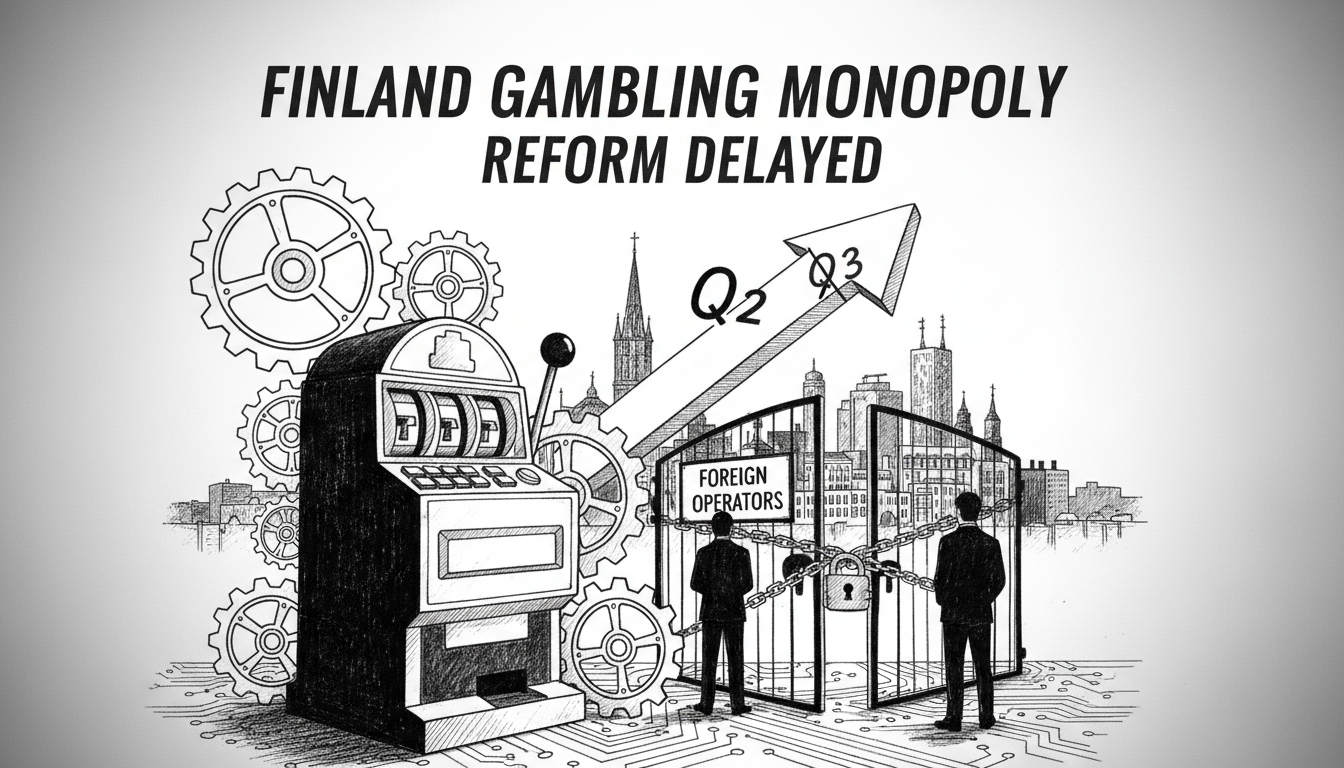
Finland's landmark move to dismantle the state gambling monopoly has been delayed. The shift to a licensing system for online casinos will now begin in the third quarter, not at the start of the year as originally planned. This delay pushes a major market opening into the post-election period.
The reform will end Veikkaus's exclusive hold on the Finnish gambling market. It will introduce a licensing model that allows foreign operators to apply for permits. This change aims to recapture an estimated 800 to 900 million euros that flows abroad annually from Finnish online gamblers. Under the new system, the state will collect revenue from license fees and taxes.
Political maneuvering by the leading government party, the National Coalition Party, is behind the schedule change. Sources indicate the party, led by Prime Minister Petteri Orpo, wants the law to take effect after the next parliamentary elections. The bill's final details were agreed upon by the governing parties this week. It will proceed to a full parliamentary vote next week after committee review.
Mauri Peltokangas, the committee chair, remained cautious in his comments. He stated that preparatory discussions were held but the final draft report was not yet complete. The exact effective date is expected to be either May, June, or July.
This delay has real economic implications. The Finnish tech and gaming sectors have been anticipating this regulatory shift. It represents a significant business opportunity for Helsinki-based fintech and platform providers. Companies specializing in payment solutions, compliance software, and customer verification stand to gain. The move aligns Finland with other Nordic countries that have already opened their markets, like Sweden.
The prolonged monopoly protects Veikkaus's revenue stream for a few more months. It also gives the state-owned company additional time to prepare for intense competition. International gaming giants are already positioning themselves for entry. This reform is not just about gambling. It is a test of Finland's ability to modernize a legacy state-owned sector. The outcome will signal how the country balances social responsibility with market economics and tech-driven change.
The delay itself is a political calculation. Pushing the implementation past elections avoids immediate disruption and potential voter backlash. It is a pragmatic, if transparent, move by the coalition. The core of the reform remains intact. Finland's digital gambling market, long insulated, is finally opening. The wait for international operators and Finnish consumers just got a bit longer.