
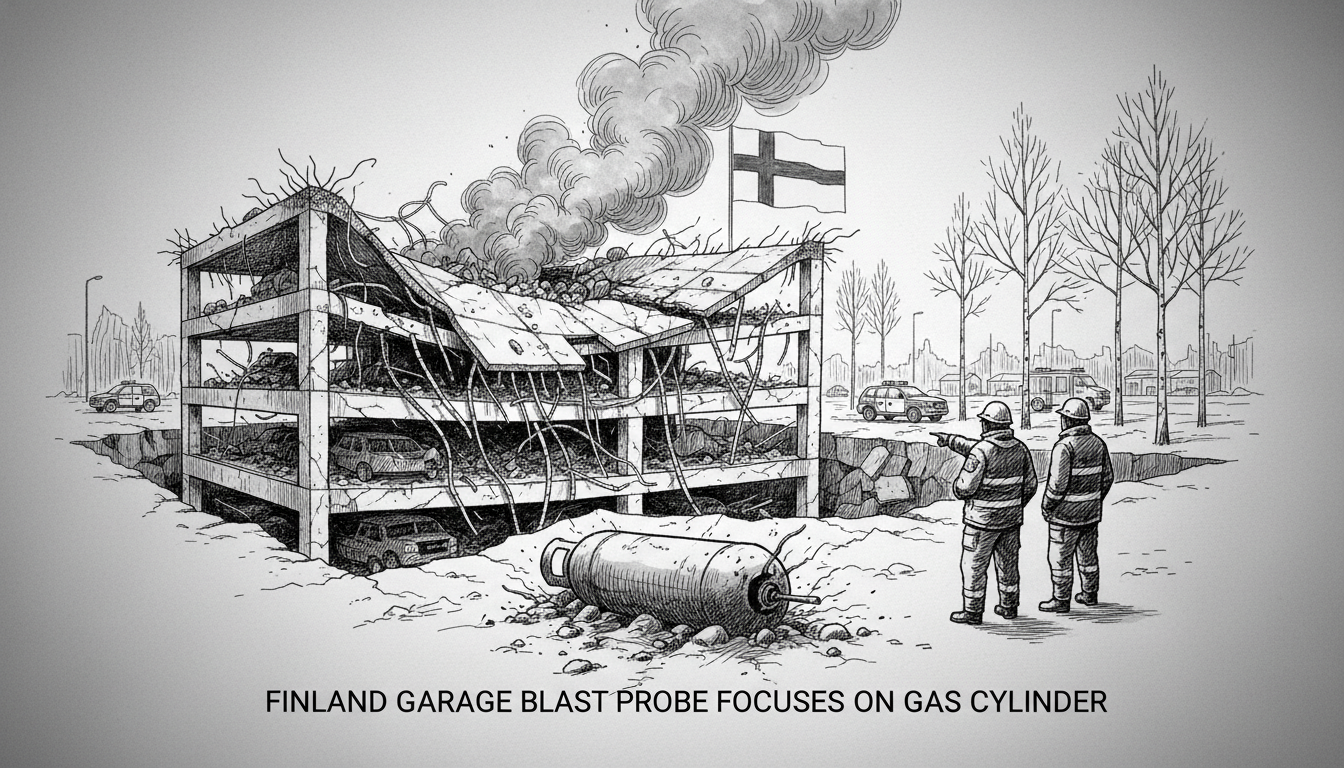
Finland's authorities are investigating a suspected gas cylinder leak as the cause of a powerful explosion in a residential garage last weekend. The incident occurred in the municipality of Lapinlahti in North Savo, highlighting the ever-present risks associated with common household fuels despite the nation's strong safety record.
According to a statement from the Eastern Finland Police Department, their primary line of inquiry points to a liquefied petroleum gas (LPG) cylinder. Investigators suspect gas leaked from the container inside the detached house's garage. A spark from an electrical device present in the space is believed to have ignited the accumulated fumes. "In a closed space, the gas could then have exploded upon ignition," the police explained.
The force of the blast was contained to the garage structure attached to the home. Remarkably, no injuries were reported from the Saturday incident. Rescue services confirmed that no bystanders were ever in danger. While the scene has been secured, police have tempered expectations for a definitive conclusion. They stated that further technical examinations are underway but noted complete certainty about the explosion's trigger may remain elusive.
The Scene in Lapinlahti
Lapinlahti is a quiet municipality of roughly 10,000 residents, known for its forests and lakes rather than dramatic incidents. The explosion at the detached house property disrupted that tranquility. The sudden blast would have been a shocking event for the local community. Initial emergency response was swift, with rescue services arriving to assess the damage and ensure no fire risk remained.
The fact that the garage was attached to a residential home amplifies the potential severity of the event. Had the explosion occurred at a different time of day, or if family members had been in or near the garage, the outcome could have been tragic. The police investigation will meticulously reconstruct the garage's contents and the positioning of the suspected cylinder and electrical equipment.
Understanding LPG and Finnish Safety Protocols
Liquefied petroleum gas is a common fuel source across Finland. It is used for heating summer cottages, powering barbecue grills, and in some domestic cooking and heating systems. Its prevalence makes safety regulations paramount. Finland has a robust framework governing the storage, handling, and installation of LPG systems, developed over decades to prevent accidents.
The guidelines are precise. Cylinders should be stored upright, outdoors, or in well-ventilated spaces specifically designed for the purpose. They must be kept away from heat sources, electrical panels, and any equipment that could generate sparks. Regular inspections of hoses, regulators, and valves are considered essential maintenance for any gas system. The Lapinlahti incident will inevitably be measured against these established safety protocols.
Expert Analysis on Prevention and Risk
Safety experts consistently emphasize that such explosions are almost always preventable. "The key factors are ventilation, inspection, and awareness," explains a veteran safety instructor from the Finnish Rescue Services, who spoke on the condition of anonymity as they were not directly involved in this case. "A garage, especially if cluttered or sealed, can quickly allow gas to build up to dangerous concentrations from even a small, unnoticed leak. An old refrigerator motor kicking on, a faulty light switch, or a power tool can provide the ignition source."
The expert pointed out that public awareness can wane precisely because serious incidents are rare. "Finland's safety standards are high, which leads to few major accidents. This can create a false sense of security for individuals at home. People might store a gas cylinder indoors 'just for the winter' or postpone checking the connections on their grill. This case is a stark, albeit fortunately non-lethal, reminder of why the rules exist."
From an analytical perspective, this incident sits at the intersection of consumer safety, regulatory compliance, and personal responsibility. It is unlikely to prompt new national legislation, as the existing framework is considered comprehensive. However, it may lead to renewed awareness campaigns from safety authorities or insurance companies ahead of the summer season, when gas grill usage peaks.
The Investigation's Path and Limitations
The Eastern Finland Police have a technical challenge ahead. Determining the exact sequence of events in a destructive explosion is complex. Forensic specialists will examine the remnants of the gas cylinder, looking for signs of corrosion, faulty valves, or damage. They will also try to identify the specific electrical device suspected of creating the spark, though it may be heavily damaged.
The police's candid admission that full certainty may not be achievable is a standard reflection of forensic realism. Without direct witnesses to the leak or ignition, the investigation must rely on physical evidence. The conclusion will likely be a assessment of probability, stating the gas cylinder leak is the suspected cause based on the available evidence. This outcome, while perhaps unsatisfying to some, is a common reality in such post-blast investigations.
A Community's Quiet Relief
For the residents of Lapinlahti and the homeowners involved, the overwhelming feeling is one of relief. Material damage to a garage is repairable. The alternative scenarios, had someone been nearby, do not bear thinking about. The incident will become a local talking point, a cautionary tale shared among neighbors about checking their own propane tanks and ensuring good airflow in their sheds and garages.
It also serves as a national reminder. Finland's safety culture is deeply ingrained, built on learning from rare events like this one. As the police continue their meticulous work, the broader lesson is clear: complacency with flammable fuels is a risk that no regulation can fully eliminate without constant public vigilance. The quiet town of Lapinlahti has provided a loud and timely warning just as the season for such fuels begins.