
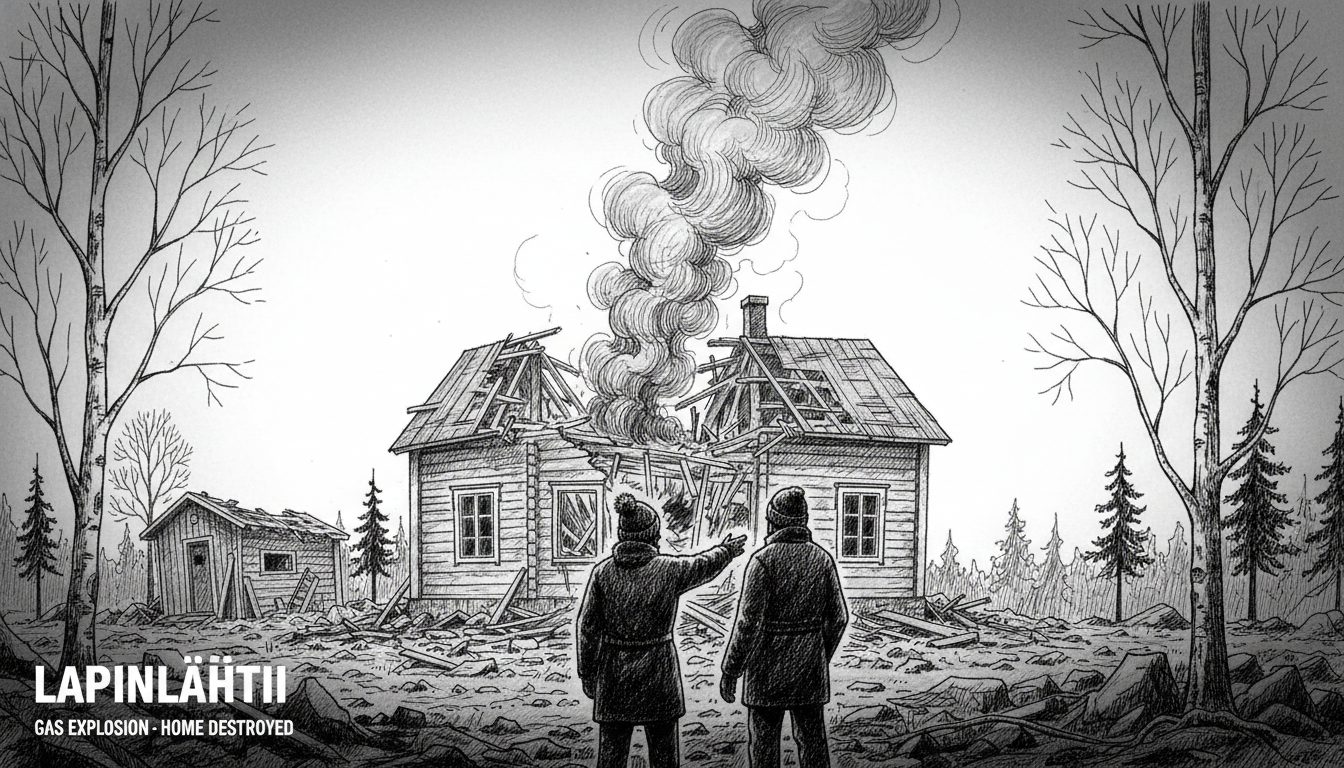
Finland's 70% home ownership rate frames a sudden tragedy after a leaking gas cylinder triggered an explosion that obliterated a detached house in Lapinlahti. The blast erupted at approximately 1:30 PM on Saturday in the garage of a residence on Ahvenkuja street. With violent force, the garage doors were hurled across the road into a neighbor's yard. A small fire ignited but was quickly extinguished by nearby residents. No injuries were reported, yet the family home was left beyond repair.
The Immediate Aftermath and Response
Poliisi and the pelastuslaitos swiftly cordoned off the area to conduct a preliminary investigation. Their initial findings ruled out explosives or technical faults within the house's systems. Instead, attention focused on a liquefied petroleum gas (LPG) cylinder stored in the garage. Investigators suspect gas leaked into the enclosed space, accumulating until an electrical spark ignited it. The subsequent explosion contained enough power to render the main structure a total loss. 'The house is irreparable based on the owner's initial assessment,' a police spokesperson confirmed in a statement. This immediate damage assessment highlights the sheer force involved.
Neighbors described a deafening bang that shook surrounding properties. The rapid community response to douse the emerging flames likely prevented further damage. Such events are rare in Finnish residential areas, making this incident particularly shocking for the small community. The psychological impact on the homeowners and their neighbors will be significant, even as physical injuries were miraculously avoided. The scene left a stark visual reminder of the hidden dangers that can exist within common household settings.
Investigating the Probable Cause
Authorities have centered their inquiry on the theory of a gas leak. 'The currently available information points to a liquefied petroleum gas cylinder in the garage as the primary cause,' the police bulletin stated. The hypothesis is that leaking gas found an ignition source, possibly from an electrical appliance, leading to a deflagration in the confined garage. However, police also tempered expectations, noting that definitive confirmation of the exact sequence may remain elusive. Complete certainty is often challenging to establish in explosion investigations due to the destructive nature of the event.
This aligns with broader investigative challenges. Even with modern techniques, pinpointing the precise spark or the moment of leakage can be difficult after such devastation. The investigation will continue to examine the remnants of the garage and the gas equipment. Safety inspectors may also review the age and maintenance history of the cylinder involved. Understanding this chain is critical not just for this case, but for preventing similar future accidents across the country.
Gas Safety and Expert Analysis in the Finnish Context
Finland has comprehensive safety regulations governing the storage and use of gas cylinders, often emphasizing proper ventilation and regular equipment checks. Despite these measures, experts note that risk persists without vigilant adherence. 'The key lesson from incidents like this is the critical importance of regular inspections and ensuring storage areas are well-ventilated,' said a safety engineer familiar with residential hazards, who spoke on the condition of anonymity as they were not directly involved in the case. 'Gas is heavier than air; it can pool in low, enclosed spaces like garages, creating an invisible hazard.'
The expert emphasized that many homeowners might not be fully aware of the protocols. Cylinders should be stored upright and outdoors in a well-ventilated shed, not inside living spaces or attached garages. Connections and hoses should be checked for wear annually. In a nation where detached houses are a common residence, especially in rural areas like Lapinlahti, this knowledge is vital. The Finnish Safety and Chemicals Agency (Tukes) provides guidelines, but personal responsibility in implementation is paramount. This explosion serves as a sobering case study for authorities and homeowners alike.
The Broader Implications for Homeowners
This event triggers a necessary conversation about preventive safety culture. For a country with a high prevalence of detached homes, the potential for similar incidents, though statistically low, warrants attention. Insurance companies may see queries spike about coverage for such accidental damage. Community awareness programs about handling propane and other flammable gases could see renewed interest. The Lapinlahti incident is a wake-up call that safety routines cannot become complacent.
From a policy perspective, it underscores the need for continuous public information campaigns. While Finnish building codes are stringent, they primarily address new constructions. The existing stock of older homes, where modifications might have been made informally, presents a different challenge. There is no indication of negligence in this case, but the tragedy naturally leads to introspection. Are current safety guidelines sufficiently communicated and understood by the average citizen? This question will likely resonate in public discussions in the coming weeks.
Moving Forward from the Rubble
The homeowners in Lapinlahti now face the daunting task of rebuilding their lives from scratch. The material loss is total, and the emotional recovery will take time. Community support in such situations often becomes a cornerstone for healing. Meanwhile, the police investigation will inch toward its conclusion, even if some questions remain unanswered. The final report may influence local safety advisories.
As Finland progresses, the balance between independent homeownership and managing associated risks remains crucial. This single explosion in a quiet neighborhood is a potent reminder that safety is an active, daily practice. Will this event lead to a nationwide check of gas cylinders in garages? Only time will tell, but the lesson from Lapinlahti is clear: vigilance is the price of security in our own homes.