
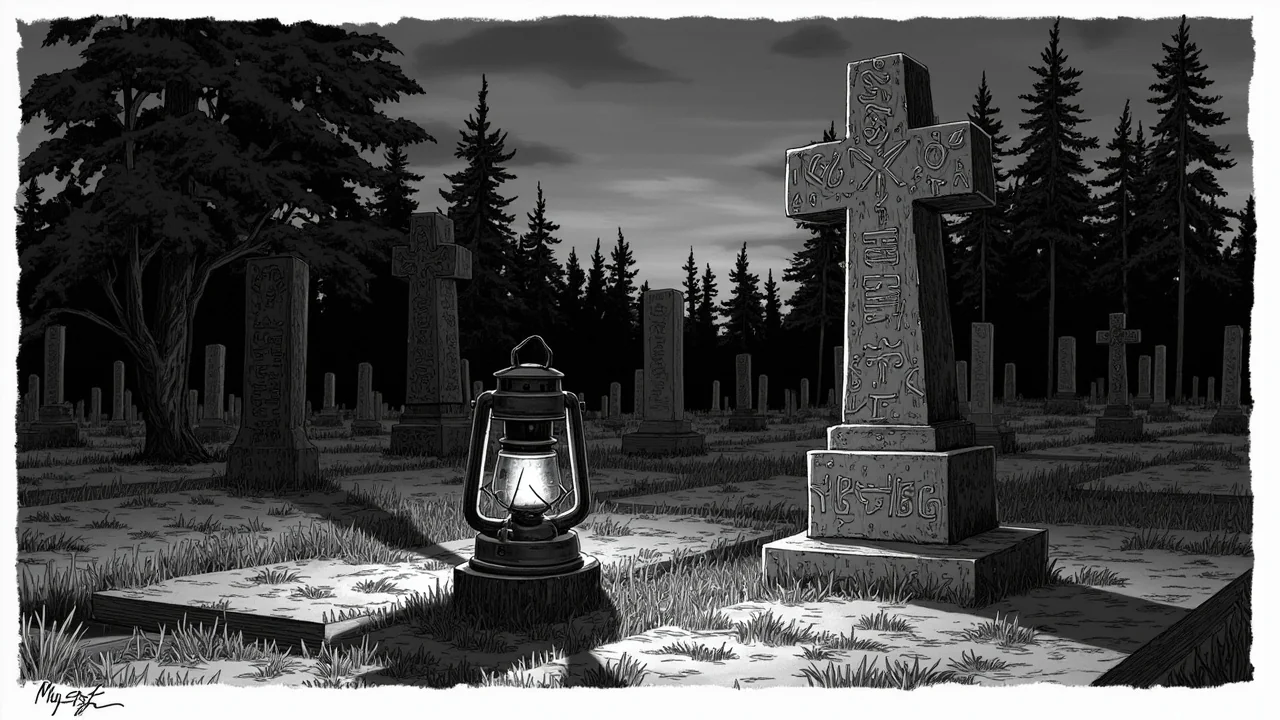
Finland's quiet Nurmijärvi graveyard became the scene of a disturbing theft in early January, shaking a local family and raising questions about respect for the dead. A visitor tending to a family grave on January 5 discovered one of four memorial lanterns had been stolen, despite all four burning peacefully just days earlier over the New Year. The theft prompted an anguished public plea from the family: "You who stole it, return the lantern. Does your conscience not trouble you?"
This incident in the Nurmijärvi churchyard, while described by local parish officials as rare, strikes at the heart of Finnish memorial traditions. The lanterns held profound personal significance, with each one representing a child in the family. In a country where cemeteries are places of serene, year-round visitation and candle-lit remembrance, especially during the dark winter months, such a violation feels particularly jarring. It breaches an unspoken social contract of respect that governs these sacred communal spaces.
A Violation of Sacred Space and Memory
Finnish cemeteries, or hautausmaat, are integral to the nation's cultural and spiritual landscape. They are meticulously maintained, often park-like spaces where families regularly visit to light candles, clean gravestones, and reflect. The items left on graves—lanterns, flowers, small mementos—are considered private property, tangible extensions of personal grief and love. The theft in Nurmijärvi, therefore, is not merely a petty crime against property; it is an attack on memory itself. The parish's head of grounds, Teija Marjamäki, confirmed the rarity of such events in her experience, noting that widespread theft from graves is not common in Nurmijärvi or other parishes where she has worked. However, she acknowledged isolated cases do occur and may go unreported.
The emotional impact is magnified by the timing and symbolism. The lanterns were alight during the reflective period of year-end, making their subsequent disappearance a cruel contrast. The family's question—"Does your conscience not trouble you?"—speaks to a deep expectation of communal decency. It underscores a belief that certain boundaries, especially those surrounding mourning and the deceased, should be universally respected, regardless of law or surveillance.
Practical Limits and Parish Guidance
From an administrative standpoint, the Lutheran parish, which manages the cemetery, faces clear practical limitations. As Marjamäki explained, the parish cannot possibly prevent all thefts. The graveyard is an open, public space intended for quiet contemplation, not high-security monitoring. This reality shifts both responsibility and recourse onto the families. The items are their private property, and the decision to file a formal police report rests solely with the grave rights holder, the person officially responsible for the plot.
In response to these vulnerabilities, parish authorities offer practical advice to visitors. They recommend securing decorative items directly to the headstone when possible. For the ubiquitous candles, a key feature of Finnish grave culture, they suggest using engraved candle holders or utilizing the candle nooks often built into the gravestones. "A candle nook in the headstone can reduce the risk—hardly anyone would dare take from there," Marjamäki advised. This guidance highlights a Finnish approach to problem-solving: pragmatic, design-oriented, and relying on a degree of social trust. The solution is not presented as increased policing or surveillance, but as smarter, more secure ways for individuals to honor their loved ones.
Theft, Trust, and Finnish Society
This incident provides a small but revealing window into broader Finnish social dynamics. Finland consistently ranks extremely high in global metrics for social trust, low corruption, and rule of law. Petty crime, particularly of this personal nature, is statistically low. The shock generated by the lantern theft stems partly from its deviation from this norm. It feels like a betrayal of the high-trust environment where people generally expect others to respect both public and private sanctities.
Analysts who study Nordic societies often point to this trust as a cornerstone of social cohesion. It allows for the existence of open cemeteries, unattended summer cottages, and lost-and-found systems that actually work. When an act like this occurs, it doesn't just victimize one family; it subtly tests that communal fabric. The public plea from the family is not just about a lantern; it's an appeal to restore that broken trust, to activate the thief's conscience and thereby reaffirm the shared values that hold the community together.
Furthermore, the response illustrates the division of responsibility in Finland's welfare society. The parish maintains the grounds and provides guidance, but the state (via police) intervenes only at a citizen's direct request. The individual bears the initial responsibility for securing their property and initiating legal action. This model functions efficiently in a high-trust society but can leave victims feeling exposed when that trust is violated.
Legal Recourse and Cultural Norms
Legally, the case falls under standard theft statutes. The value of the stolen lantern is likely low, but the emotional and symbolic value is incalculable. Whether the family chooses to file a police report involves a personal calculation: the desire for justice versus the bureaucratic effort required for what the system might classify as a minor property crime. Many similar offenses may go unreported for this reason, making the true incidence difficult to gauge, as Marjamäki acknowledged.
Culturally, the act of graveyard visitation is deeply ingrained. During winter, the sight of cemeteries aglow with hundreds of candles against the snow is a powerful national image, representing the persistence of light and memory through darkness. Items left on graves are seen as inviolable. This norm is enforced not by law, but by powerful social convention. The thief in Nurmijärvi violated that convention, which is why the act feels so shocking to the public. It was not just illegal; it was profoundly improper.
A Look Ahead: Security vs. Serenity
The case presents a quiet dilemma for parish administrators across Finland. How do you balance the need for an open, peaceful environment for mourning with the need to protect visitors' memorials? The current model heavily emphasizes personal responsibility and social trust. Introducing overt security measures like cameras or fences would fundamentally alter the character of these serene spaces, potentially causing more distress to visitors than the rare risk of theft.
The pragmatic advice offered—to secure items better—seems the most likely path forward. It puts the tools in the hands of the people without transforming the cemetery's atmosphere. It also, implicitly, continues to appeal to the collective conscience. The hope is that the social cost of being someone who steals from a grave remains so high that it deters all but the most desperate or indifferent.
The stolen lantern in Nurmijärvi is more than a missing object. It is a test of conscience, as the family stated, and a reminder of the fragile agreements that underpin a civilized society. The incident will likely fade from public attention, but for the family, the empty space on that grave remains. For everyone else, it poses a lingering question: in a society built on trust, what do we do when that trust is broken, not in a grand way, but in a small, deeply personal act of disrespect? The answer, for now, remains a mix of practical advice, personal vigilance, and a continued, perhaps shaken, belief in the power of a troubled conscience.