
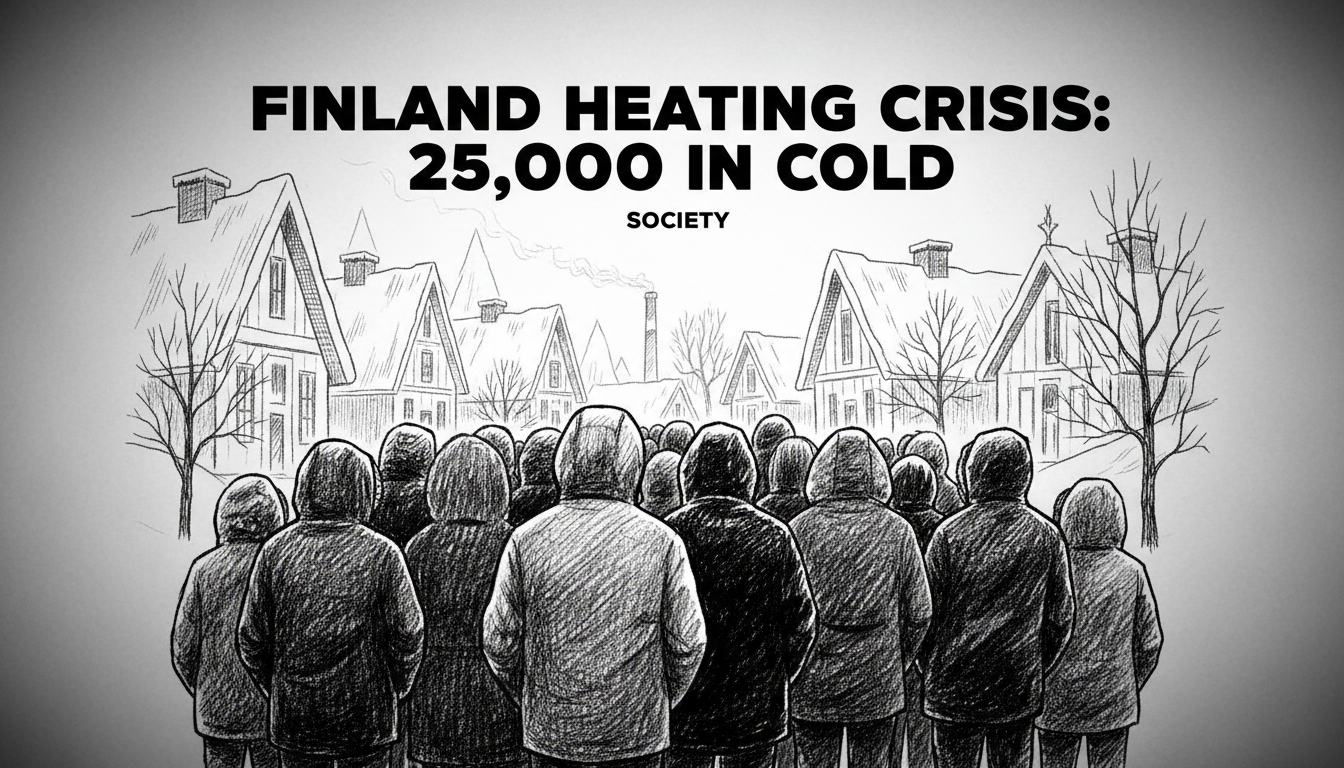
Finland's district heating network faced a severe test as a critical pipe burst on New Year's Day, plunging thousands of residents in the southeastern city of Imatra into the cold. The rupture on Lappeentie street triggered an emergency response from local energy utility Imatran Lämpö, highlighting the vulnerabilities in the nation's essential heating infrastructure during its harshest season.
Technician Mikko Varjonen from Imatran Lämpö described the moment the failure became apparent. "We detected the leak when a significant amount of water started disappearing from the network," Varjonen said. For a system that relies on circulating hot water to deliver heat, such a sudden loss of pressure signals a major breach. Crews were dispatched into the freezing conditions to locate the exact point of failure, a challenging task with the pipe buried beneath a snow-covered road.
A City Shivers as Response Teams Mobilize
The immediate impact was felt across a significant portion of Imatra, a city of approximately 25,000 residents situated near the Russian border. District heating, known as kaukolämpö, is not a luxury in Finland; it is the primary heating method for most urban apartment buildings, public facilities, and many businesses. When the hot water stops flowing, indoor temperatures can drop rapidly, a dangerous situation when outdoor temperatures routinely fall below -10°C in January.
Local authorities activated contingency plans, advising affected residents in the worst-hit zones to seek temporary shelter with relatives or in municipal facilities prepared for such emergencies. Schools and public buildings in the area were closed as a precaution. The incident immediately shifted from a technical infrastructure problem to a pressing public welfare issue, testing the city's crisis management protocols.
The Backbone of Finnish Winter Comfort
This rupture forces a broader examination of a system most Finns take for granted. District heating accounts for nearly half of the country's heating market, a higher share than in most other nations. It is widely regarded as an efficient and reliable method, utilizing combined heat and power (CHP) plants to maximize energy use. Heat that would be wasted in electricity generation is captured and pumped through a vast, insulated underground pipe network.
"The efficiency of district heating is its greatest strength, but its centralization is also a potential weakness," explained Dr. Elina Järvensivu, an energy infrastructure researcher at Lappeenranta-Lahti University of Technology. "A single point of failure on a main artery, especially in extreme cold which stresses the materials, can disrupt service for a wide area. The systems, particularly in some older urban districts, are aging. This requires continuous, proactive investment that sometimes competes with other municipal priorities."
The economic ripple effects are significant. Businesses face closures, pipes in buildings risk freezing and bursting, and the energy company itself incurs substantial costs from emergency repairs and compensating customers for lost heat. Furthermore, such events can strain national energy reserves if backup power generation is required.
A National Infrastructure Challenge
The incident in Imatra is not an isolated one. Similar breaks occur periodically in Finnish cities, often during deep winter freezes when ground shifting and extreme thermal contraction stress the pipes. Each event sparks a debate about the pace of infrastructure renewal. The Finnish government, through its Ministry of Economic Affairs and Employment, has programs supporting energy infrastructure upgrades, but the primary responsibility lies with the dozens of local, often municipally owned, energy companies like Imatran Lämpö.
This local responsibility creates a patchwork of investment levels. Some cities with newer networks or aggressive replacement schedules experience fewer failures. Others, grappling with tighter budgets or older city centers, are more vulnerable. The European Union's directives on energy efficiency and security of supply also provide a framework, pushing for smarter, more resilient networks. However, the capital required for large-scale pipe replacement is immense.
Expert analysis points to a multi-faceted solution. "Beyond simply replacing old pipes, we need better monitoring," Dr. Järvensivu added. "Advanced sensors that can detect pre-failure stress or minor leaks before they become catastrophic are key. Integrating these smart technologies into the grid is the next step for maintaining reliability." This proactive approach represents a shift from scheduled maintenance to condition-based monitoring, a move that could prevent crises rather than just respond to them.
Looking Beyond the Immediate Repair
As work crews on Lappeentie worked to excavate, repair, and reinsulate the broken pipe, the conversation in Imatra and beyond turned to resilience. The repair itself is a straightforward but time-consuming engineering task: isolate the section, replace the failed pipe segment, pressure-test the repair, and gradually bring the network back online to avoid thermal shock.
The longer-term question is how Finland will future-proof this critical infrastructure against both aging and a changing climate. While winters remain cold, increasing temperature volatility and more frequent freeze-thaw cycles can accelerate wear. Furthermore, the national push toward carbon-neutral energy sources means the heat flowing through these pipes is increasingly coming from biofuels, waste heat, and other renewable sources, but the distribution network itself must be sound.
The event in Imatra serves as a stark reminder. Finland's societal comfort through the long winter is underpinned by a complex, mostly hidden physical network. Its reliability is a cornerstone of public health and economic stability. When a single pipe bursts, it exposes the delicate balance between engineering, finance, and environmental forces. It asks a pointed question of every municipality: is the invisible system beneath our feet prepared for the challenges ahead? The answer will determine whether future New Year's days are met with warmth or with emergency repairs in the freezing dark.