
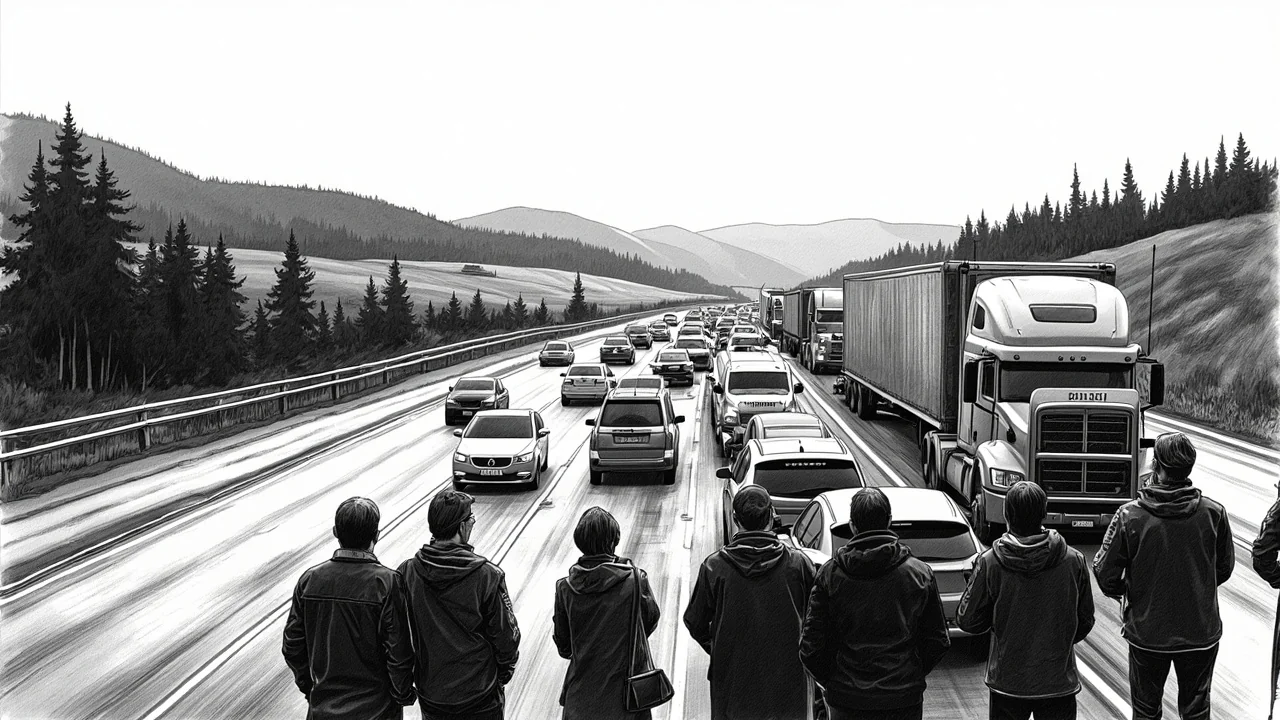
Finland's Valtatie 15 highway was the scene of a disruptive three-vehicle collision on Wednesday morning, causing significant traffic delays near Kotka. A passenger car first collided with the rear of a truck before veering into oncoming traffic and striking a van, according to initial reports from rescue services. The accident occurred on the stretch between Juurikorpi and Uronlampi, forcing the temporary closure of one lane during the morning rush hour.
Harri Liljeqvist from the Kymenlaakso Rescue Department described the sequence of events. "In the accident, a passenger car first collided with the rear of a truck. Then it apparently ended up on the oncoming lane and collided there with a van," Liljeqvist said. He confirmed that police are investigating the exact chain of events. Fortunately, no one was seriously injured in the multi-vehicle impact, a fact rescue services highlighted given the severity of the collision.
The incident underscores the persistent challenges of winter driving on Finland's crucial freight corridors. Liljeqvist noted that road conditions were "challenging winter driving weather" at the time of the accident. By 11:30 AM, recovery operations were underway with a tow truck expected on scene to clear the vehicles and restore normal traffic flow on this vital southeastern artery.
A Critical Artery Temporarily Blocked
Valtatie 15 is not just any road; it serves as a primary logistical lifeline connecting the port city of Kotka to the wider region and beyond towards Lappeenranta. Any disruption on this highway has immediate ripple effects. The closure of one lane near Juurikorpi during a weekday morning created a bottleneck for commercial freight and commuter traffic alike. The highway handles a substantial volume of heavy goods vehicles transporting materials to and from the industrial and port activities concentrated in the Kotka area.
The timing of the accident amplified its impact. Morning traffic, including shift workers and long-haul truckers, faced unexpected delays. While authorities worked efficiently to manage the scene, the blockage served as a stark reminder of how a single incident can compromise regional mobility. The Kymenlaakso Rescue Department's prompt response likely prevented a more severe traffic standstill, but the economic cost of such delays, though unquantified in this instance, is a recurring concern for local businesses reliant on just-in-time logistics.
Winter Conditions: The Ever-Present Risk Factor
Finnish road safety experts consistently point to seasonal adaptation as the key to preventing accidents like the one on Valtatie 15. "Challenging winter driving weather" is a common phrase in Finnish traffic reports from October through April, encompassing everything from black ice and packed snow to reduced visibility. This accident will inevitably lead investigators to examine fundamental safety principles: was the following distance sufficient for the conditions? Were the vehicles' tires appropriate for winter highways? Was speed adjusted to match the road surface?
Highways like Valtatie 15, with mixed traffic of passenger cars and heavy trucks, present specific hazards in winter. A truck's braking dynamics differ significantly from a lighter vehicle, and spray from trucks can further reduce visibility. The initial rear-end collision with the truck suggests a potential misjudgment of stopping distance or speed. The subsequent crossover into the opposing lane indicates a loss of control, a scenario that becomes far more likely on slick pavement. This crash pattern, while fortunately not resulting in serious injuries this time, is a classic and dangerous outcome of winter driving incidents.
The Investigation and Broader Safety Context
The police investigation into the Kotka crash will follow a standard but meticulous protocol. Officers will document the final positions of vehicles, measure skid marks if present, and interview all drivers involved. They will also assess the road conditions at the exact time and location of the accident. Technical inspections of the vehicles, particularly the passenger car, will check for pre-existing mechanical faults. The goal is to build a conclusive picture of causation, which is essential for both any potential legal proceedings and for informing broader public safety messaging.
This incident occurs within a national context where Finland continuously strives to improve its road safety record. The country has long been a leader in traffic safety, but winter remains its greatest adversary. Public campaigns by the Finnish Transport and Communications Agency (Traficom) and organizations like the Finnish Road Safety Council (Liikenneturva) repeatedly emphasize winter tire mandates, safe following distances (often recommending a doubling of the usual gap in poor conditions), and reduced speeds. Each accident provides real-world data that feeds into these campaigns and infrastructure planning, such as considering improved road drainage or lighting on high-risk stretches.
Economic and Commuter Impact of Highway Disruptions
Beyond the immediate safety aspects, accidents on key routes like Valtatie 15 have tangible economic consequences. Kotka's port is a major hub for Finnish exports and imports. Delays in trucking schedules can disrupt supply chains, delay shipments, and incur additional costs for logistics companies. For commuters, unexpected delays mean lost productivity, missed appointments, and increased stress. While this single-lane closure was resolved within hours, it highlights the vulnerability of regional economies to transportation network shocks.
The efficiency of the response by rescue services and police is critical in minimizing this impact. Their ability to quickly secure the scene, provide medical aid, and initiate clearing operations limits the duration of traffic disruptions. The reported deployment of a tow truck and clearance crews by late morning points to a coordinated effort to restore capacity. This operational efficiency is a result of well-practiced protocols for dealing with incidents on major highways, a necessity in a country where long distances and harsh weather make reliable roads a matter of both economic and social cohesion.
A Near Miss with a Wider Lesson
The Kotka highway accident ended as a near miss in terms of human cost, with no serious injuries reported. This fortunate outcome should not diminish its value as a cautionary tale. As daylight hours slowly lengthen, driver fatigue and complacency can set in, yet winter conditions persist well into spring in southeastern Finland. Every such incident reinforces the non-negotiable rules of winter driving: appropriate tires, heightened vigilance, generous following distances, and speed tailored not to the posted limit, but to the actual conditions of the road.
The three vehicles involved will be cleared, the lane reopened, and traffic on Valtatie 15 will return to its normal rhythm. However, the questions posed by the skid marks and crumpled metal remain. Did the drivers involved feel fully prepared for that morning's journey? As Finland continues to navigate its long winter, the balance between maintaining mobility and ensuring safety is tested daily on highways just like this one. The next major storm is always on the horizon, and the lessons from Juurikorpi must travel far beyond the crash barriers of Valtatie 15.