
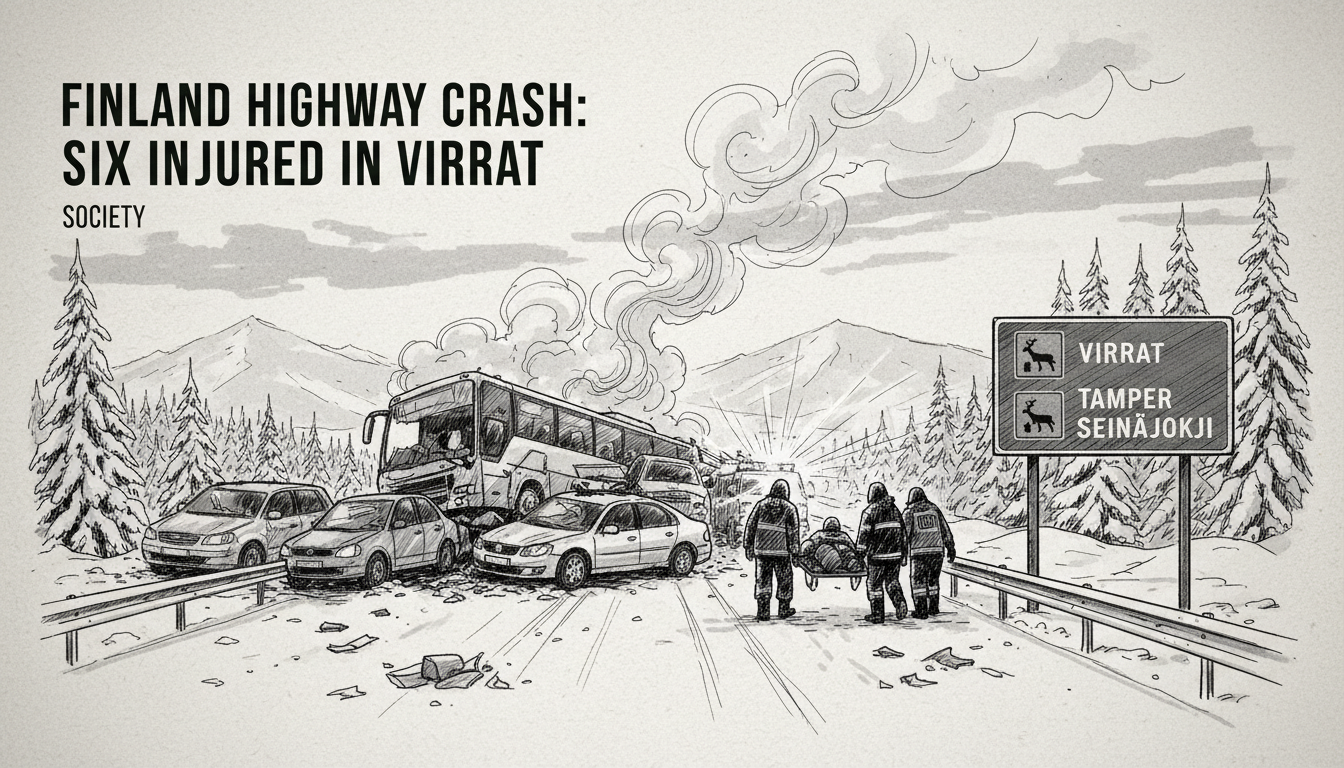
Finland's Valtatie 23 highway was the scene of a serious collision Wednesday afternoon that left six people injured. Two SUVs were involved in a head-on crash near the Koivumäentie intersection in Virrat, according to rescue services from the Pirkanmaa region. All six individuals were transported from the scene for further medical treatment following initial emergency care assessments. The crash forced the complete closure of the main highway, with traffic rerouted via a controlled detour using local roads.
Emergency Response and Road Closure
Authorities moved quickly to secure the crash site and manage the resulting traffic chaos. "Traffic on Highway 23 was completely cut off at the accident site," a Pirkanmaa rescue department official said in a statement. "Traffic is now directed via a detour past the accident scene." The designated detour route sent vehicles alternating along a loop connecting Highway 23 to Kurjenkyläntie and Koivumäentie roads. This kind of immediate road closure and rerouting is standard protocol for major incidents on Finnish highways to allow for safe rescue operations and preliminary investigation. The duration of the closure often depends on the severity of the crash and the complexity of the cleanup operation.
The Vital Artery of Valtatie 23
This incident disrupted traffic on a key transport corridor for central Finland. Valtatie 23, a national highway, stretches approximately 370 kilometers from Pori on the west coast to Joensuu in the east. It serves as a crucial link for regional economies, connecting population centers and facilitating the transport of goods. Accidents on such major routes have ripple effects beyond the immediate tragedy, causing significant delays for commercial and private travel. The highway passes through varied terrain and several municipalities, with the section near Virrat being a familiar route for many. Finland's national road network, maintained by the Finnish Transport Infrastructure Agency (Väylävirasto), is generally considered well-maintained, though winter conditions and high speeds on straight sections can present risks.
Investigating the Causes and Safety Context
While the specific cause of Wednesday's collision remains under investigation by police, such serious accidents invariably trigger broader discussions on road safety. Head-on collisions on two-lane highways are among the most dangerous types of traffic incidents. Experts consistently point to factors like speeding, distracted driving, fatigue, and risky overtaking maneuvers as primary contributors. Finland has long been a world leader in road safety, with its Vision Zero policy aiming to eliminate traffic fatalities and serious injuries. This proactive strategy involves continuous improvements to infrastructure, such as adding median barriers on high-risk stretches, alongside strict enforcement and public education campaigns.
Despite this strong record, each serious accident prompts fresh scrutiny. "Every severe crash is a tragedy and a reminder that our work on road safety is never complete," noted a senior advisor from the Finnish Transport Safety Agency (Trafi). "Investigators will look at all possible factors, from road conditions and vehicle status to driver behavior, to understand what happened and how similar events can be prevented." The findings from this investigation in Virrat will contribute to national statistics and inform future safety measures. Data-driven analysis of accident blackspots often leads to targeted infrastructure upgrades or changes in traffic control.
The Human Cost Beyond the Statistics
The official report lists six injured, but behind that number are individuals, families, and communities suddenly facing crisis. The psychological and physical aftermath of a major collision can be long-lasting. Finland's public healthcare system and strong social support networks are mobilized in such events to provide necessary care. The event also impacts first responders, police, and tow truck operators who manage the traumatic scene. For regular commuters and residents of Virrat, the sight of a closed highway and emergency vehicles is a stark, unwelcome reminder of how quickly normalcy can shatter.
Local authorities often review procedures after significant incidents. The efficiency of the multi-agency response—involving rescue services, police, and healthcare—is a testament to Finland's coordinated crisis management protocols. These systems are regularly tested and refined, ensuring a swift and effective reaction when emergencies occur on remote stretches of road or in more populated areas.
A Nation's Continuous Journey Toward Safer Roads
Finland's approach to road safety is comprehensive, but as this crash shows, absolute prevention remains an elusive goal. The country's low traffic fatality rate is achieved through a combination of strict legislation, a culture of compliance, and significant investment in safe road engineering. Winter tire mandates, low blood-alcohol limits, and extensive use of camera surveillance are all part of this ecosystem. Yet, the human element is always present. As traffic volumes recover post-pandemic and new vehicle technologies emerge, the strategies for protection must also evolve.
The crash on Valtatie 23 will soon fade from national headlines, replaced by other news. For those involved and their loved ones, however, the effects will endure. For traffic planners and safety officials, the data from Virrat becomes another point on a chart, informing the slow, persistent work of making every journey safer. As Finland moves forward, balancing the freedom of mobility with the imperative of safety continues to be a central, challenging, and vital task for society. How will the lessons from this week's collision shape the next segment of road to be upgraded or the next safety campaign launched?