
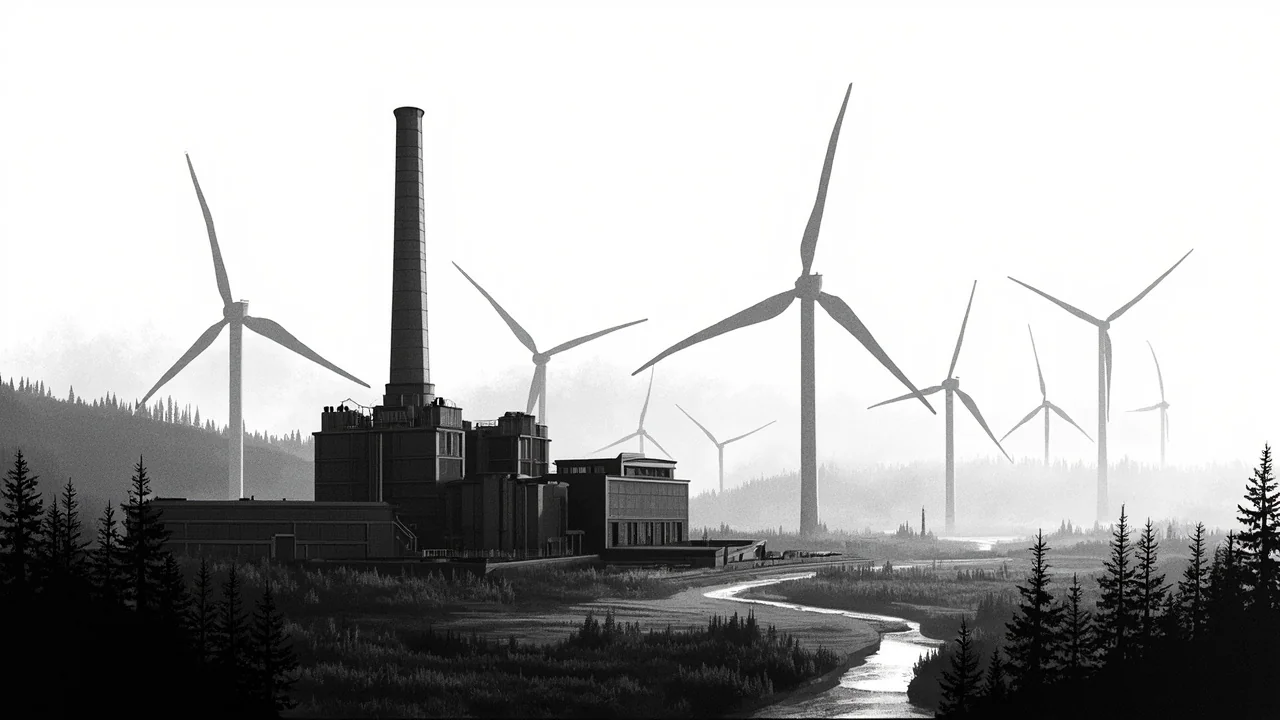
Finland's electricity production achieved a historic peak of 15,438 megawatts on Saturday evening, shattering previous national records. The record was set between 6:00 and 6:15 PM, as confirmed by Jukka Leskelä, CEO of Energy Industry Finland, in a social media announcement. This surge highlights a critical moment in the nation's energy transition, driven by intense cold that spiked demand and simultaneous strong winds that boosted renewable output. For policymakers in Helsinki's government district, this peak tests the resilience of the grid and the success of long-term energy investments.
Jukka Leskelä noted that the cold snap significantly increased electricity consumption while wind conditions amplified production. 'Electricity consumption is high and we are on the export side. A new thing during consumption peaks,' Leskelä stated. This balance between high domestic demand and export capability marks a shift in Finland's energy profile, often discussed in Eduskunta committees on climate and economic affairs. The record comes as Finland continues to integrate new nuclear capacity and expand its wind power fleet, aligning with European Union decarbonization directives.
A Convergence of Climate and Capacity
The record-breaking hour resulted from a precise alignment of meteorological and infrastructural factors. Sub-zero temperatures across southern Finland pushed heating demand to seasonal highs, straining conventional power sources. At the same time, gusty winds in coastal and northern regions allowed wind turbines to operate near maximum capacity. This synergy between weather-driven demand and supply is becoming more common as Finland's renewable share grows. Energy Minister Lintilä has frequently cited such events as evidence that the national energy strategy is working, though grid stability remains a priority.
Finland's power mix now includes a significant portion from renewables, with wind power capacity increasing by over 2,000 megawatts in the past five years. The Olkiluoto 3 nuclear reactor, which reached full output in 2023, also provides a steady base load that supports grid reliability during peaks. This diversification reduces reliance on imported electricity from neighboring Nordic and Baltic markets, a key goal set by the current government coalition. The record output occurred during a period when Finland was a net exporter, underscoring improved self-sufficiency.
Policy Foundations and EU Implications
This electricity peak is not an isolated event but a direct outcome of deliberate policy decisions. The Finnish Parliament, Eduskunta, has passed numerous energy acts in recent years to accelerate renewable projects and streamline permitting. These measures are designed to meet both national targets and EU-wide goals under the Fit for 55 package, which aims for carbon neutrality by 2050. Finland's government, led by Prime Minister Orpo, has emphasized energy security as a cornerstone of its program, linking it to broader European energy independence amid geopolitical tensions.
Analysts point to the role of EU funding mechanisms, such as the Innovation Fund, in supporting Finnish wind and storage projects. The record output demonstrates how national policies interact with European frameworks to drive tangible results. However, challenges persist, including the need for enhanced grid interconnections and demand-side management. The Ministry of Economic Affairs and Employment is currently reviewing capacity mechanisms to ensure future peaks can be managed without price spikes or reliability issues.
Expert Analysis on Grid Resilience
Energy experts highlight that such records validate investments in grid modernization and flexible generation. 'This peak shows our system can handle extreme conditions, but we must prepare for more frequent volatility due to climate change,' said Dr. Elina Seppänen, a researcher at Aalto University. She notes that the Finnish Energy Authority's recent reports stress the importance of battery storage and smart grids to balance intermittent renewables. The government's upcoming energy and climate plan, due for submission to the EU, is expected to address these integration challenges.
From a political perspective, opposition parties have raised concerns about regional disparities in energy infrastructure. While southern Finland benefits from robust connections, northern areas face constraints that could limit future renewable expansion. Eduskunta debates have centered on equitable investment, with the Green League advocating for faster transmission upgrades. The record peak may intensify these discussions, especially as Finland aims to double wind power capacity by 2030.
Future Outlook and Strategic Decisions
Looking ahead, Finland's energy landscape will continue to evolve with new projects coming online. The Hanhikivi 1 nuclear project, though canceled, has shifted focus to smaller modular reactors and offshore wind farms in the Baltic Sea. EU state aid guidelines will influence how these are funded, requiring close coordination between Helsinki and Brussels. The record output serves as a benchmark for future capacity assessments, informing decisions on decommissioning fossil-fuel plants and expanding cross-border cables.
For consumers and businesses, this peak underscores the importance of energy efficiency and flexible tariffs. The government's support for electrification of transport and industry must be matched by grid investments to avoid bottlenecks. As Finland progresses toward its 2035 carbon neutrality target, such records will become more common, testing the limits of policy and infrastructure. The key question is whether the political will exists to maintain pace with technological and environmental changes.
Finland's electricity production record is a milestone in its energy transition, reflecting successful policy implementation and natural advantages. Yet, it also signals the need for ongoing adaptation to ensure that peaks in production translate into sustained benefits for the economy and environment. As Helsinki policymakers analyze this event, the focus will be on building a system that is not only high-capacity but also resilient and fair for all regions.