
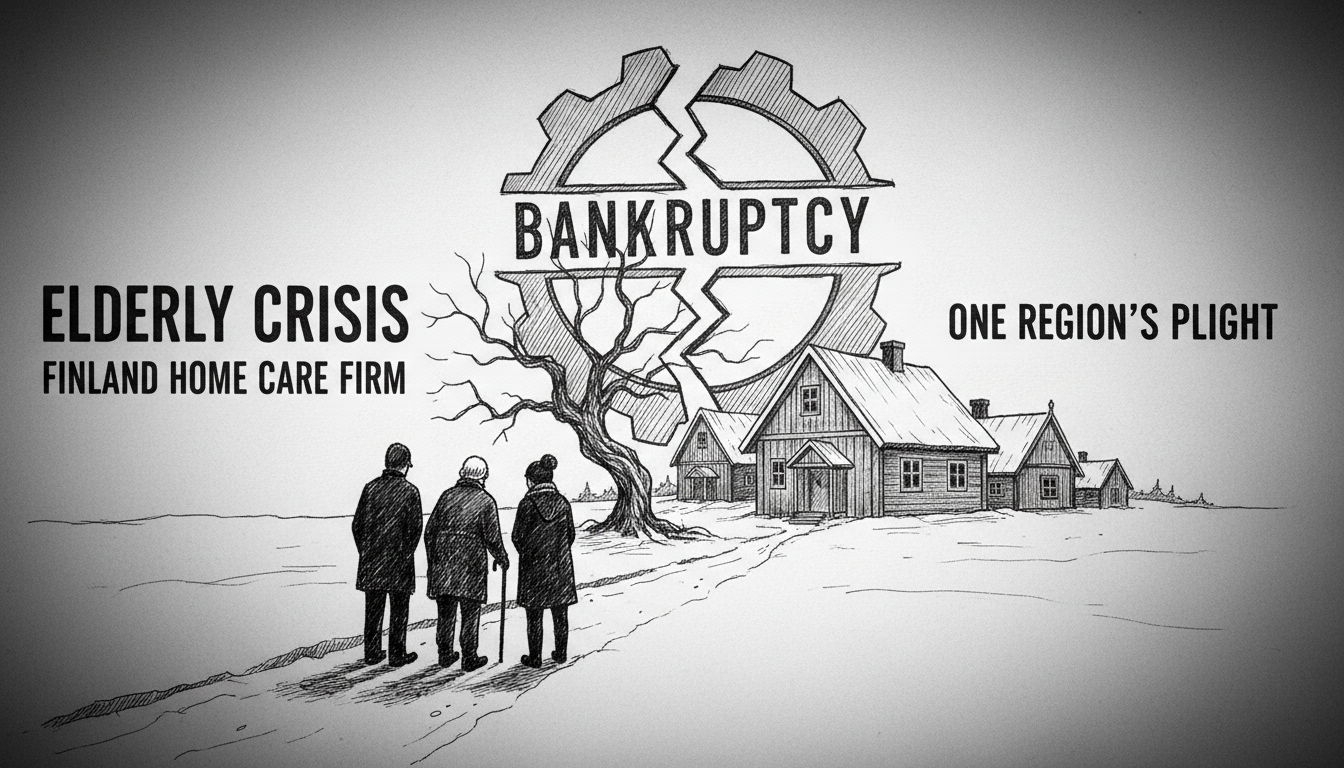
Finland's home care sector faces a critical test as HoivaHäme Oy, a key provider in the Kantahäme region, enters bankruptcy. The Pirkanmaa District Court ordered the company's bankruptcy this Wednesday, with the Finnish Patent and Registration Office finalizing the process on Thursday. This collapse disrupts essential services for elderly and vulnerable clients, highlighting systemic pressures within Finland's celebrated social care model. The company's board chairman confirmed that new care placements were secured for all affected clients, a process managed by local authorities to prevent immediate harm.
A System Under Strain
Finland's universal healthcare system, a cornerstone of the Nordic welfare model, is grappling with an undeniable demographic challenge. The population is aging rapidly, increasing demand for home-based elderly care services. This demand pressures both public municipal providers and private companies like HoivaHäme that operate through service procurement contracts. These private firms are crucial for supplementing public capacity, but they operate on thin margins within a tightly regulated funding environment. The bankruptcy of a regional player exposes the fragile economics of this partnership model. Operational costs, including wages for care workers, supplies, and transportation, have risen sharply across the sector.
Industry analysts point to several converging factors that can lead to such failures. "Contracts with municipalities often fail to cover the true cost of providing high-quality, person-centered care," explains one Helsinki-based health economist familiar with the sector. "When you combine fixed-price contracts with rising labor costs and complex client needs, the financial sustainability of smaller providers becomes very precarious." This case in Kantahäme is not an isolated incident but part of a worrying trend of consolidation and failure in the Finnish social care market.
The Immediate Fallout and Response
The primary concern following any care provider bankruptcy is continuity for clients. These are individuals who rely on daily visits for medication, meals, hygiene, and basic mobility. A sudden interruption can cause severe distress and health risks. According to the statement from HoivaHäme's board chairman, the transition for clients was the immediate priority. Finnish law and municipal responsibility frameworks likely activated contingency plans, with the local authority in the Kantahäme region forced to rapidly absorb the company's client list into its own services or find alternative private providers.
This emergency transfer process, while necessary, carries its own disruptions. Care relationships built over months or years are severed. Routines are broken. New carers must be introduced and familiarized with complex care plans. For the clients, often elderly and sometimes living with dementia, this change is more than an administrative detail; it is a profound loss of stability and trust. The municipality now faces increased short-term costs and logistical complexity, potentially straining its resources and affecting other waiting lists for care services.
Broader Implications for Finnish Care Policy
This bankruptcy arrives amid ongoing national debates about the future of social and healthcare provision in Finland. The previous government's ambitious SOTE reform, aimed at reorganizing healthcare and social welfare regions, has created a period of transition and uncertainty. For private providers, the shifting regulatory landscape and the financial pressures on the new wellbeing services counties make for a difficult operating environment. The HoivaHäme case will be studied in Helsinki's government district as a concrete example of systemic vulnerability.
Members of the Eduskunta, Finland's parliament, are certain to raise questions. Opposition parties may critique the government's oversight of private care providers and the adequacy of funding for elderly care. The governing coalition, led by Prime Minister Petteri Orpo, must demonstrate that the safety net functioned as intended while addressing the underlying causes. Policy discussions will intensify around procurement models, cost indexing for care contracts, and the desired balance between public and private provision in a core welfare service.
The Human Cost Behind the Bankruptcy Filing
Beyond the court order and trade register entry, the real story lies in the homes across Kantahäme. For the care workers employed by HoivaHäme, bankruptcy means sudden unemployment and uncertainty. This workforce, predominantly female, now seeks positions in an sector that is simultaneously demanding and underpaying. Their expertise is vital, yet their economic position is often weak. The clients, meanwhile, must rebuild a sense of security. While the physical tasks of care may continue under new management, the relational aspect of care—the familiar face, the known routine—is fractured.
This incident underscores a central paradox in modern welfare states: the pursuit of efficiency and cost-control in service delivery can sometimes undermine the very stability and quality that define humane care. Finland has long been a benchmark for successful aging policies, but cases like HoivaHäme reveal the cracks forming under demographic pressure. It tests the resilience of the municipal safety net and the wisdom of relying on a competitive market for such a sensitive, person-dependent service.
Looking Ahead: Stability or More Shakeouts?
The question for policymakers and citizens is whether HoivaHäme is a canary in the coal mine. Will other small to mid-sized providers in regions across Finland face similar financial cliffs? The answer depends on how municipalities and the state respond. There may be calls for stricter financial health checks for companies bidding on care contracts, or for new forms of partnership that share risk more equitably. Alternatively, this could accelerate a move toward larger, potentially more resilient corporate providers, reducing local diversity and choice.
For now, the immediate crisis in Kantahäme has been contained. No client was left without a care plan. This is a testament to the fundamental strength and responsibility of Finland's welfare system. However, containing a crisis is not the same as solving it. The bankruptcy of HoivaHäme Oy is a clear signal that the business of care, in its current form, is struggling. As Finland continues to navigate its demographic transition, ensuring that care is both compassionate and sustainable will remain one of its most defining challenges. The stability of everyday life for thousands of elderly Finns depends on getting this balance right.