
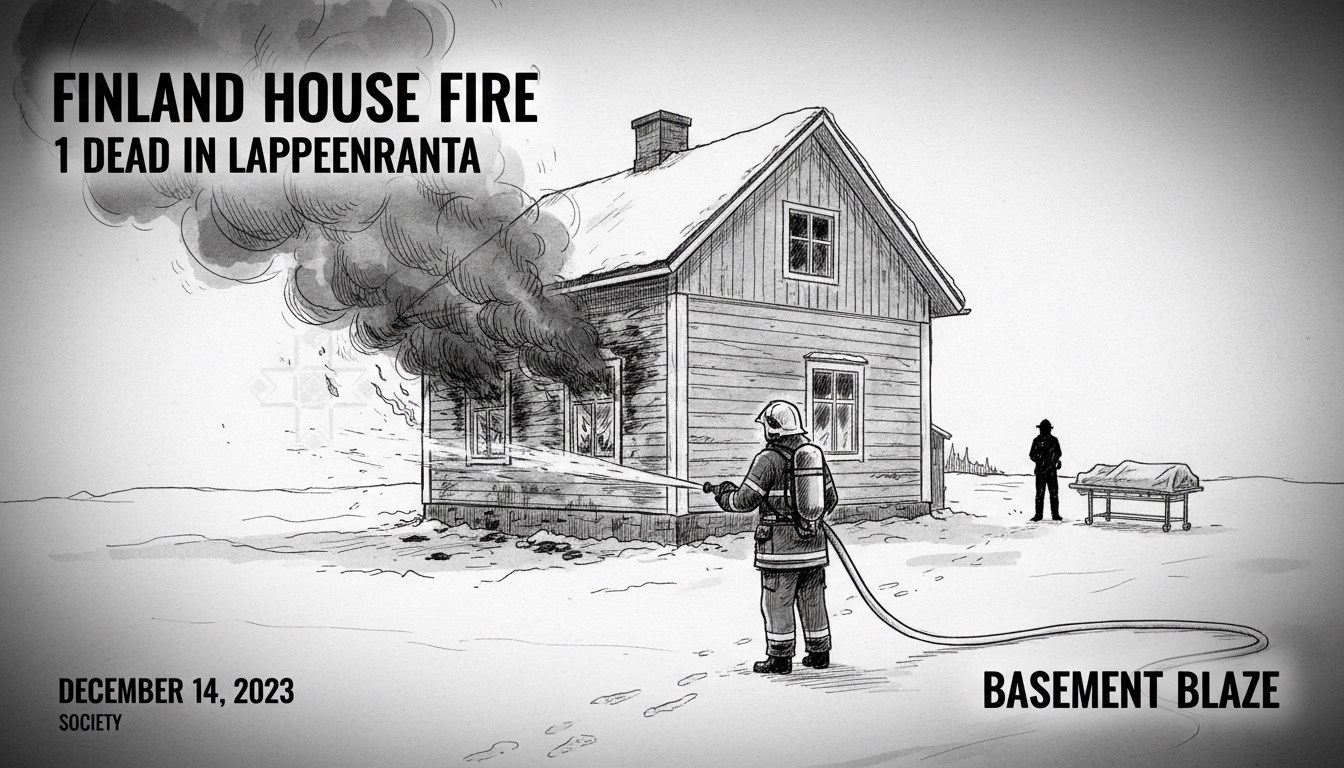
Finland house fire in Lappeenranta claimed one life on Saturday evening, marking a tragic residential incident in the southeastern city. The South Karelia Rescue Department reported the fatal fire broke out in the basement of a detached house before 10 p.m. Firefighters extinguished the blaze quickly, but a victim was discovered in the basement area. Police and rescue officials remained on the scene past 11 p.m. as they launched an investigation into the fire's cause, a standard procedure for fatal incidents.
A Swift Response and a Tragic Outcome
Emergency services received the alarm before ten o'clock on Saturday night. The South Karelia Rescue Department mobilized resources to the address in Lappeenranta, a city of approximately 73,000 people known for its university and lakeside location. Their response was rapid, and crews managed to contain and extinguish the basement fire efficiently. Despite their speed, the operation transitioned from firefighting to a recovery mission when one deceased individual was located within the basement. The rescue department confirmed the fatality in their initial statement, though they have not released the victim's identity pending notification of next of kin.
This immediate containment likely prevented the fire from spreading to the upper floors of the detached house, a scenario that could have led to greater structural damage or further risk. The fact that the fire was confined to the basement underscores both the effectiveness of the response and the specific, localized origin of the blaze. Investigators will now meticulously examine the basement area to determine the ignition point and source.
The Critical Investigation Phase Begins
Authorities have entered the detailed investigative phase common to all fatal fires in Finland. The South Karelia Rescue Department, in collaboration with the police, is tasked with determining the cause. This process involves forensic examination of the scene, interviews with any witnesses or residents, and a technical analysis of the basement's contents and systems. Finnish fire investigations are methodical, aiming to establish whether the cause was accidental, such as an electrical fault or a heating system malfunction, or if other factors were involved.
Fire safety experts in Finland note that basement fires present unique challenges. These spaces often house electrical panels, heating boilers, laundry facilities, and storage, any of which can be a potential ignition source. "Basements can contain multiple fire risks, from old wiring servicing the house to flammable materials in storage," explained a veteran Finnish fire investigator, who spoke on background about general procedures. "The investigation will map everything in that space and test potential hypotheses against the physical evidence." The cold climate also means heating systems are under consistent use during winter, though the recent milder spring temperatures may shift the focus of the probe.
Fire Safety in the Finnish Context
This tragic event in Lappeenranta brings residential fire safety into sharp focus. Finland has stringent building codes and a strong culture of fire prevention, driven by the existential threat fires pose during long, cold winters when escape is more difficult and the consequences of losing a home are severe. National statistics from the Finnish National Rescue Association (SPEK) show that most fatal fires occur in residential buildings, often during nighttime hours. The presence of working smoke detectors is considered the most critical factor in preventing deaths, providing the early warning needed for escape.
In detached houses, safety measures are the responsibility of the homeowner. Authorities consistently campaign for the installation and maintenance of smoke detectors on every floor, including basements and attics. They also recommend having a practiced fire escape plan. The investigation in Lappeenranta will certainly note whether functional smoke alarms were present and if they alerted occupants. While the quick fire service response is commendable, the ultimate goal of Finnish safety policy is to provide residents with the time and warning to evacuate themselves before firefighters arrive.
A Community Near the Border Grapples with Loss
Lappeenranta, situated in the region of South Karelia near the Russian border, is a close-knit community. As a university city and a hub for tourism around Lake Saimaa, news of a local tragedy resonates deeply. The loss of life in a private home, a place of assumed safety, sends a ripple of sorrow through the neighborhood and the wider city. Local social services and the church may offer support to the affected family and neighbors in the coming days, a common practice in Finnish municipalities following traumatic events.
The city's rescue services, while experienced, are confronted with the human cost of their work. Each fatal fire is a sobering reminder of their mission's gravity. The personnel involved will undergo standard debriefing procedures to process the incident. Meanwhile, the police investigation will proceed with careful respect for the victim and their family, aiming to provide answers while handling the case with discretion. The release of the victim's name and any preliminary cause will follow official protocols, which prioritize informing next-of-kin before making details public.
Looking Ahead: Prevention and Policy Reflections
As the investigation continues, this incident will contribute to the ongoing national conversation about fire safety. While Finland's record is strong, every fatality prompts reviews and reinforces public information campaigns. Data from this fire will be added to national statistics, helping safety experts identify persistent risks—perhaps related to basement safety, older electrical installations in certain types of homes, or seasonal factors. The Ministry of the Interior and SPEK regularly analyze such trends to update guidelines and target their educational efforts.
For now, the focus in Lappeenranta remains on uncovering the precise sequence of events that led to Saturday night's tragedy. The work of investigators is painstaking and crucial, not only for providing closure but also for potentially preventing future similar incidents. Their findings, once concluded, will answer the urgent questions of how and why this fire started. The ultimate goal, shared by rescue services and policymakers across Finland, is to ensure that every home is a sanctuary, protected by both technology and awareness from such devastating loss. This single death in a South Karelian basement is a stark reminder that vigilance is a permanent necessity, even in a nation renowned for its safety standards.