
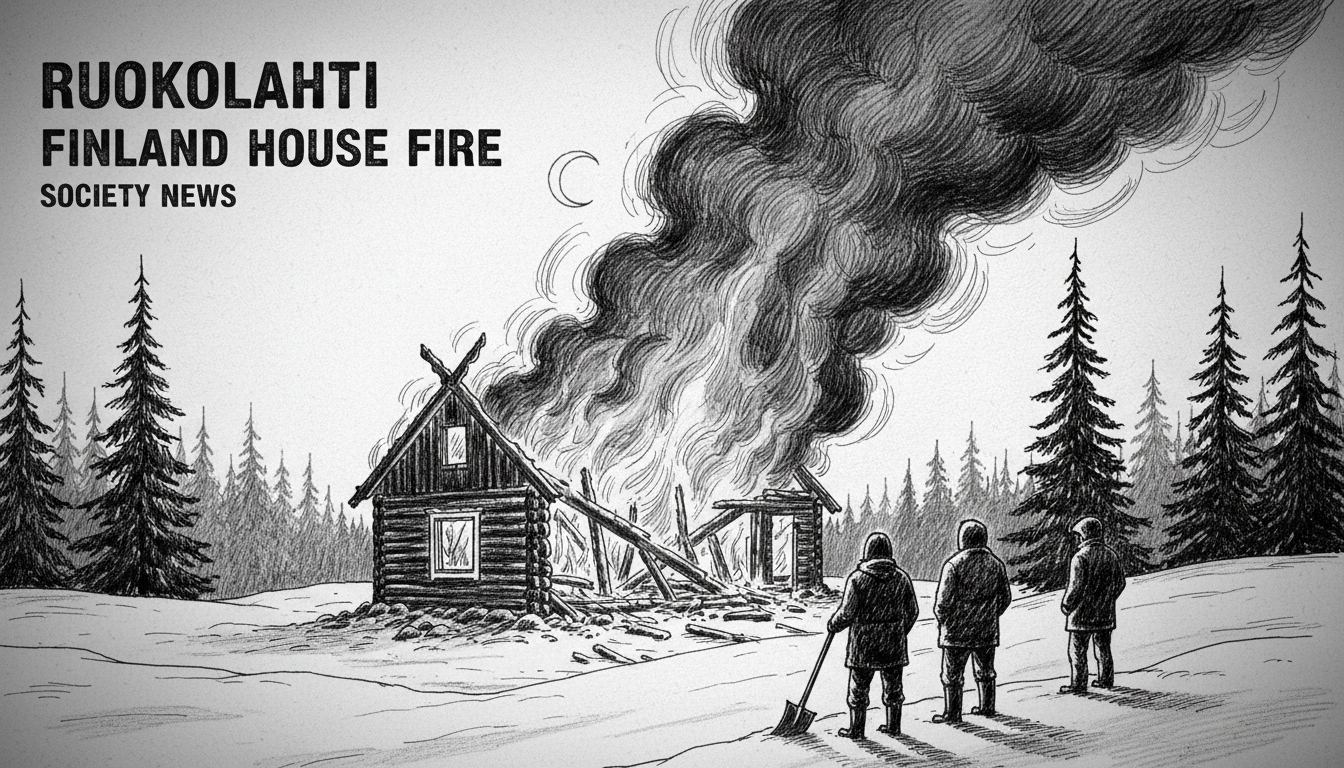
Finland house fire has destroyed a detached home in Ruokolahti, leaving a family displaced and highlighting the persistent national challenge of residential blazes. The South Karelia Rescue Department received an emergency call at 3:45 AM, reporting a significant fire at a property on Iivarintie road. A passerby first spotted the flames engulfing the single-story wooden house, which measured less than 100 square meters. Firefighters arrived to find the building fully involved, with no occupants inside. The sole resident was located and checked by paramedics at the scene. Crews battled the intense fire through the night, with suppression efforts continuing into the early morning hours. The cause of the blaze is under investigation by local authorities.
A Nighttime Emergency in South Karelia
The fire broke out in the quiet, lakeside municipality of Ruokolahti in southeastern Finland. The South Karelia Rescue Department mobilized multiple units to the address following the early morning alarm. Upon arrival, crews faced a well-developed fire in the compact wooden home. Their primary task was to contain the blaze and prevent it from spreading to nearby forested areas or other properties. The operation transitioned from an aggressive attack to a defensive strategy as the structure became unstable. Firefighters worked for hours in the dark to fully extinguish the hot spots, a process that lasted until dawn. The resident, reportedly the only occupant, was fortunate to have escaped before the fire took hold.
The National Picture of Residential Fires
This incident is not an isolated event but part of a broader annual pattern. According to the latest official statistics from the Finnish Rescue Service, there were 4,078 building fires across the country in 2022. Of these, a significant majority—2,314 fires—occurred in residential buildings. These numbers include apartments, row houses, and detached homes like the one lost in Ruokolahti. While fatal fires have decreased over decades due to improved safety measures, property destruction remains a constant risk. Each year, hundreds of Finnish families experience the trauma of losing their homes and possessions to fire. The economic cost runs into tens of millions of euros annually, factoring in property loss and emergency service resources.
Expert Insights on Fire Prevention
Fire safety experts point to several critical factors for preventing such tragedies. "The cornerstone of home fire safety is a working smoke detector," says a senior fire prevention officer with the Rescue Services. "It gives you the earliest possible warning, especially crucial at night when people are sleeping." Experts also stress the importance of regular maintenance for electrical systems and heating appliances, which are common ignition sources. Older Finnish homes, in particular, may have wiring that does not meet modern load demands. The use of auxiliary heaters during Finland's long, cold winters also increases risk if they are placed too close to combustible materials or left unattended. Having a practiced escape plan is another layer of essential preparedness that many households lack.
The Human and Community Impact
Beyond the statistics lies a profound human story of loss. A house fire represents the sudden destruction of a sanctuary, the loss of irreplaceable personal items, photographs, and heirlooms. The resident of the Ruokolahti home now faces the daunting tasks of finding temporary accommodation, navigating insurance claims, and rebuilding a life. The psychological impact of such an event can be long-lasting, with feelings of vulnerability and anxiety often persisting long after the flames are out. In tight-knit communities like Ruokolahti, such an event resonates deeply. Neighbors and local organizations typically rally to provide immediate support, offering clothing, meals, and temporary housing to those affected.
How Finland's Rescue System Responds
The response to the Ruokolahti fire showcases the structure of Finland's emergency services. The South Karelia Rescue Department is a professional and volunteer force responsible for a large, predominantly rural area. Their challenge is to provide rapid response across significant distances, a task complicated by Finland's sparse population distribution outside urban centers. Upon receiving a call, dispatchers must quickly determine the scale of the incident and allocate appropriate resources, which can include fire engines, ambulances, and command units. The system is designed for efficiency, but remote locations can inherently lead to longer response times. This reality underscores the importance of fire prevention and early detection, as a fire can become uncontrollable in the minutes it takes for crews to arrive.
Looking Ahead: Safety in a Cold Climate
The Ruokolahti fire serves as a seasonal reminder as Finland moves deeper into autumn. Heating systems that have been dormant for months are being activated, and electrical loads increase with darker days. Fire safety campaigns traditionally intensify during this period, urging citizens to check their smoke alarms and inspect heating sources. Municipal rescue departments often offer free home safety visits, especially for elderly residents living alone. The ultimate goal is to drive down the number of preventable fires. While the investigation into the Iivarintie fire continues, its aftermath reinforces a clear message. Proactive safety measures, public awareness, and community vigilance are the most effective tools against the recurring threat of home fires in Finland.