
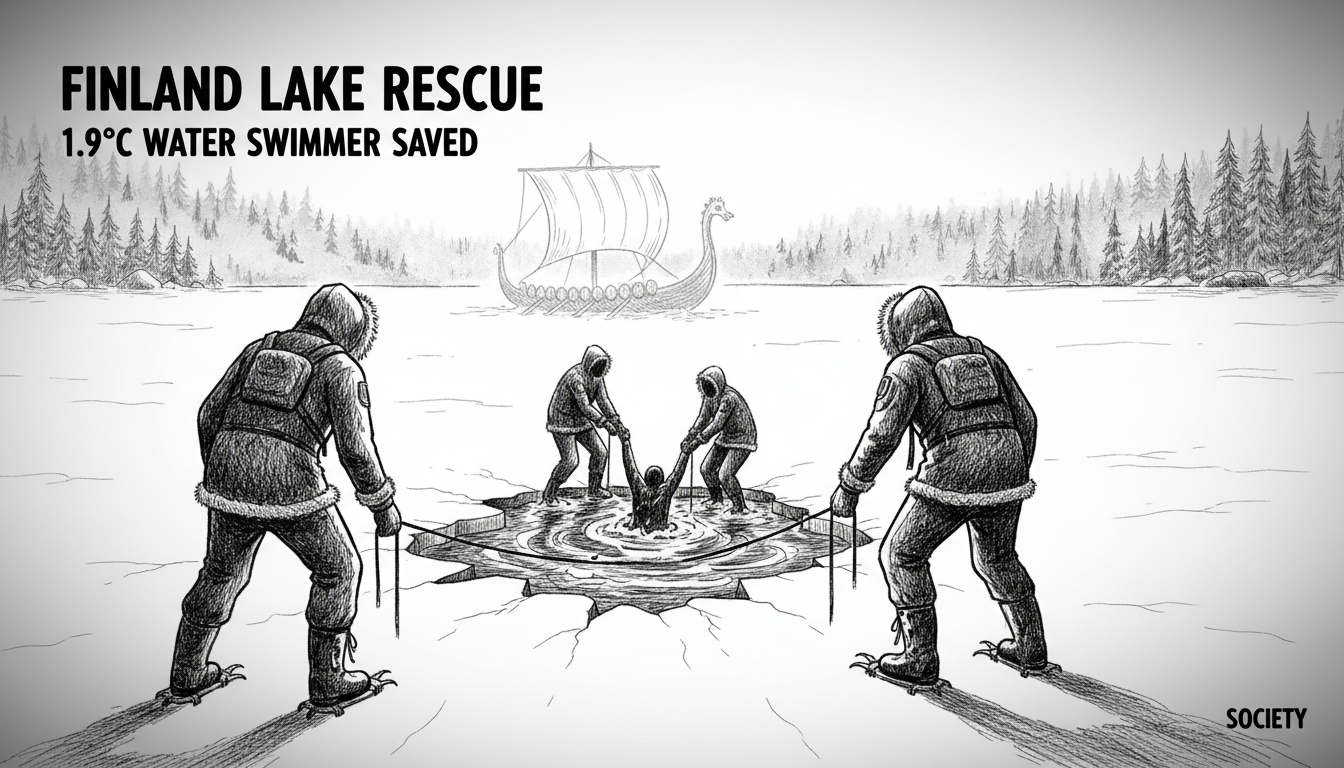
Finland water safety was put to the test in a dramatic rescue on Saturday morning in Jyväskylä. The Central Finland Rescue Department pulled a hypothermic swimmer from the frigid waters of Jyväsjärvi lake after a passerby spotted clothes on the Rantaraitti path and an unresponsive person in the water. Surface rescuers retrieved the individual from 25 meters offshore, and emergency services transported them for further hospital care. The alarm was raised at 9:58 AM, triggering a response from six rescue units. According to the Vesi.fi service, the water temperature in the nearby Päijänne lake was a near-freezing 1.9 degrees Celsius that day.
A Routine Morning Turned Critical
The incident unfolded along Survontie, a lakeside area in the central Finnish city. A citizen walking the popular Rantaraitti path made the crucial first observation: abandoned clothing and a person in the water who did not respond to shouts. This immediate alert to authorities set the rescue operation in motion. The swift dispatch of six units from the Central Finland Rescue Department highlights the protocol for potential cold-water emergencies. Surface rescue teams, trained for such extractions, navigated to the swimmer. "The passerby's alert was decisive," a rescue department spokesperson said in a statement. "In water that cold, every minute is critical for survival."
Finland's landscape, defined by over 188,000 lakes, creates a nation intimately connected to water. Activities like swimming, boating, and winter ice swimming are embedded in the culture. This relationship necessitates a highly proficient rescue service, equipped and drilled for operations in harsh conditions. The Jyväskylä rescue demonstrates this readiness, but also underscores a persistent danger. Drowning remains a cause of accidental death in Finland, with cold water immersion dramatically accelerating risk. Hypothermia can incapacitate a swimmer within minutes, leading to loss of muscle control and consciousness.
The Lethal Reality of Cold Water Shock
Experts point to the physiological shock of entering cold water as the initial, often fatal, threat. "The danger isn't just hypothermia over time; it's the immediate gasp reflex and cold shock response," explains Dr. Eero Laaksonen, a specialist in environmental medicine. "When you hit water below 15°C, the body's automatic reaction is to gasp involuntarily. If your head is submerged, you inhale water. Your heart rate and blood pressure spike dangerously." This can lead to cardiac arrest even in healthy individuals before hypothermia fully sets in. At 1.9°C, functional paralysis can occur in under 10 minutes, with unconsciousness following swiftly.
The rescued swimmer's condition upon retrieval—unresponsive and hypothermic—aligns with this expected rapid onset. The fact they were found 25 meters from shore suggests they may have been swimming or wading before succumbing to the cold's effects. Rescue services emphasize that no one should enter such cold water without proper safety measures, which include a flotation device, a companion, and a warm recovery plan. Swimming alone, especially during the off-season or in early spring when ice has recently melted, is strongly discouraged.
Finland's Water Safety Infrastructure in Action
The operational response provides a case study in Finnish emergency coordination. The Central Finland Rescue Department, like others across the country, maintains specialized water rescue teams. Their training includes ice rescue, swift-water operations, and techniques for treating cold-water immersion victims. The dispatch of multiple units allows for simultaneous tasks: direct rescue, medical stabilization, logistics, and scene management. This integrated approach is vital in a country where lakes and a long coastline are central to community life.
Public awareness campaigns run by organizations like the Finnish Swimming Teaching and Lifesaving Federation (SUH) consistently stress cold water risks. They advocate for the use of life jackets, checking ice thickness in winter, and understanding one's limits. "Respect for the water is part of our culture," says SUH safety advisor Mari Koskinen. "We promote enjoyment of nature, but with a clear mind. The water temperature in our lakes can be deceptive, especially on a sunny day. The surface might look inviting, but a few degrees above freezing is lethal."
A Narrow Escape and a Broader Warning
While the Jyväskylä incident ended with a rescue, it serves as a stark reminder during a transitional seasonal period. As winter ice recedes and spring arrives, people may overestimate their safety near water. The air temperature can be mild while the lake water remains dangerously cold, having just shed its ice cover. This mismatch in perception versus reality contributes to accidents.
The role of the vigilant passerby cannot be overstated. In remote or less-trafficked shoreline areas, such a timely discovery might not occur. Authorities reiterate basic safety advice: inform someone of your plans and expected return time if going near water, avoid alcohol, and wear a personal flotation device. For winter swimmers, who practice cold-water immersion intentionally, the protocols are strict: never swim alone, always use a safety line and ladder, and limit time in the water based on temperature.
The rescued individual's current medical condition has not been disclosed, in line with Finnish privacy practices. Their survival hinges on the speed of the rescue and the subsequent medical care for rewarming and treating potential complications like organ dysfunction. The event is a sobering success story for the rescue services, but a close call that highlights an ever-present natural hazard in the Finnish environment.
Balancing Tradition with Modern Risk Awareness
Finland's affinity for its lakes is timeless, but the understanding of the risks has evolved. The national focus on water safety, from childhood swimming lessons mandatory in school to public service announcements, aims to build a society that enjoys its natural resources wisely. The rescue in Jyväskylä proves the system works when alerted. The broader challenge is preventing the need for the alert in the first place. As climate patterns shift and ice seasons change unpredictably, public education must adapt to new norms and persistent dangers.
Will this narrow escape reinforce the critical message of cold water respect before the summer season truly begins? For the rescue teams who train for these scenarios, the hope is that each publicized incident reinforces vigilance. The beauty of Finland's lakes is undeniable, but their cold embrace demands unwavering respect and preparation from every citizen and visitor who ventures near.