
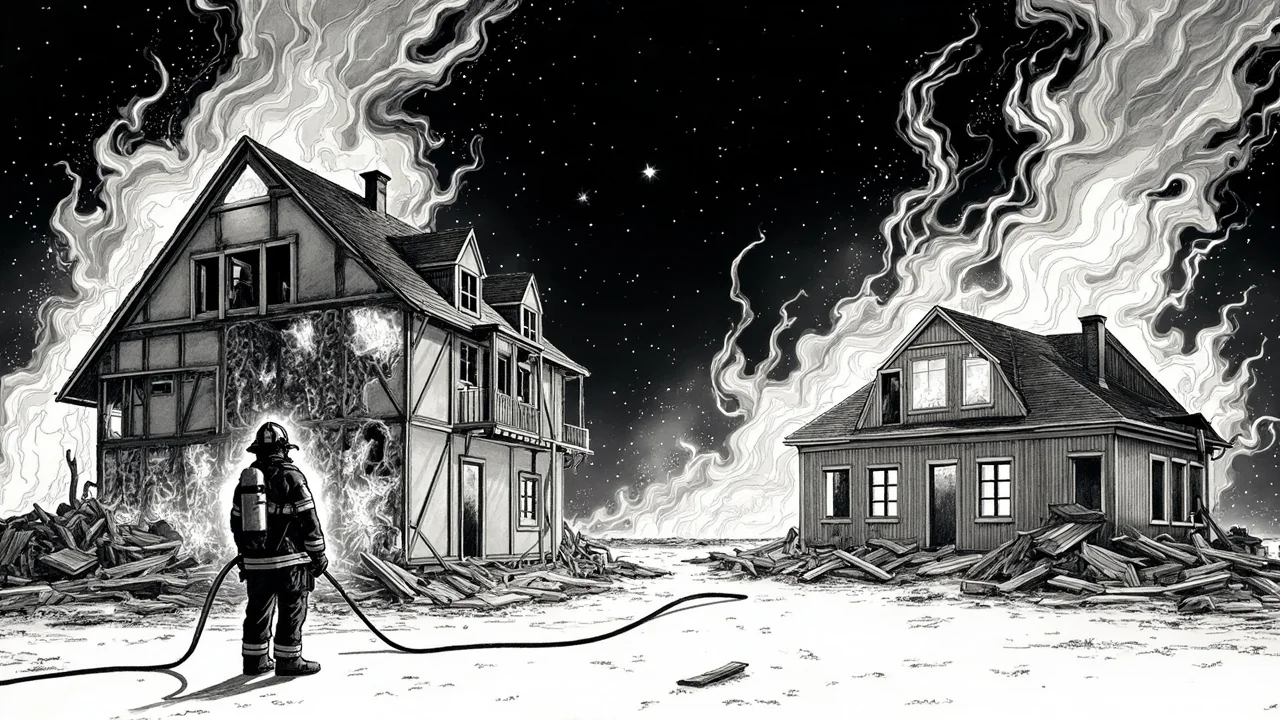
Finnish firefighters battled a destructive overnight blaze in Lohja that completely destroyed a family home and a traditional garden sauna. The fire, reported just before 2:00 AM on Sunday, left only a few walls standing in the densely populated residential area.
Neighbors alerted emergency services to the intense flames that had already engulfed both wooden structures. Duty Fire Chief Pasi Kääriäinen confirmed the extensive damage. "A couple of walls are still standing on each, but you can say they are completely destroyed," Kääriäinen stated. The West Uusimaa Rescue Department reported both buildings were in the full blaze stage when crews arrived. A car parked on the property was also consumed by the fire.
Authorities have no information yet on possible injuries or whether anyone was inside the buildings when the fire started. The cause of the blaze remains unknown, though the rescue department indicated it likely spread rapidly. Police and fire investigators will begin their official inquiry once the site is safe and cool enough to enter. Mop-up operations were expected to continue until at least 11:00 AM.
The Scene in Lohja's Residential Neighborhood
Lohja is a municipality in Uusimaa, approximately 60 kilometers west of Helsinki. The fire occurred in a typical Finnish suburban setting where detached homes, often with separate sauna buildings, are common. Such pihasauna, or garden saunas, are a deeply ingrained part of Finnish culture and family life. The total loss of both primary dwelling and sauna represents a profound destruction of a family's private sanctuary.
Chief Kääriäinen noted the neighborhood is densely populated, raising immediate concerns for surrounding properties. Fire crews successfully contained the blaze to the two structures of origin. No adjacent homes were damaged, and neighbors were not exposed to significant smoke hazards despite the ferocity of the fire. The rapid response prevented a potentially larger disaster.
Understanding the Risks in Finnish Wooden Homes
While the investigation into the Lohja fire's origin is pending, the incident highlights broader safety considerations. Finland has one of Europe's highest rates of wooden house construction, a tradition rooted in the abundance of forest resources. Single-family homes and summer cottages are predominantly built from wood. This material, while sustainable and providing excellent insulation, presents specific fire risks, especially in older buildings.
"Fires in fully wooden structures can reach a critical stage very quickly," explains safety expert and former fire investigator Mikael Forsström. "Modern building codes mandate fire-retardant treatments and careful planning of electrical systems, but older homes may not have these upgrades. A fault in electrical wiring, a fireplace, or even a sauna stove itself can be the source." Sauna stoves, which heat to extremely high temperatures, require proper installation, maintenance, and clearance from combustible materials.
The Aftermath and Insurance Implications
The financial and emotional toll on the property owners will be severe. In Finland, homeowner's insurance (tonttuvakuutus) is not legally mandatory but is held by the vast majority of property owners. A standard policy typically covers fire damage to buildings and other structures on the land, like saunas and garages.
Insurance companies will await the official fire investigation report before processing a claim. Anniina Koski, a claims manager with a major Finnish insurer, outlines the process. "The adjuster's first task is to verify the cause is a covered peril. Once that is established, the coverage for building damage is usually based on the cost of rebuilding to a similar standard. The total loss of two structures is a significant event, but policies are designed for this. The bigger challenge for the family is the personal disruption and loss of irreplaceable items."
Personal belongings inside the home may be covered under a separate contents insurance (irtaimistovakuutus) policy. The destroyed car would fall under mandatory motor insurance (liikennevakuutus), which includes fire damage.
A Community Response and Cultural Loss
Beyond the bricks and mortar, the loss of a sauna resonates culturally. For many Finns, the sauna is a place of physical and mental relaxation, a venue for quiet conversation, and a weekly ritual. A family's sauna often holds decades of memories. Rebuilding it will be about more than construction; it will be about restoring a key part of household tradition.
Local community support networks often activate following such events in Finland. Neighbors may offer temporary housing, meals, or storage space. The municipality's social services can also provide guidance and support to residents displaced by fire.
The Lohja incident is a stark reminder during the colder months when heating systems and fireplaces are in constant use. The Finnish National Rescue Association (SPEK) regularly campaigns for fire safety, emphasizing the importance of working smoke detectors, careful ash disposal from fireplaces and stoves, and having a fire extinguisher readily available. They recommend testing smoke alarms monthly and replacing them every ten years.
As the cleanup in Lohja continues, the focus turns from emergency response to recovery and investigation. The blackened chimney and fragments of wall will stand as a somber landmark while the affected family navigates insurance, temporary housing, and the long process of deciding what comes next. The complete destruction leaves a void in the neighborhood's landscape and a family's life, underscoring how quickly fire can alter futures. Will this event lead to renewed local focus on safety checks for older electrical systems and heating appliances in the community?