
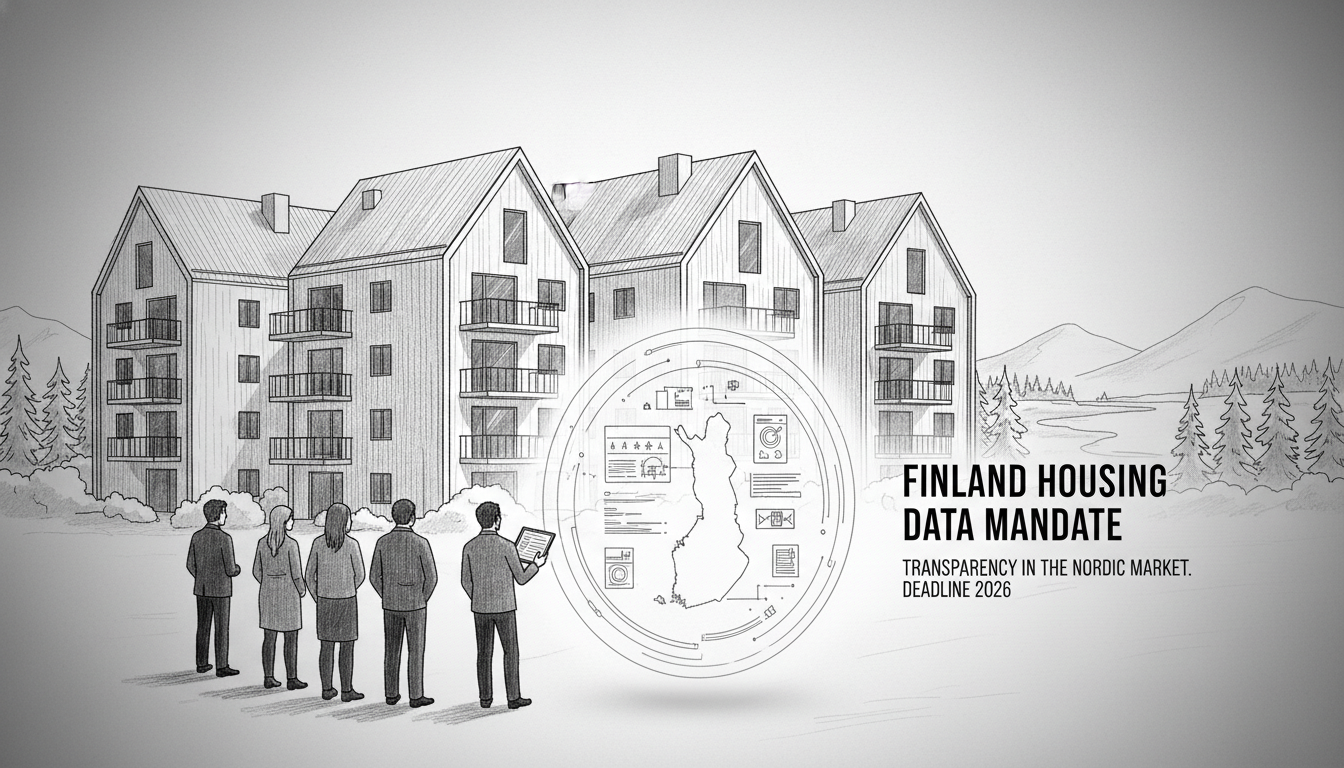
Finland's National Land Survey has activated a new online portal for small housing companies, marking a significant expansion of the country's digital property data system. The move completes the second phase of a national apartment information register that now requires all but the smallest housing cooperatives to report maintenance, renovation, and loan data. Janne Murtoniemi, the director responsible for the service at the National Land Survey, confirmed the portal's launch in a Monday morning economic program, stating it was designed specifically for smaller housing associations without professional property management software.
This regulatory shift means thousands of Finnish housing companies must now document past and planned renovations, including maintenance need assessments, and report all housing company loan details. The deadline for submitting this information is the end of June 2026. Only the very smallest cooperatives with five or fewer apartments are exempt, and only if they carry no shared debt for residents. Murtoniemi encouraged even exempted small companies to submit data voluntarily to create a more comprehensive national database.
The policy represents a substantial administrative change for Finland's distinctive housing model, where apartment ownership typically occurs through shares in a housing company that owns the building. This system, deeply embedded in Finnish property law, places maintenance and renovation responsibilities on the collective company rather than individual owners. The new reporting requirement aims to increase transparency in a market where renovation needs and financial health can vary dramatically between buildings, particularly in older urban areas like Helsinki's Kruununhaka or Kallio districts.
For international observers, this move reflects broader Nordic trends toward digital governance and transparency in housing markets. Similar registries exist in Sweden and Norway, though Finland's approach integrates data more comprehensively across ownership, encumbrances, and now physical maintenance. The European Union's push for standardized property data to facilitate cross-border investment and lending likely influenced the timing, though the implementation is distinctly Finnish in its meticulous attention to detail and phased rollout.
Murtoniemi offered practical advice to smaller housing companies navigating the new obligation. He recommended first agreeing internally on who would submit the data, whether the board chairperson, a property manager, or another designated person. Then companies must locate all renovation documentation before the appointed person submits it through the National Land Survey's web service. This process, while adding administrative work, could ultimately benefit homeowners by creating clearer records for potential buyers and lenders.
The political context here involves Finland's coalition government pursuing digital efficiency across sectors. The Ministry of Agriculture and Forestry, which oversees the National Land Survey, has championed such digitization projects as part of broader public sector modernization. While the policy received cross-party support in the Eduskunta, some center-right politicians expressed concern about administrative burdens on volunteer-run housing boards. The practical reality is that most Finns will encounter this system when buying, selling, or renovating apartments in the coming years, making it a quietly significant change in everyday life.
What does this mean for Helsinki's housing market? The capital region, with its mix of early 20th-century stone buildings and modern tower blocks, will see varied impacts. Older housing companies in districts like Eira or Punavuori may face more complex reporting due to extensive renovation histories, while newer developments in Kalasatama or Suvilahti might have simpler digital records. The transparency could potentially affect property values, as buildings with well-documented maintenance and manageable debt become more attractive to cautious buyers and institutional investors.
The expansion of Finland's apartment information system shows how Nordic countries use technology not just for convenience but for systemic transparency. While adding paperwork for housing companies, the registry could prevent surprises about building conditions or hidden debts, a common issue in older properties. The June 2026 deadline gives companies reasonable time to comply, but the real test will be whether this data actually improves decision-making for homeowners, buyers, and policymakers in Finland's important housing sector.