
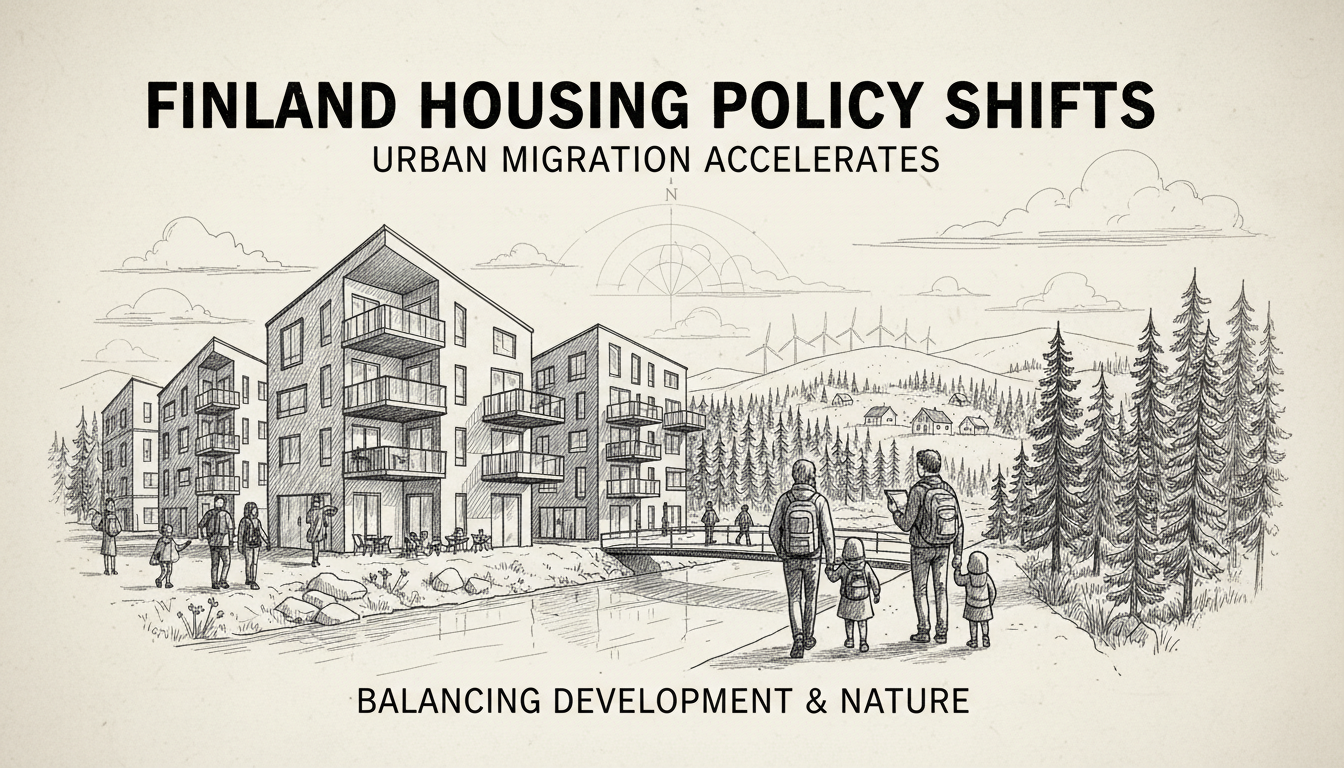
Finland's government faces mounting pressure to address urban housing shortages as migration patterns show increasing movement from rural areas to Helsinki. The recent case of Hannele Nykänen, who relocated from Noormarkku in Western Finland to Helsinki's metropolitan region, exemplifies this national trend. Her search for a modern apartment with renovation-free convenience near family highlights the practical considerations driving these relocation decisions across Finnish society.
Urban migration patterns reveal significant demographic shifts affecting Helsinki's housing market. Many families seek proximity to urban services while maintaining access to natural environments, creating specific demand for well-located apartments with modern amenities. The Finnish government monitors these trends closely as they impact national housing policy and urban development strategies.
Helsinki's suburban concrete apartment buildings, constructed during Finland's rapid urbanization period, now represent sought-after housing options. These properties typically offer through-floor apartments with solid foundations and convenient access to both nature and urban services. Their popularity reflects changing preferences among Finnish residents who value practical living solutions over extensive renovation projects.
Government housing officials acknowledge the challenges in balancing urban development with environmental considerations. The Ministry of Environment continues working on sustainable urban planning initiatives that accommodate population growth while preserving green spaces. Recent parliamentary discussions have focused on zoning regulations and construction standards that support family-friendly urban environments.
Finland's housing policy intersects with broader European Union urban development directives. The EU's focus on sustainable cities influences national approaches to urban planning and housing development. Finnish representatives regularly contribute to European discussions about balancing urban density with quality of life considerations.
The practical reality for many Finnish families involves weighing housing costs against location benefits. While Helsinki offers employment opportunities and services, housing expenses remain higher than in rural municipalities. This economic calculation drives many relocation decisions, with families seeking optimal balance between affordability and accessibility.
Urban development experts note that Helsinki's expansion requires careful management of infrastructure and services. The city's growth patterns influence transportation planning, educational resources, and healthcare provision. Municipal authorities coordinate with national government agencies to ensure adequate support for increasing urban populations.
Future housing policy discussions will likely address the tension between urban concentration and regional development. Some parliamentary members advocate for incentives to maintain vibrant rural communities, while others emphasize the economic benefits of urban clustering. This ongoing debate reflects broader considerations about Finland's demographic future and settlement patterns.