
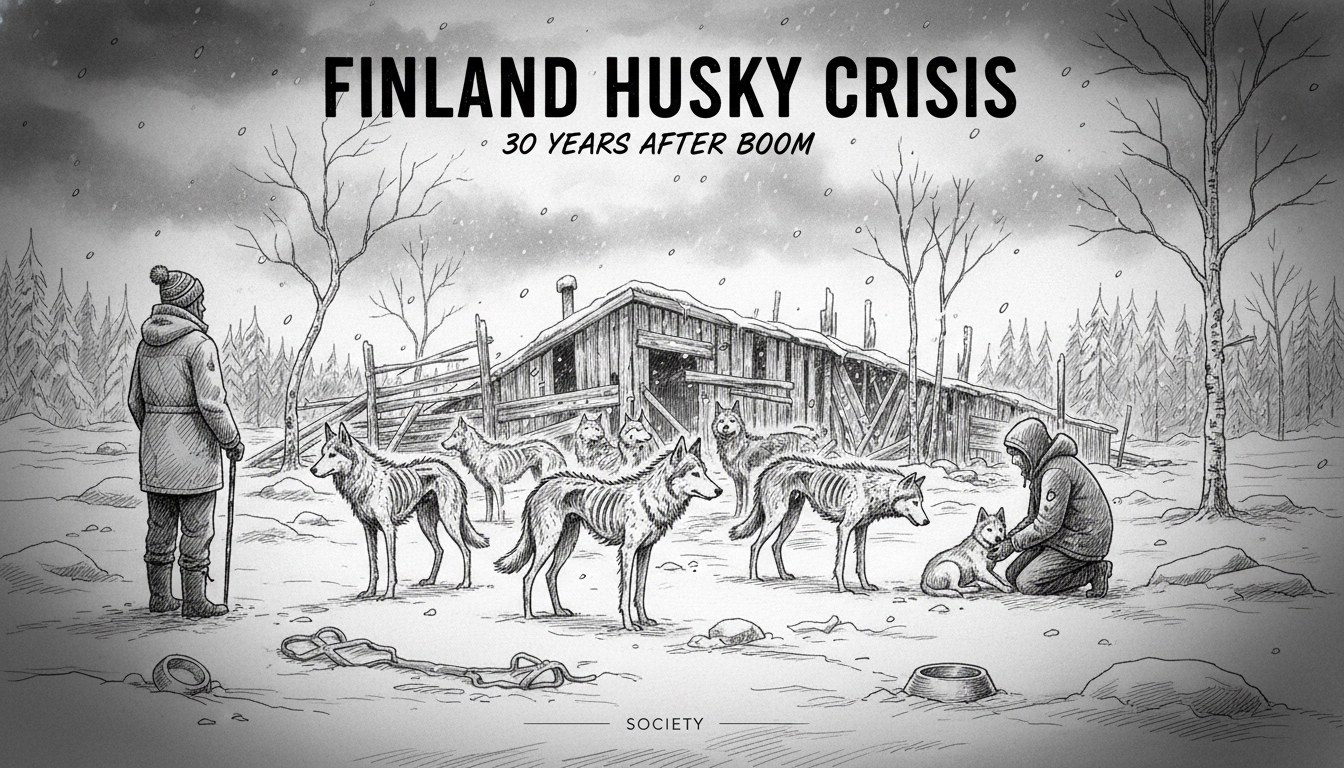
Finland's husky safari industry, expanding since the 1990s boom, faces blistering criticism from pioneer entrepreneur Reijo Jääskeläinen. In a rare public outburst, the founder of Levi Huskypuisto alleges widespread incompetence and unsuitable dogs in Lapland's lucrative dog-sledding tourism sector. "Nowhere else in the world is this done with as weak skills as in Finland," Jääskeläinen stated, delivering a stark warning about the state of a business integral to the Arctic region's identity. His comments expose a deepening rift between tourism growth and animal welfare standards, raising questions for Finnish authorities in Helsinki and EU regulators in Brussels.
A Pioneer's Harsh Assessment
Reijo Jääskeläinen, recognized as one of Finland's first husky entrepreneurs, launched his business during Lapland's tourism explosion three decades ago. He now describes an industry where many operators have acquired dogs for safari use without understanding canine behavior or Arctic demands. The core issue, according to Jääskeläinen, is that most dogs used for tourist rides are fundamentally unsuited for Lapland's harsh conditions. He criticizes the common practice of labeling mixed-breed dogs as "Alaskan huskies," a trend that began during the profitable 1990s boom. "Any animal remotely resembling a dog got a harness put on, and it instantly became a fast Alaskan husky," he remarked, highlighting a dilution of breed standards for commercial gain.
Jääskeläinen operates his safari park with a team primarily composed of Siberian huskies, which he argues are best suited for tourist work due to their temperament and resilience. His critique suggests a race to the bottom in quality, where quantity and profit override animal welfare and authentic experience. This perspective from a foundational figure challenges the narrative of seamless tourism growth promoted by regional development agencies. It directly touches on Finland's national reputation for responsible environmental and animal management, a key pillar of its international brand.
The 1990s Boom and Its Legacy
Dog sledding in Lapland has deep roots in Sami transportation and hunting traditions, but its transformation into a mass tourism product accelerated in the 1990s. As Finland emerged from recession, Lapland marketed its winter wilderness to international visitors, creating high demand for husky safaris. This period saw a rapid influx of new entrepreneurs into the sector, many without prior experience with sled dogs. The economic incentive led to shortcuts in breeding and training, with companies broadly adopting the "Alaskan husky" label for marketing appeal, regardless of genetic lineage.
Experts in animal welfare and sustainable tourism frequently warn that rapid commercialization can compromise care standards. The Finnish government, through the Ministry of Agriculture and Forestry, oversees animal welfare legislation, but enforcement in remote tourism enterprises remains a challenge. The Eduskunta, Finland's parliament, has debated stricter regulations for animal-based tourism in recent years, often referencing EU directives on animal treatment. However, local economic interests in Lapland, a region dependent on seasonal tourism, have historically tempered aggressive regulatory moves. Jääskeläinen's comments may reignite this policy discussion, pushing animal suitability and handler competence to the forefront.
Breeding, Welfare, and Policy Gaps
The controversy centers on the specific claim that many "Alaskan huskies" used in tourism contain so much pointer or other non-northern breed DNA that they are not huskies at all. These dogs, Jääskeläinen asserts, lack the thick coats and endurance required for repeated Arctic safari work, potentially leading to welfare issues during extreme cold. This breeding problem points to a larger systemic issue: a lack of standardized industry qualifications or mandatory breeding protocols for tourism sled dogs in Finland. While Sweden and Norway have more established codes of conduct, Finland's approach has been more laissez-faire, relying on general animal welfare laws.
The European Union's animal welfare strategy emphasizes the "Five Freedoms," including freedom from discomfort and freedom to express normal behavior. Finnish MEPs have occasionally raised concerns about tourism animal welfare in EU forums, but no specific EU regulation governs sled dog operations. This places the onus squarely on national and local Finnish authorities. The Regional State Administrative Agency for Northern Finland conducts inspections, but its resources are stretched across vast geographical areas. Jääskeläinen's critique implies that self-regulation by the industry has failed, necessitating a formal intervention from Helsinki.
The Road to Ethical Tourism
For the Finnish government, balancing Lapland's economic engine with ethical imperatives is a delicate political task. The Ministry of Economic Affairs and Employment promotes tourism growth, while the Ministry of Agriculture and Forestry safeguards animal welfare—a potential bureaucratic conflict. Recent policy updates have focused on climate and sustainability, yet animal welfare within tourism has not been a headline priority. Jääskeläinen's call for expertise and breed integrity could prompt the Eduskunta's Commerce Committee and Agriculture and Forestry Committee to revisit the issue, possibly proposing a licensing system for husky safari operators.
International tourism trends increasingly favor experiences with verified ethical credentials. Scandals involving animal welfare can rapidly damage a destination's brand, as seen in other global contexts. Finland's image as a clean, well-regulated Nordic country is a marketable asset at risk if practices in Lapland contradict that perception. The Finnish Travel and Tourism Board, Business Finland, actively markets Lapland's safaris; Jääskeläinen's warnings suggest a need for closer alignment between marketing narratives and on-the-ground reality. Incorporating independent animal welfare audits into tourism quality certifications could be a viable solution, merging market demands with improved standards.
A Crossroads for Arctic Adventure
Reijo Jääskeläinen's candid assessment serves as a crucial reality check for an industry at a crossroads. The pioneer who helped build Lapland's husky safari phenomenon is now questioning its very foundations. His advocacy for Siberian huskies and professional knowledge is not merely a business preference but a plea for sustainability. As climate change alters Lapland's winters and tourist expectations evolve, the sector's long-term viability may depend on returning to its roots: using appropriately bred dogs handled by experts.
The Finnish government faces a clear choice: maintain the status quo and risk gradual reputational erosion, or enact stronger guidelines that secure both animal welfare and the industry's future. With EU Green Deal principles emphasizing holistic sustainability, Helsinki has an opportunity to lead in ethical Arctic tourism. Jääskeläinen's harsh words are not a condemnation of dog sledding itself, but a demand for its dignified and competent practice. The response from policymakers in the capital will determine whether Lapland's husky safaris remain a symbol of Finnish wilderness integrity or become a case study in tourism gone awry.