
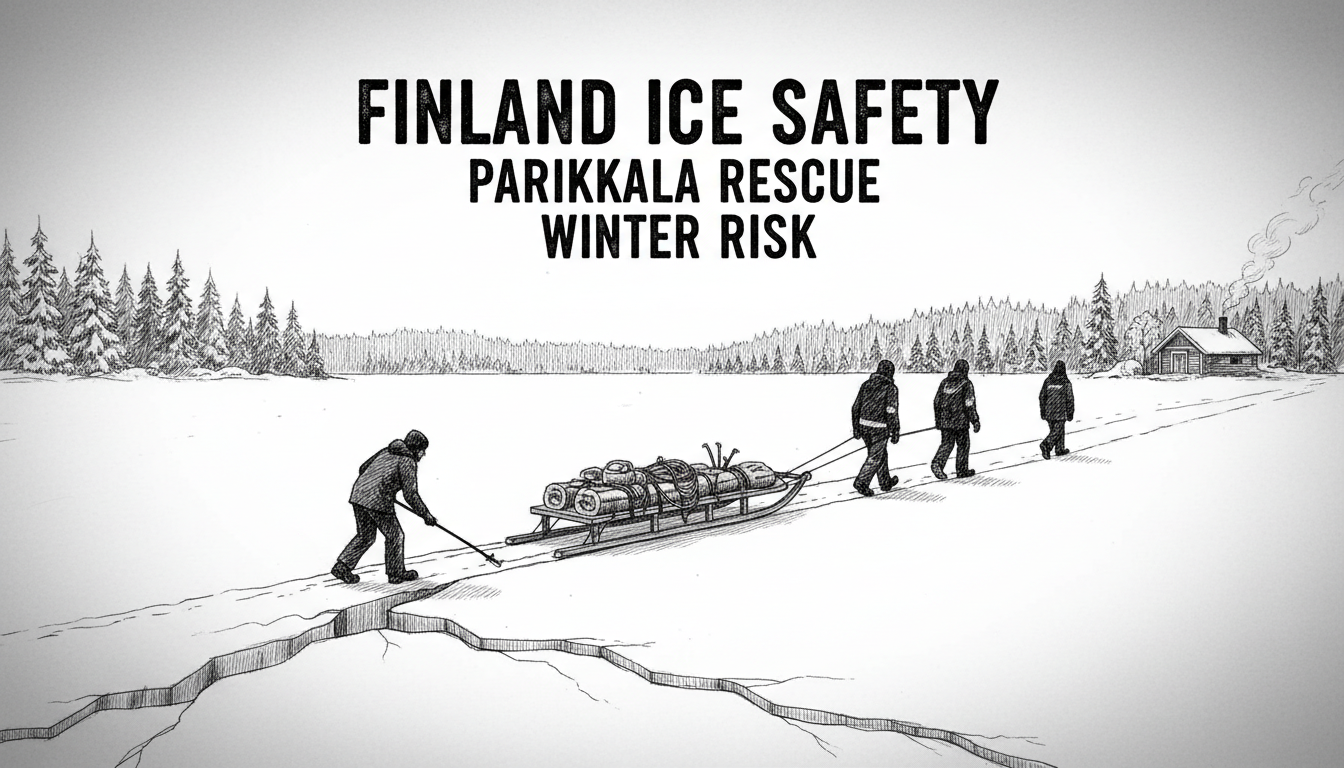
Finland's frozen lakes pose a constant winter risk, a reality underscored by a dramatic self-rescue in Parikkala this week. A person wearing a dry suit fell through the ice on Kalattomanselkä lake near Suitsansaari island on Wednesday afternoon. The individual managed to call emergency services and, crucially, climbed out onto the island using their own strength before rescuers arrived. The South Karelia Rescue Department received the alarm at 5:47 PM and established phone contact to confirm the situation, ultimately determining no active rescue operation was necessary. This incident serves as a potent reminder of the fine line between routine winter activity and crisis on Finland's extensive icy waterways.
A Close Call on Kalattomanselkä
The event unfolded in the late afternoon daylight of a Finnish winter. The exact circumstances leading to the fall remain unclear, but the location—Kalattomanselkä near Suitsansaari in Parikkala, South Karelia—is typical of the lake-dense Finnish landscape. What is clear is that the individual's preparedness played a decisive role in the outcome. Wearing a dry suit, a specialized garment designed to provide thermal protection and some buoyancy in cold water, was likely the key factor that prevented a hypothermic emergency and enabled self-rescue. The rescue services' bulletin noted they 'confirmed the situation' after making contact, a standard procedure to ensure no further assistance was required. The fact that the call to emergency services came from the victim themselves highlights both the accessibility of help and the presence of mind required in such a terrifying situation.
The Ever-Present Danger of Thin Ice
This incident is not an isolated event but part of a recurring seasonal pattern. Finland has approximately 168,000 lakes, and during winter, their frozen surfaces become highways, playgrounds, and fishing grounds. However, ice is a dynamic, living surface. Its thickness and strength are not uniform. 'Ice safety can vary greatly depending on location and weather conditions,' notes data from the Finnish Environment Institute (SYKE). Factors like underwater currents, springs, shifting snow loads, and recent temperature fluctuations can create deceptively weak spots even in areas where the ice appears thick and solid. The early winter period, with intermittent freezing, and the late winter thaw are particularly hazardous times. Yet, as the Parikkala case shows, danger exists throughout the season.
The Critical Role of Preparedness and Gear
Ice safety experts consistently point to preparation as the primary defense against tragedy. The Parikkala individual's dry suit was a critical piece of equipment. These suits, along with flotation suits, are designed to keep a person afloat and significantly slow the onset of hypothermia, buying precious minutes for self-rescue or for help to arrive. Another essential tool is a pair of ice awls or ice claws—spiked handles worn around the neck that allow someone who has fallen through to grip the ice and pull themselves out. Without them, pulling one's body onto a slippery ice shelf is nearly impossible. Experts also strongly advise against venturing onto the ice alone and recommend always informing someone of your planned route and return time. Carrying a mobile phone in a waterproof case, as was done in this case, is another basic but vital safety measure.
Analysis: A Culture of Self-Reliance Meets Modern Safety
The Parikkala incident reflects a deeply ingrained Finnish relationship with nature, one that balances self-reliance with respect for the elements. Activities like ice fishing, cross-country skiing on lakes, and even driving on official ice roads are woven into the fabric of winter life. This cultural comfort can sometimes lead to complacency. The rescue services' response protocol also reveals a efficient system geared towards rapid localization and assessment. Finnish rescue departments are highly trained for ice and water emergencies, equipped with hovercrafts, ice sleds, and diving teams. However, their first message is always prevention, and their second is self-rescue: the immediate actions taken by the individual are the most important. The system is designed to support, not replace, personal responsibility.
The Bigger Picture: Winter Safety Beyond the Lakes
While lake ice incidents capture headlines, Finland's winter safety challenges are broader. The same variable conditions affect sea ice in the archipelago, with even greater risks due to salinity and currents. Urban environments present hazards like slippery sidewalks and falling icicles. The Finnish National Rescue Association (SPEK) and various outdoor associations run annual safety campaigns focusing on ice knowledge, advocating for checking official ice thickness reports when available, and using the 'buddy system.' Yet, official measurements can only cover a fraction of the coastline and lake perimeter, placing the ultimate judgment call on the individual. This creates a complex public safety landscape where education and personal accountability are paramount.
What This Means for Residents and Visitors
For Finns, the story is a seasonal reminder to check gear and conditions. For visitors drawn to Finland's iconic winter wonderland, it underscores the importance of not treating the ice as a uniform, safe surface. Guided tours on ice generally use pre-checked routes with professional oversight, which is the safest way to experience these activities. Independent exploration requires serious preparation and local knowledge. The recommended minimum ice thickness for a single person walking is 5-7 centimeters, but even that can be unreliable without knowing the ice's quality. Snowmobile travel requires at least 15-20 centimeters of strong, blue ice. These rules are not mere suggestions; they are derived from hard experience.
A Final Word: Respect for Nature's Conditions
The successful self-rescue in Parikkala ended without tragedy, making it a case study in both risk and mitigation. It demonstrates that accidents can happen to anyone, even those who are somewhat prepared. The dry suit was the hero of the day, turning a potential fatality into a manageable emergency. The story should prompt every winter enthusiast to audit their safety kit: Are the ice claws accessible? Is the flotation suit in good condition? Has someone been told the plan? Finland's breathtaking frozen landscapes are there to be enjoyed, but they demand a partnership of respect, knowledge, and caution. As the days slowly lengthen and the ice begins its eventual transition, will this winter's lessons in preparedness be remembered for the next?