
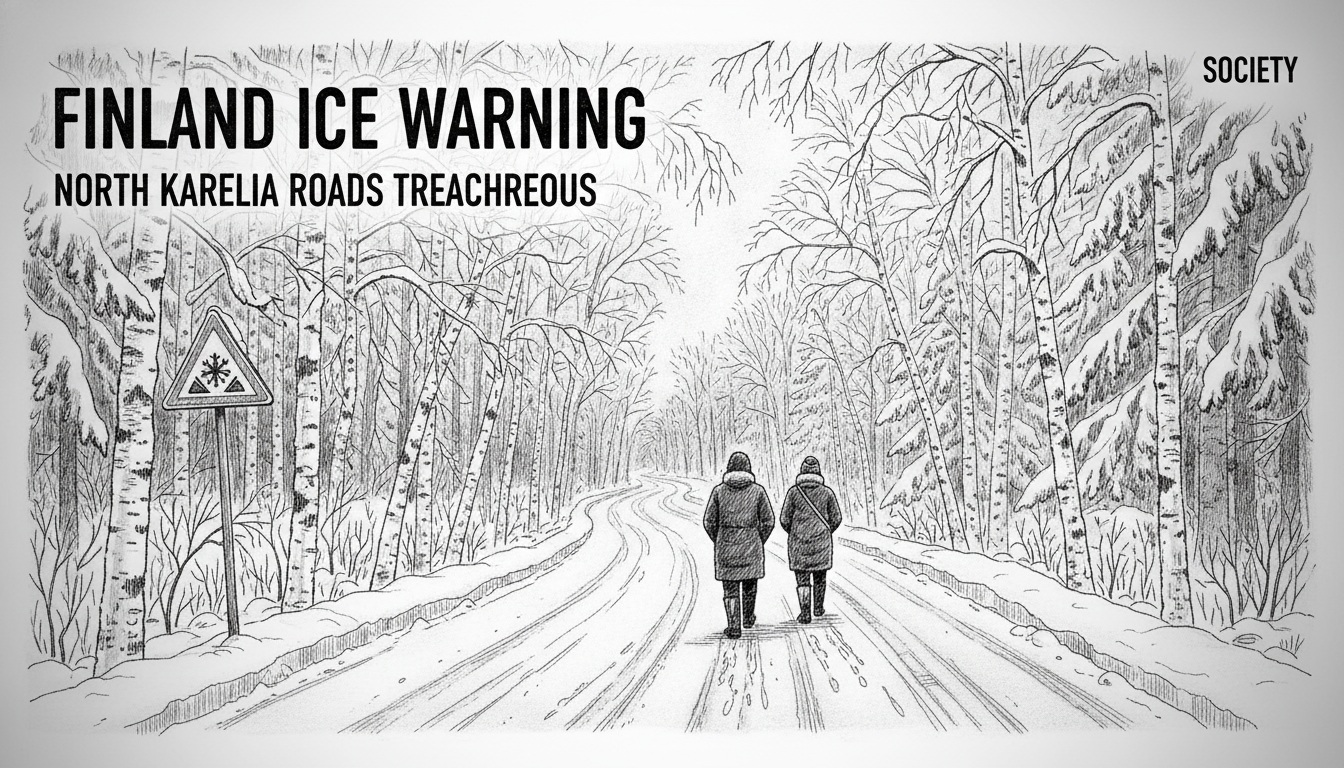
Finland's emergency services issued a stark warning Tuesday morning as treacherous ice and slippery conditions gripped the eastern and central regions. The Finnish Meteorological Institute's warning map showed poor driving conditions stretching from Central Ostrobothnia across to South Karelia and South Savo, reaching into southern Lapland. North Karelia's rescue department delivered the most direct advice: 'So put on your studded shoes and apply glide wax to your skis if you head out on Tuesday morning.'
This is not a routine winter alert. The specific combination of factors creates a high-risk environment. Roads are slick with snow and frost rime, while pedestrian walkways present an even greater hazard with water on top of ice. 'Light traffic routes are extensively very slippery, and the risk of slipping is significant,' the institute's warning stated. The immediate consequence is a tangible strain on emergency resources. North Karelia Rescue Department confirmed that both rescue and emergency medical tasks were increasing across its region Tuesday morning.
A Seasonal Hazard with Concrete Consequences
Such warnings are a familiar part of the Finnish winter cycle, yet their regularity does not diminish their danger. The transition periods between seasons, particularly autumn to winter and winter to spring, are peak times for hazardous 'black ice' and sudden temperature shifts that catch drivers and pedestrians off guard. In 2022, Finland recorded 34,776 traffic accidents involving personal injury, with numbers consistently rising during the winter months due to adverse conditions. Each warning from the Meteorological Institute represents a critical public safety intervention, aiming to mitigate the predictable spike in accidents.
The geographical focus of Tuesday's warning highlights regional vulnerabilities. North Karelia, bordering Russia in eastern Finland, often experiences more severe winter conditions than coastal areas. Its climate and topography make it a frequent epicenter for ice warnings. The rescue department's specific call for studded footwear underscores the localized reality. While winter tires are legally mandated and a national norm, the advice to don 'nastakengät'—shoes with metal studs—speaks to conditions severe enough to challenge even prepared citizens on foot.
The Science Behind the Slipperiness
The current hazard stems from a precise meteorological recipe. The institute cited 'huono liikennesää'—poor driving weather—caused by snowy and frost-covered roads. Frost rime, a feathery ice coating that forms when supercooled water droplets freeze on contact with surfaces, creates a particularly slick layer on asphalt. More dangerously for pedestrians, walkways have become ice rinks with a layer of water on top, eliminating almost all friction. This phenomenon occurs during temperature fluctuations around the freezing point, where melting surface ice is trapped by colder air or underlying ice, preventing drainage.
Road safety experts consistently emphasize a triad of precautions for such conditions: proper winter tires, significantly reduced speeds, and increased following distances. 'The difference between summer and winter tires is not just about traction; it's about braking distance on ice, which can be several times longer,' explains a veteran Finnish driving instructor familiar with eastern routes. For pedestrians, the advice is simpler but often ignored: slow down, choose routes with gravel or snow cover, and use appropriate footwear. The rescue services' plea is a direct response to the high volume of fall-related injuries that flood clinics during these periods, straining the entire emergency response chain from ambulance crews to emergency rooms.
Emergency Services Under Pressure
The warning carries an operational subtext for Finland's public safety infrastructure. When the North Karelia Rescue Department notes an increase in tasks, it signals a tangible resource allocation challenge. Each slip-and-fall callout or minor traffic collision requires personnel and vehicles, potentially delaying responses to other emergencies. This strain is a calculated, annual burden for Finnish rescue departments, but peak days like the one forecasted test their capacity. The system relies heavily on public adherence to warnings to moderate the incident volume.
This interplay between forecast, public warning, and emergency preparedness is a finely tuned process in Finland. The Meteorological Institute's publicly accessible warning maps are a key tool, offering visual, real-time risk assessment for the entire country. Municipalities and rescue districts use these alerts to prepare their teams, sometimes pre-positioning resources in anticipation of high call volumes. The explicit mention of increased tasks in the public warning itself is a strategic communication tactic, aiming to convey the seriousness of the situation beyond mere inconvenience.
Cultural Adaptation to a Harsh Climate
Finland's relationship with winter hazards is deeply embedded in its culture and regulations. The mandatory winter tire period, running from November to March (with regional adjustments), is a legislative recognition of environmental reality. Public awareness campaigns, often led by the Finnish Transport and Communications Agency (Traficom), reinforce safe practices annually. Yet, as this week's warning shows, compliance and constant vigilance are necessary. The term 'petollinen'—treacherous or deceitful—used in warnings perfectly captures the threat: conditions that appear manageable but are dangerously slick.
This cultural adaptation extends to urban planning. Cities like Helsinki and Joensuu in North Karelia maintain extensive winter maintenance routines, plowing and graveling streets and paths. However, during periods of active freezing rain or rapid temperature changes, even the most efficient services cannot keep all surfaces safe. The responsibility then shifts to the individual, armed with the right equipment and information. The rescue department's almost folksy advice about skis and studs is a very Finnish solution, blending traditional winter mobility with modern safety.
Looking Beyond the Immediate Warning
While Tuesday's focus is on eastern Finland, the pattern serves as a reminder for the entire country. As climate change alters winter weather patterns, experts note potential increases in freeze-thaw cycles, which are prime conditions for ice formation. This could make such treacherous periods more frequent or unpredictable. The existing warning systems and public preparedness will become even more critical. The effectiveness of Finland's model lies in its integration: scientific forecasting from the Meteorological Institute, clear public messaging, a legal framework for vehicle safety, and a culturally ingrained respect for winter's dangers.
The final measure of this system's success is a quiet one: a reduction in preventable accidents. When rescue departments do not see a significant spike in calls despite a severe weather warning, it indicates the public heeded the advice. The hope embedded in the North Karelia warning is that citizens will choose to delay trips, work from home, or at least equip themselves properly. In a nation where winter lasts half the year, resilience is built not just on infrastructure, but on the collective decision to put on those studded shoes and tread carefully.
Will the public's response to this latest alert demonstrate the learned resilience that defines Finnish winter survival, or will emergency rooms see the usual influx of slip injuries? The answer lies with every individual stepping out their door.