
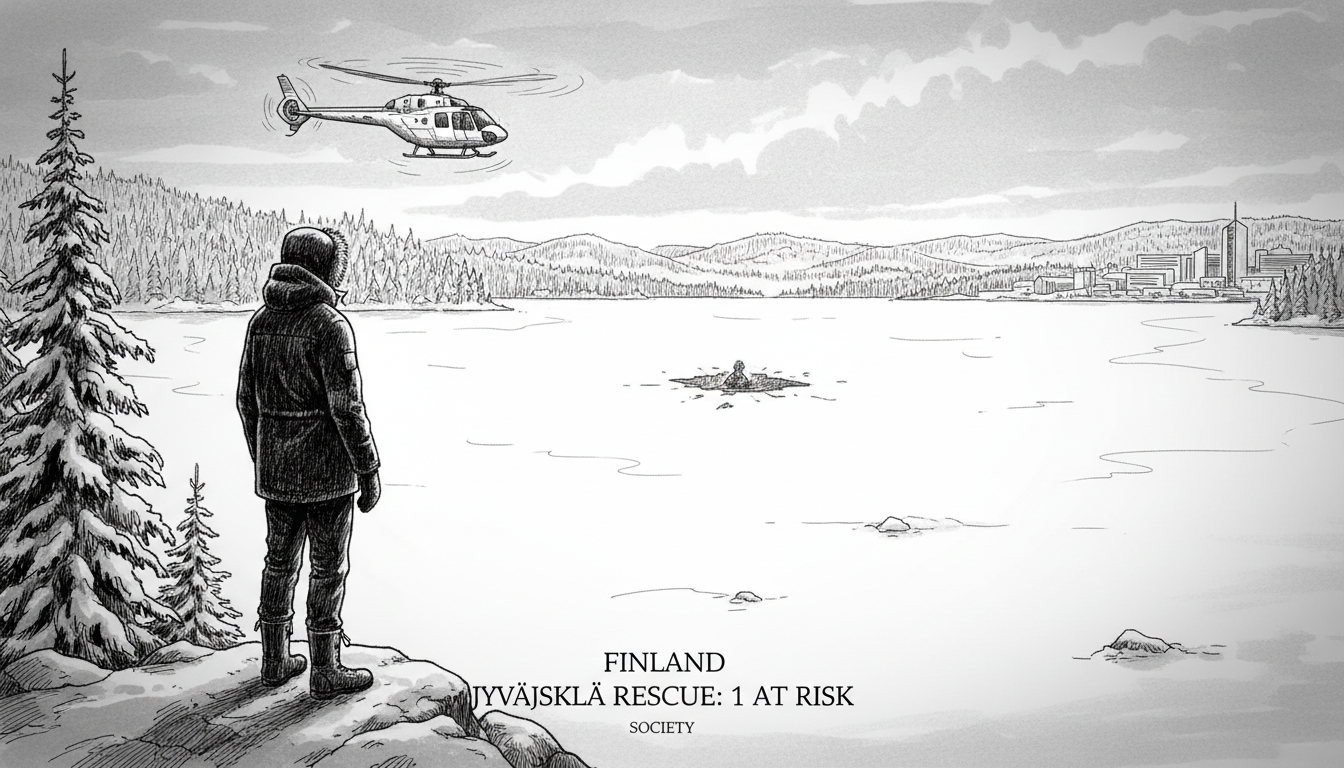
Finland rescue services are racing against time to save one person in Jyväskylä's Kanavuori area after a distress call at 15:16 local time. The Keski-Suomen pelastuslaitos, Central Finland Rescue Department, deployed two units to assist police in the operation. Authorities have released minimal details, indicating a sensitive or ongoing situation in the rugged terrain. This incident highlights the critical coordination between Finnish emergency services in remote locations.
Rescue Operation Launched
Emergency responders received the alert for a person requiring rescue in Kanavuori at 3:16 PM. The Central Finland Rescue Department is supporting police efforts with specialized teams. Jyväskylä police will provide further updates, standard protocol for operations where public safety or investigation integrity is paramount. The silence suggests a complex rescue is underway, demanding careful management.
Finland's rescue services operate under municipal authority, with regions like Keski-Suomen pooling resources for efficiency. This structure ensures rapid response but faces challenges in vast, forested areas. The Kanavuori operation tests this system, relying on trained personnel and equipment suited for difficult landscapes. Every minute counts in such scenarios, where weather and daylight become factors.
Understanding Kanavuori's Terrain
Kanavuori is part of Jyväskylä's expansive natural environment, characterized by dense forests and uneven ground. This topography complicates rescue missions, often requiring off-road vehicles, drones, or manual traversal. Central Finland is known for its lakes and wilderness, attracting outdoor enthusiasts but posing risks for the unprepared. Rescue experts note that similar operations elsewhere in Finland have taken hours, even with advanced technology.
Jyväskylä, a city of over 140,000, balances urban development with access to nature. Kanavuori represents this blend, where residents hike and explore. However, accidents can happen suddenly, turning recreation into emergency. The rescue department trains for these contingencies, emphasizing terrain navigation and first aid. Their collaboration with police ensures a unified command structure during crises.
Finnish Emergency Response Framework
Finland's rescue services are governed by the Rescue Act, which mandates municipal responsibility for emergency preparedness. The Central Finland Rescue Department exemplifies regional cooperation, covering multiple municipalities. This model is funded through local taxes and state subsidies, reflecting Finland's commitment to public safety. In Parliament, the Eduskunta periodically reviews rescue funding, especially after notable incidents.
EU directives on civil protection also influence Finnish practices, promoting cross-border training and resource sharing. However, day-to-day operations remain locally managed, allowing flexibility for regional challenges like those in Central Finland. The Kanavuori rescue draws on this integrated approach, where police handle law enforcement and scene security while rescue teams focus on extraction and medical aid.
Expert analysis points to the high training standards of Finnish rescue personnel. They undergo rigorous drills for wilderness rescues, which are common in a country with extensive forests. The lack of immediate details in this case may stem from operational secrecy to avoid interfering with the rescue. Such discretion is standard, prioritizing the victim's safety and the responders' efficiency.
Historical Context and Risks
Similar rescues in Finnish nature areas occur regularly, especially during summer and autumn when outdoor activity peaks. Data from the Finnish Rescue Services Association shows hundreds of wilderness interventions annually. Most involve hikers, hunters, or foragers who become lost or injured. The terrain in places like Kanavuori can deceive even experienced outdoorspeople, leading to slips or health emergencies.
Climate change introduces new risks, with unpredictable weather causing more sudden storms or temperature drops. This adds pressure on rescue services to adapt their strategies. In Central Finland, local authorities have invested in better communication gear and all-terrain vehicles. The current operation will likely inform future preparedness plans, potentially triggering policy discussions in Helsinki.
The Finnish government emphasizes preventative measures, like public education on wilderness safety. However, when rescues are needed, the response must be swift and coordinated. The Kanavuori incident tests this readiness, with outcomes potentially influencing budget allocations. As a political correspondent, I see these operations as practical demonstrations of Finland's social contract, where state services protect citizens in remote locations.
What Comes After the Rescue?
Once the person is recovered, the focus will shift to medical care and investigation. Police will determine the circumstances leading to the distress call, which could range from accidental injury to a medical episode. The rescue department will debrief to identify lessons for future operations. This process is crucial for continuous improvement in Finland's emergency response network.
For the public, such events underscore the importance of preparedness when venturing into nature. Carrying a phone, informing others of routes, and understanding one's limits can prevent emergencies. Jyväskylä's officials may renew safety campaigns, leveraging this incident to raise awareness. The role of local media in reporting responsibly, without compromising rescue efforts, remains key.
Finland's commitment to its rescue services is unwavering, but each operation reveals areas for enhancement. As technology evolves, drones and GPS tracking could become more prevalent in wilderness rescues. The EU's focus on digital emergency systems might accelerate such adoption. For now, the human element—trained responders braving challenging terrain—remains at the heart of missions like Kanavuori.
This rescue operation, while specific to Jyväskylä, reflects broader Nordic values of collective security and environmental respect. How Finland balances its love for nature with the risks it poses will shape future policy debates. For today, all attention is on Kanavuori, hoping for a safe conclusion that reaffirms trust in the system designed to protect every citizen, no matter where they are.