
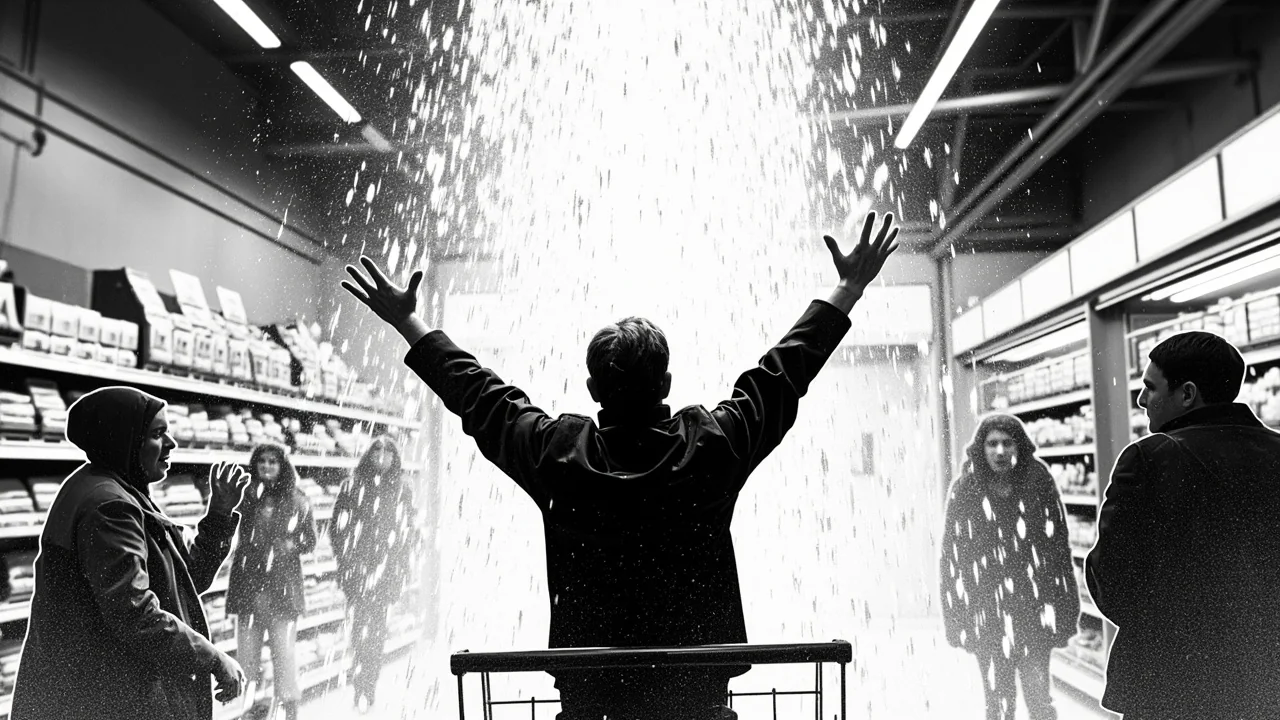
Finland's capital Helsinki experienced a bizarre retail incident when a burst pipe sent a cascade of warm water onto a customer inside a downtown K-Market. The event at the Erottaja store on Thursday evening turned a routine shopping trip into an unexpected shower for one young man, highlighting how the nation's extreme winter weather can penetrate even the heart of the city.
"My friend went into a bit of shock when suddenly warm water came pouring down on him," a witness at the scene reported. The customer, who was standing in the store's vestibule, was not completely drenched but received an alarming soaking. Staff reacted swiftly, placing plastic crates under the stream to contain the water, repeatedly emptying them as they filled.
Store owner Tom Färdig identified the cause as a combination of severe frost and malfunctioning entrance heaters. "You might not think this would be typical in downtown Helsinki, but such a biting cold complicated our day here at Erottaja too," Färdig explained. The intense cold caused a heating pipe in the vestibule's radiator to freeze and rupture. He noted the entrance warm-air blowers were in poor condition, which contributed to the pipe freezing.
A Swift Response Limits Damage
The incident, while dramatic, was resolved with impressive speed. A maintenance technician arrived on-site within thirty minutes and stopped the leak. Färdig emphasized that most of the water flowed out toward the street rather than into the building itself, preventing major interior damage. "The water was perhaps more of a nuisance once it froze on the street," he assessed. The store is located above a parking garage, which protected offices or storage areas below from water damage.
A temporary blower has been installed in the vestibule, with a permanent replacement unit scheduled for installation within two weeks. Only minor drying work is now anticipated. The episode serves as a vivid, if localized, example of infrastructure strain during Finland's winter, even in a central urban environment where such problems are less common.
Winter's Grip on Urban Infrastructure
This incident, though minor, opens a window into the constant battle Finnish municipalities and businesses wage against winter. Helsinki's public works department budgets millions annually for winter maintenance, focusing on road salting, snow removal, and ensuring public building integrity. While major systems are robust, auxiliary elements like entrance heaters in private businesses represent a vulnerable point. Property management experts note that vestibule or "tuulikaappi" heating systems are critical for preventing exactly this type of freeze-and-burst scenario, creating a thermal barrier between the harsh exterior and the building's internal plumbing.
"It's a chain reaction," explains a Helsinki-based facility manager familiar with commercial properties. "The entrance air curtain or heater fails, the vestibule space drops to near-outdoor temperatures. Any water pipe in that zone, even for a radiator, is at immediate risk if the cold is severe enough. The pipe freezes, the ice expands, and the metal or joint fails. Then, when the heating system cycles or the ice eventually thaws, you have a major leak." The speed of the K-Market repair crew likely prevented the water from causing electrical issues or structural damage to the shop floor.
The Human Element in a Mechanical Failure
Beyond the plumbing failure, the response highlights a familiar Finnish pragmatism. The cashier's immediate action—using available plastic crates to manage the flow—was a practical, hands-on solution. There was no panic, just a methodical approach to containment. This aligns with a broader cultural competency in facing weather-related challenges. For the customer who got wet, the experience was undoubtedly startling, but also peculiarly Finnish: an inconvenience born directly from the environmental extremes that shape life here.
Similar small-scale infrastructure issues are reported across the country each winter, from frozen pipes in older residential buildings to malfunctioning door seals in public transport hubs. They rarely make headlines but form part of the seasonal rhythm. The Erottaja incident gained attention precisely because of its unusual location in a bustling city center and its direct, personal impact on a customer. It breaks the expectation that such hassles are confined to rural areas or poorly maintained properties.
Business Continuity and Consumer Safety
From a business perspective, the event tests crisis management on a micro-scale. K-Market, part of the S-Group retail cooperative, has protocols for property incidents. The primary goals are ensuring customer safety, minimizing damage, and resuming normal operations as fast as possible. Redirecting the water, calling a technician, and communicating the cause were all executed effectively, suggesting sound basic training for staff.
Consumer safety authorities note that slips and falls from water ingress are a more common risk than the water itself. The staff's quick action to control the flow and, presumably, to mark any wet floors inside, would have been crucial. Had the pipe burst over a refrigerated aisle, creating a pool of water near electrical equipment, the situation would have been far more dangerous. The location in the entryway, while unfortunate for the one customer, was arguably the safest place for such a failure within the store.
A Microcosm of Climate Resilience
Finland is often cited for its climate resilience and adaptation strategies, planning for heavier snowfall and temperature fluctuations. However, this small event is a reminder that resilience depends on maintaining countless small components. It's not just about flood barriers or forest management; it's about ensuring the door heaters work at a local grocery store. As winters continue to exhibit volatile patterns with periods of intense cold, the maintenance of these peripheral systems becomes more critical.
Will this lead to a city-wide inspection of vestibule heaters? Unlikely. But for property managers, it's a case study. Proactive winterization includes checking these often-overlooked systems before the deep cold sets in. The cost of servicing a heater is minimal compared to the cost of water damage, even a small leak, and the potential public relations oddity of drenching a shopper.
Looking Ahead: Winter's Unpredictable Challenges
The repaired K-Market at Erottaja will soon have its new heater, and the story will become a funny anecdote. Yet, it underscores a fundamental truth about life in Finland: society is built to withstand winter, but that requires constant, vigilant upkeep. The extreme cold that delivers picturesque snowy landscapes and ideal conditions for winter sports is the same force that tests every seal, pipe, and wire.
This incident ended with a damp jacket and some spilled water, not a major disaster. The response was efficient and calm. In that sense, it was a perfectly managed minor winter crisis. But it leaves us with a question: as our climate changes and weather patterns grow more extreme, are we paying enough attention to the small, mundane pieces of infrastructure that keep our daily lives running smoothly when the temperature plummets? The answer, for one Helsinki K-Market, was a lesson learned with a splash.