
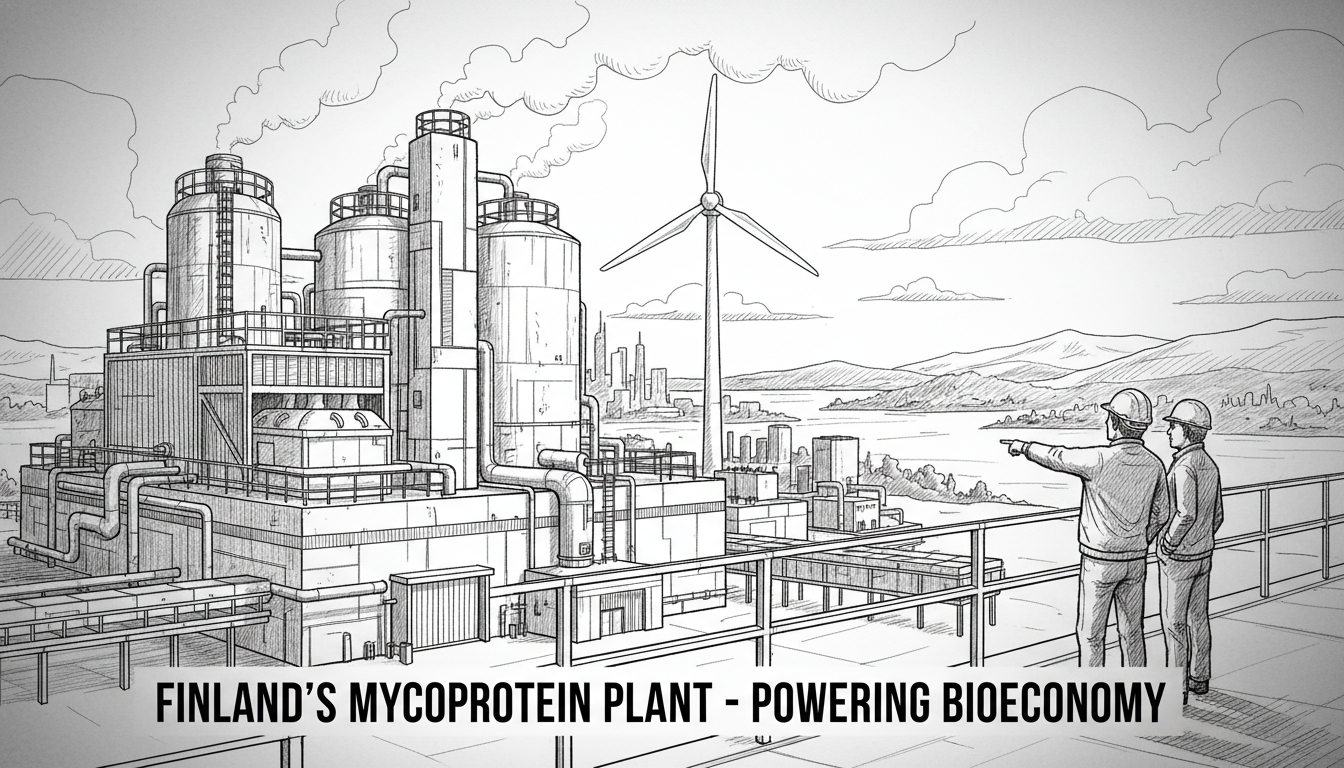
A major mycoprotein production facility in Lappeenranta, Finland, is reaching its final construction phase after overcoming significant initial funding challenges. The project's core components, a series of 27,000-liter bioreactors, are now fully erected on site, marking a critical milestone for the venture led by entrepreneur Alejandro Antalich. The entrepreneur expressed profound relief, stating he could 'breathe again' now that the massive reactors are in place and the project has passed its most precarious financial stage. Engineers from Latvia are scheduled to arrive imminently to install and commission the bioreactors, a process expected to take approximately six weeks. This development signals a tangible shift for Finland's bioeconomy strategy, moving from pilot-scale research to commercial-scale production of sustainable protein alternatives.
The completion of this plant positions Finland at the forefront of the European Union's strategic push for food security and alternative protein sources. The EU's Farm to Fork strategy explicitly supports the development of sustainable, locally-produced food systems to reduce reliance on imported animal feed and meat. A facility of this scale, producing fungal-based protein, directly aligns with Brussels' directives on circular bioeconomy and climate-neutral food production. The project's location in the South Karelia region, a hub for Finnish clean tech and bio-industry, is no coincidence. It leverages existing expertise and infrastructure, while the cross-border involvement of Latvian engineering talent underscores the pan-Nordic and Baltic collaboration common in such industrial projects.
From a national policy perspective, the plant's progress validates recent Finnish government investments in the bioeconomy sector. The Ministry of Economic Affairs and Employment has identified biotechnology as a key growth area. The successful scaling of this facility from a pilot plant demonstrates a viable pathway for other Finnish deep-tech startups. It also answers a persistent question about the commercialization of research originating from Finland's strong academic institutions in fields like synthetic biology and food science. The project faced real skepticism during its funding phase, a common hurdle for capital-intensive industrial biotechnology ventures. Its current trajectory shows that with sustained effort, such ventures can secure the necessary backing to reach fruition.
What does this mean for Finland's economic and agricultural landscape? The operational plant will create new high-skill jobs in engineering, biotechnology, and logistics in the Lappeenranta region. It provides a new, local source of protein that could supply the Nordic food and feed industries, potentially increasing resilience against global supply chain disruptions. The technology itself, using bioreactors to cultivate mycoprotein, represents a less resource-intensive method of protein production compared to traditional livestock farming, aligning with Finland's ambitious carbon neutrality goals. The real test will come in the next quarter when the installation is complete and production ramps up. Market acceptance, production costs, and the ability to scale output will determine the long-term impact of this significant industrial undertaking.