
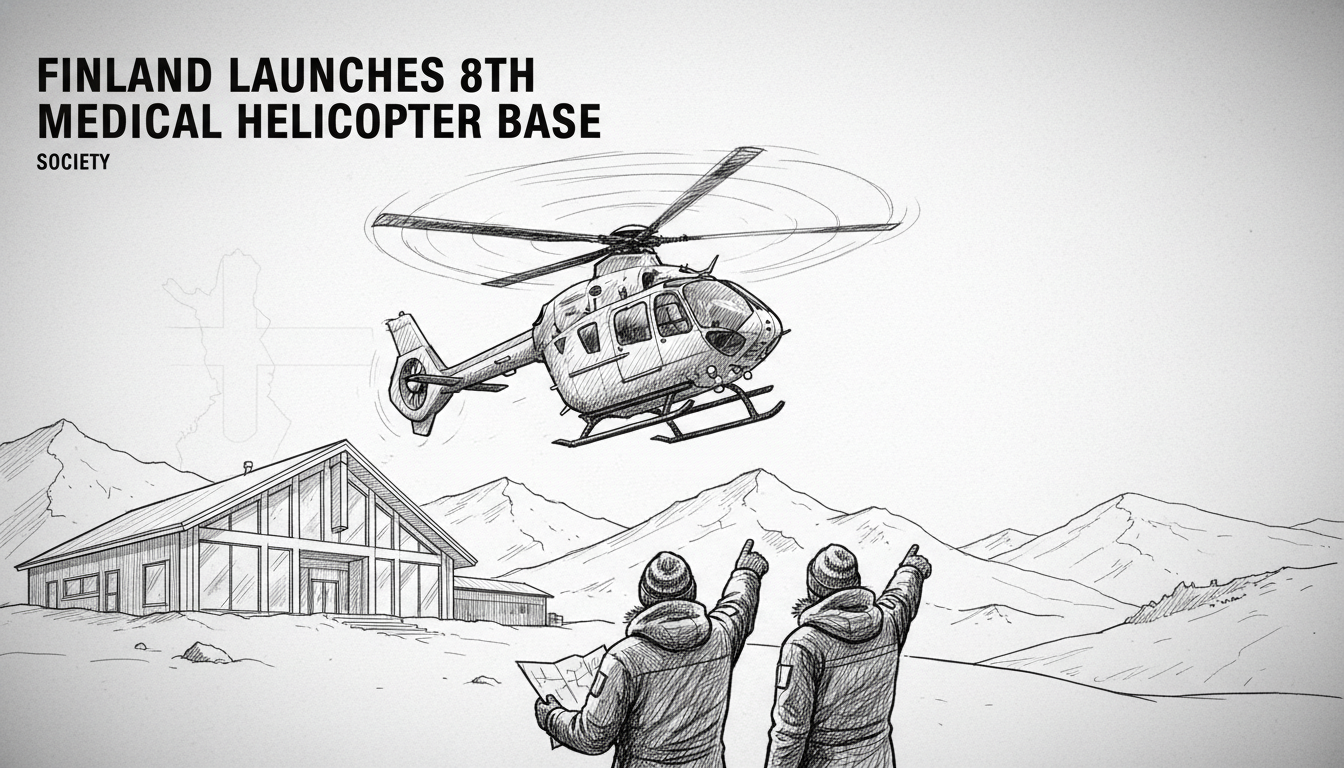
Finland's emergency medical services network expands with a new air ambulance base in Utti starting January 7th. This addition strengthens critical care access across the country's vast rural landscapes, where distance and terrain often delay lifesaving interventions. The Utti helicopter base will operate as part of a nationwide system designed to bridge geographical gaps in healthcare delivery.
A Lifeline for Rural Finland
For residents in remote areas of Eastern Finland, the Utti medical helicopter represents more than just new machinery. It signifies a faster response to cardiac arrests, severe accidents, and other medical emergencies where every minute counts. Finland's population of 5.5 million is spread across a territory marked by dense forests and over 180,000 lakes. Ground ambulance routes can be long and winding, especially during harsh winter months. The helicopter emergency medical service (HEMS) network is a strategic answer to this persistent logistical challenge.
The Utti base, located near Kouvola, is the eighth such facility in the national HEMS framework. Its establishment follows a long-term plan by the Finnish government to ensure equitable emergency care. The Social Affairs and Health Committee in the Eduskunta has consistently backed funding for these services, recognizing their role in fulfilling the constitutional right to health. This move aligns with broader Nordic welfare principles, where geographical location should not determine survival odds.
Operational Details of the Utti Base
During an emergency call, the Utti helicopter will carry a crew of four specialized personnel. This team typically includes a pilot, a paramedic, and an emergency care doctor. Their mission is to deliver advanced medical stabilization directly at the scene or during rapid transport to a central hospital. The base's January launch was confirmed by the Finnish Institute for Health and Welfare, which oversees HEMS coordination.
Finland's existing seven helicopter bases are stationed in cities like Helsinki, Turku, and Oulu. The Utti addition fills a coverage gap in the Kymenlaakso and South Savo regions. Operations will be integrated with the national 112 emergency response center. Calls are triaged based on location, severity, and weather conditions to deploy the fastest appropriate resource. This system has proven effective in reducing mortality from trauma and time-sensitive illnesses.
Expert Analysis on HEMS Effectiveness
Medical experts underscore the value of these services. 'Helicopter emergency medical services are not just about speed; they are about bringing the emergency department to the patient,' said Dr. Elina Saari, a HEMS medical director. 'For a country with Finland's geography, strategic air ambulance placement is a cost-effective investment in public health outcomes.' Studies in Scandinavia show that HEMS interventions can improve survival rates by 10-15% for critical cases in remote locations.
The Finnish model emphasizes physician-staffed helicopters, which is less common in some other European countries. This allows for complex procedures like emergency anesthesia or thoracotomy to be performed en route. The system is funded through state budgets and municipal contributions, reflecting the high priority placed on universal healthcare access. Maintenance and operational costs are significant, but policymakers argue the human and economic benefits of saving productive lives justify the expenditure.
Government Policy and EU Context
This expansion is rooted in Finland's National Emergency Medical Services Plan, revised in 2022. The plan mandates a response time target of 60 minutes for advanced medical care anywhere in the country. The Centre Party and Social Democrats have both championed rural healthcare investments, making the Utti base a cross-party achievement. Minister of Family Affairs and Social Services Aki Lindén recently highlighted HEMS as a 'cornerstone of our social safety net.'
While emergency medical services are a national competence, EU cohesion policy indirectly supports such infrastructure. Funds from the European Regional Development Fund have been used for regional development in Eastern Finland, which can include improving healthcare accessibility. Furthermore, EU aviation safety regulations (EASA) govern the operational standards of medical helicopters, ensuring strict safety protocols for both patients and crews. Finland's approach often serves as a reference point in EU discussions on rural healthcare innovation.
Future Challenges and Strategic Outlook
Looking ahead, the sustainability of Finland's HEMS network faces challenges. An aging population may increase demand for emergency services. Recruitment and retention of specialized flight doctors and paramedics require competitive incentives. Climate change introduces new variables, with more frequent extreme weather events potentially grounding helicopters. The Finnish Ministry of Social Affairs and Health is already evaluating next-generation solutions, including potential drone-assisted medical supply delivery.
The Utti base's inauguration is a step toward more resilient emergency care. It demonstrates a continued commitment to leveraging technology for public good. As other Nordic nations like Sweden and Norway also invest in their air ambulance systems, regional cooperation on training and best practices is likely to grow. For now, the focus remains on ensuring the Utti helicopter becomes a reliable asset for the communities it serves.
Will this expansion prompt further investments in Finland's emergency response capabilities? The answer may depend on ongoing evaluations of patient outcomes and cost-efficiency. What remains clear is that in the vast Finnish landscape, the sound of an approaching medical helicopter continues to symbolize hope and the unwavering promise of care.