
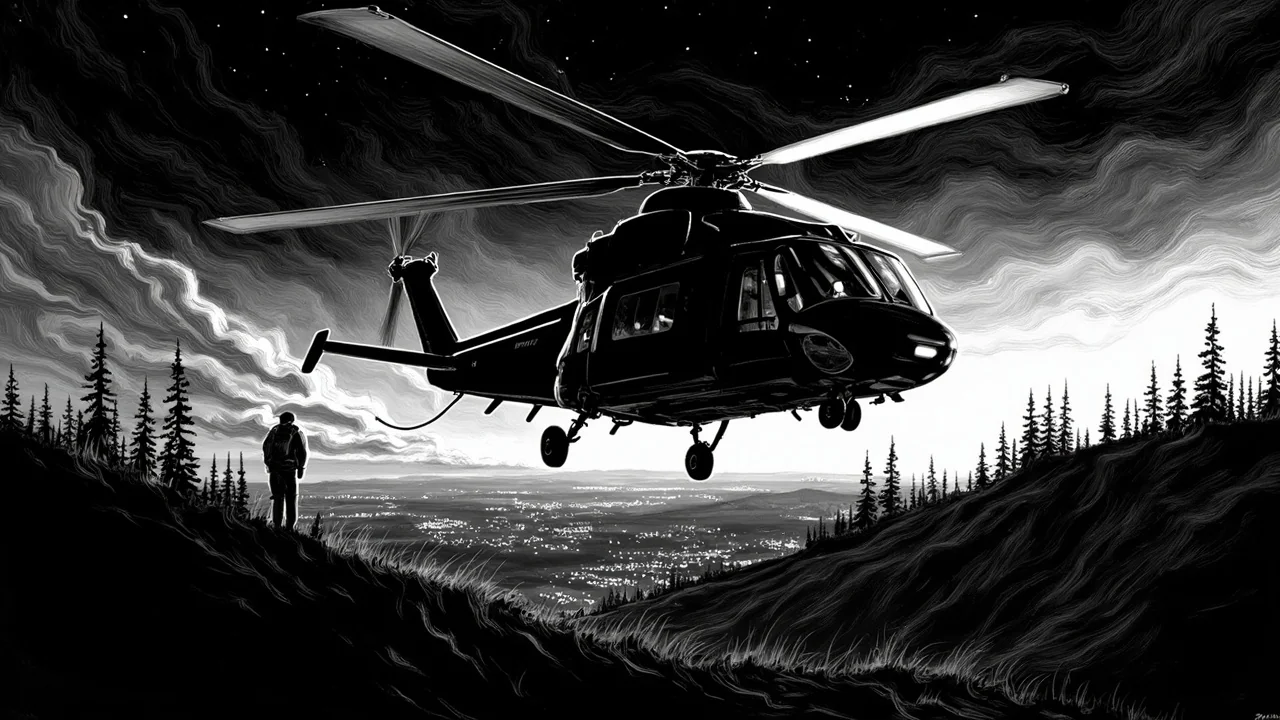
Finland's Defence Forces will conduct helicopter night training across four weeks this winter, with operations extending over a 150-kilometer radius from the Utti Jaeger Regiment base. The first training flights begin on Monday, January 12th, marking the start of an intensive period for helicopter crews operating NH90 transport and MD500 light helicopters. This essential training for flight crews and search-and-rescue readiness will see aircraft in the skies over Kymenlaakso and southern coastal areas, with flights running from Monday evening until the early hours of Friday morning.
Residents in the region should expect noise disturbance and may see the glare of searchlights and flares on the horizon during the designated training weeks. The military states operations will focus on sparsely populated areas and employ noise-reducing flight methods where possible. All scheduled training sorties must conclude by 3 a.m. at the latest, with crews practicing terrain-following flight and occasional low-altitude maneuvers under the cover of darkness.
A Deliberate Schedule for Critical Skills
The Finnish Army's Helicopter Battalion has planned this training for weeks 3, 7, 14, and 15 of the year, a schedule designed to build essential competencies in phases. Night flying presents unique challenges, requiring pilots to rely on instruments and night-vision technology rather than visual cues from the ground. The use of searchlights and flares during these exercises is not for spectacle but for simulating real-world conditions where illuminating a landing zone or a search area is necessary for mission success.
"This training is non-negotiable for maintaining our operational readiness," a Defence Forces spokesperson said in a statement. "The skills practiced during these night flights are directly applicable to critical tasks like medical evacuations, maritime search and rescue, and national defence missions that do not adhere to a nine-to-five schedule." The choice of the Utti base as the launch point is strategic, providing access to diverse terrains including forests, coastal archipelagos, and lake districts, which mirror conditions across Finland and the broader Baltic region.
Balancing Military Readiness and Community Impact
While the necessity of the training is clear for defense officials, its immediate impact is felt on the ground in the form of noise pollution. The distinct, throbbing sound of helicopter rotors can carry for kilometers, especially in the quiet of a winter night. The Defence Forces acknowledge this disruption and outline their mitigation strategy: directing flight paths over less-densely populated zones and adhering to specific noise-abatement procedures whenever the training objectives allow.
This balance is a recurring point of discussion in Finnish civil-military relations. Finland maintains a conscription-based defense system and a strong societal consensus on the need for a credible military deterrent, especially following the nation's accession to NATO. However, this consensus is periodically tested by the tangible realities of living near training grounds, flight paths, or artillery ranges. Open communication about schedules and purposes, as seen with this public announcement for the Utti flights, is a key part of maintaining public understanding and support.
The Aircraft at the Heart of the Mission
The training will employ two workhorse aircraft of the Finnish Army. The NH90 is a modern, twin-engine multi-role helicopter used for troop transport, naval operations, and heavy lift. Its full night-operation capability is a major asset. The smaller, agile MD500 light helicopter is often used for reconnaissance, command roles, and as a platform for special operations. Training these two platforms together allows crews to practice coordinated operations, a common requirement in complex real-world missions.
The ongoing development of Finland's helicopter capabilities is closely watched by defense analysts. The NH90 fleet has faced logistical and maintenance challenges across several European nations, making consistent flying hours for training and proficiency all the more vital. Effective night operations significantly extend the operational window and flexibility of these aviation assets, a crucial factor for a nation with long winter nights and a vast, complex geography to monitor and defend.
The Broader Defense Context in the Nordic-Baltic Area
These routine training flights occur against a backdrop of heightened military activity across Northern Europe. Finland's integration into NATO means its defense exercises are increasingly interlinked with allied nations. While the Utti night flights are a national exercise, the skills honed are interoperable with NATO standards and procedures. The Finnish Defence Forces regularly participate in and host joint exercises with allies, where night-flying proficiency is a fundamental requirement for integrated air operations.
Furthermore, the focus on southern coastal and maritime areas in this training cycle is significant. The security of the Baltic Sea region is a top priority for Helsinki, and helicopter units play a key role in maritime surveillance, anti-submarine warfare, and rapid response to incidents at sea. Practicing low-level navigation over the coastline and open water in darkness prepares crews for the exact conditions they might face during a Baltic Sea contingency.
A Recurring Cycle with Enduring Significance
For residents of Southeast Finland, these four weeks of nocturnal activity are a periodic part of the calendar. For the Defence Forces, they are an indispensable investment in human skill and operational capability. The training underscores a central tenet of Finland's defense doctrine: a credible deterrent requires not just modern equipment, but highly trained personnel capable of operating it effectively in all conditions, day or night, summer and winter.
The public announcement, with its specific details on timing and potential disturbances, reflects a transparency intended to foster public patience. The unspoken contract is that the minor inconvenience of disrupted sleep is weighed against the greater assurance of having skilled crews ready to perform medevacs, conduct search and rescue in a storm, or respond to a national emergency. In an era of geopolitical tension, such training is rarely questioned on strategic grounds, but its local footprint is managed through careful planning and community dialogue.
As the first helicopters power up at Utti next week, their flight paths will trace the invisible line between maintaining normal civilian life and preparing for the extraordinary demands of national defense. The success of the training is measured not in decibels of noise generated, but in the silent confidence gained by the crews who learn to navigate the dark Finnish landscape, ensuring they are prepared when called upon.