
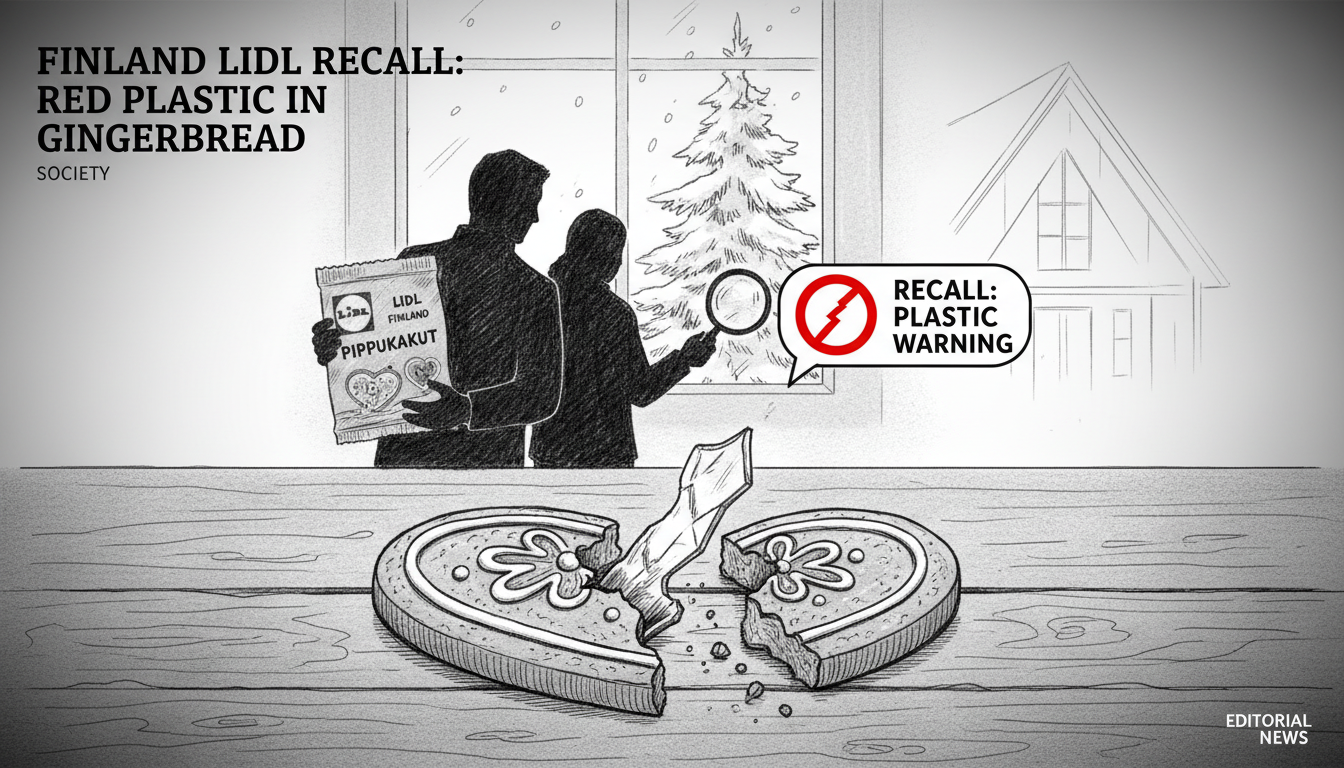
Finland's Lidl stores have pulled a specific batch of Christmas gingerbread from shelves due to a potential contamination risk. The supermarket chain announced a recall for its 'Jouluaitan Ohut piparkakku' (thin gingerbread) with a 'best before' date of October 14, 2026, warning the 300-gram packages may contain small pieces of red plastic. This precautionary measure highlights the constant vigilance required in modern food supply chains, even for festive staples.
Consumers who have purchased the affected product are advised not to eat it and can return it to any Lidl store in Finland for a full refund. Lidl Finland emphasized that only gingerbread packages bearing this specific expiration date are involved. Products with other dates remain safe for consumption. The recall was initiated by the company itself, a common practice under Finland's proactive food safety framework.
A Festive Treat Interrupted
The recall strikes a particular chord as it involves a classic Finnish Christmas product. Gingerbread, or piparkakku, is a cornerstone of the Nordic holiday season, with families often baking and decorating cookies together in the weeks leading up to Christmas. The recall of a store-bought version so early in the year—well before the typical holiday shopping rush—serves as an early reminder of the complexities behind mass-produced food. It interrupts the simple expectation of grabbing a trusted product from the supermarket shelf.
Lidl's statement was direct, focusing on the specific hazard: the possible presence of foreign red plastic material. The company did not speculate on how the plastic might have entered the production line. Such incidents can originate from multiple points, including raw ingredient sourcing, manufacturing equipment, or packaging processes. The distinct red color likely made the contaminant easier to identify in quality control checks, either by the producer or the retailer.
The Finnish Food Safety Ecosystem in Action
This recall operates within a well-established system managed by the Finnish Food Authority (Ruokavirasto). While Lidl issued the public communication, such actions are typically coordinated with or monitored by the national authority. Finland's food safety regime is considered one of the most robust in the world, built on a principle of prevention and rapid response. Companies are legally obligated to immediately inform authorities if they suspect a product they have placed on the market is unsafe.
"Recalls are a standard, if unfortunate, part of ensuring food safety," explains a food industry consultant familiar with Nordic regulations, who spoke on background. "What we see here is the system working as intended. A potential risk is identified, the batch is isolated, and a clear public instruction is issued. The speed and specificity of the recall are key to maintaining public trust." The consultant noted that proactive recalls, even for low-probability hazards, are increasingly the norm as retailers fiercely protect their brand reputation.
For the Finnish Food Authority, the primary goal is preventing any harm to consumers. Their official channels would quickly mirror Lidl's warning, ensuring it reaches citizens who might not see the retailer's announcement. The authority classifies recalls based on risk level, which dictates the urgency and reach of communications. A physical contaminant like plastic, which could pose a choking hazard or cause internal injury, typically triggers a high-priority response.
Consumer Response and Retailer Responsibility
The instructions for consumers are straightforward: check the pantry for the 300g package of Jouluaitan Ohut piparkakku, look for the 'best before' date of 14.10.2026, and if there's a match, return the product to the store. Lidl has committed to refunding the purchase price. This no-questions-asked return policy is standard in recall situations and is crucial for compliance. The ease of return is designed to remove any barrier for consumers to act on the safety warning.
From a retail perspective, Lidl Finland now faces the logistical task of removing all stock of the specific batch from its distribution centers and over 200 stores across the country. They must also investigate the incident with their supplier to determine the root cause and implement corrective actions to prevent recurrence. This process will be scrutinized by the Finnish Food Authority. The financial cost of the recall includes lost product, logistics, and potential reputational impact, though acting swiftly usually mitigates long-term brand damage.
Such events test the traceability systems mandated by EU and Finnish law. The ability to pinpoint a single production batch with a specific expiry date demonstrates a high level of supply chain control. Effective traceability allows for a surgical recall, minimizing waste and consumer inconvenience by not pulling all gingerbread or all products from a line, only the affected lot.
The Bigger Picture of Food Safety
While alarming for shoppers, isolated recalls like this are not uncommon in the global food industry. They represent a critical fail-safe mechanism. The alternative—a company discovering a problem and not acting—poses a far greater risk. Finland generally sees a steady stream of such announcements, ranging from undeclared allergens like nuts or milk in products to microbial contamination like salmonella or listeria, and physical hazards like plastic or metal fragments.
Each recall carries lessons. They often lead to tightened quality control procedures at manufacturing plants, more frequent equipment inspections, or enhanced screening of raw materials. For consumers, the key takeaway is to stay informed. Subscribing to recall alerts from the Finnish Food Authority or paying attention to retailer announcements can help protect household safety. It is also a reminder to occasionally check the expiry dates and recall notices for non-perishable items stored in kitchen cupboards.
As the holiday season approaches, other gingerbread brands and festive food producers will likely double-check their own quality protocols. The incident underscores that no segment of the food industry is immune to production errors, but a transparent and swift response is the hallmark of a responsible company and a vigilant regulatory environment. The Finnish system, combining strict regulation with corporate accountability, aims to ensure that the joy of a Christmas cookie is never spoiled by an avoidable safety concern.
Will this single recall affect Finns' traditional holiday baking and buying habits? Likely not in the long term. Trust is built over time through consistent safety and quality. Lidl's decisive action, while highlighting a failure in production, also demonstrates a commitment to correcting it. The true test will be in the effectiveness of their investigation and the transparency of any findings, ensuring that next year's Jouluaitan piparkakku arrives on shelves with only the intended ingredients: flour, syrup, spices, and the taste of Christmas.