
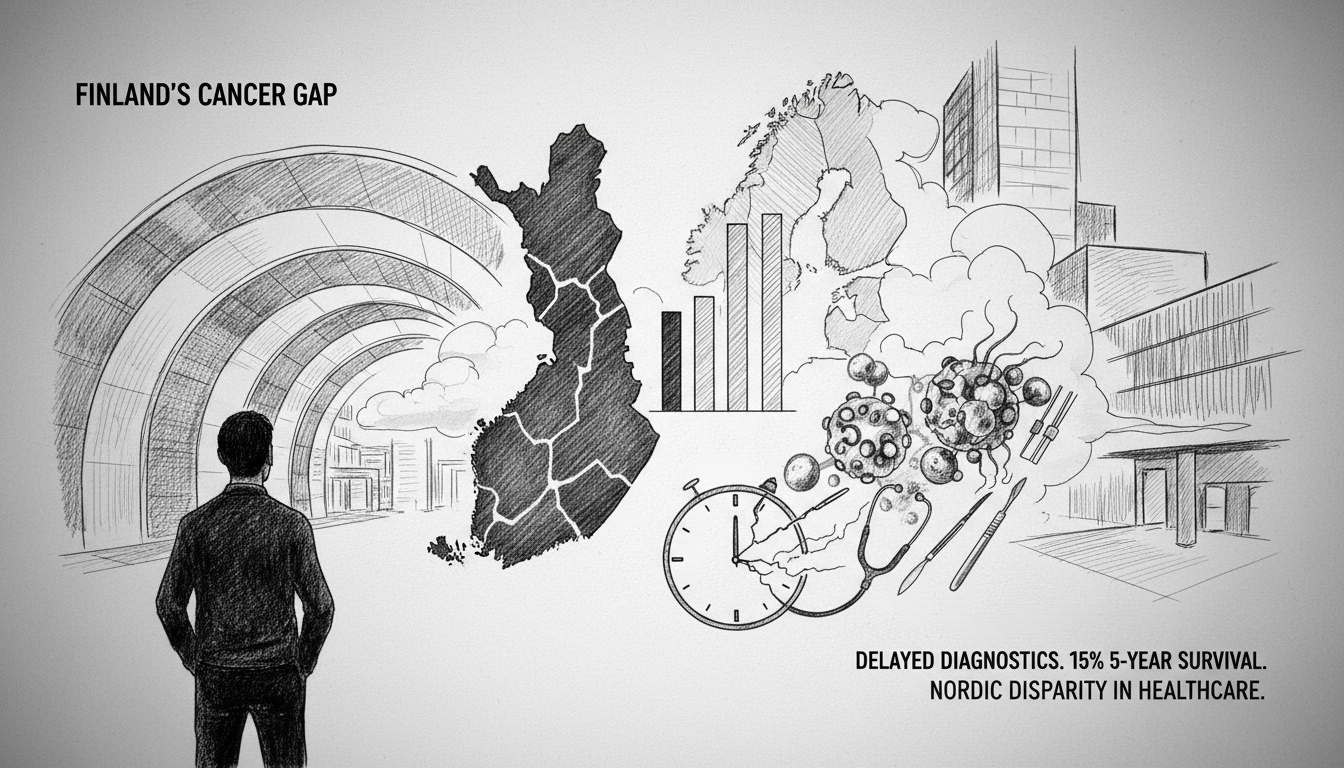
Lung cancer remains the deadliest form of cancer in Finland, with cases rising steadily in recent years. The increase appears most pronounced among working-age women who have never smoked. Finnish lung cancer patients face poorer survival prospects compared to other Nordic countries. Only 15 percent of patients survive five years after diagnosis in Finland, while other Nordic nations achieve 17-20 percent survival rates.
A recent study reveals Finland's lung cancer treatment outcomes lag behind neighboring countries. Researchers identify several contributing factors. Patients experience longer wait times for physician appointments at every stage of their care journey. The average wait for primary care consultation stretches to two weeks in Finland, while other Nordic patients typically see doctors within one week.
Diagnostic approaches also differ significantly. Finnish primary care employs more limited diagnostic methods for patients with lung symptoms compared to other Nordic health systems. Neighboring countries routinely use computed tomography imaging early in the diagnostic process, enabling faster detection.
Finland's strong gatekeeper model in healthcare creates access barriers, according to Assistant Professor Paulus Torkki from the University of Helsinki. The system requires patients to pass through assessment filters before receiving specialized care. This structure risks delaying treatment, particularly for patients with difficult-to-diagnose conditions like lung cancer.
Another critical gap involves treatment effectiveness monitoring. Finland lacks systematic hospital-level tracking of lung cancer treatment outcomes, unlike Sweden and Denmark where such monitoring forms part of quality control and care development. Other Nordic countries continuously refine treatment practices by collecting current data and comparing outcomes across hospitals.
Treatment adoption patterns also show regional variation. Finland, Iceland and Norway use newer lung cancer treatments like neoadjuvant immunotherapy and chemotherapy less frequently than Sweden and Denmark. This discrepancy might partially explain the better outcomes observed in those countries.
Despite ranking as Finland's third most common cancer for both men and women, lung cancer causes the highest mortality. The disease often gets detected at advanced stages when treatment options become more limited. This late diagnosis pattern contributes substantially to the country's poorer survival statistics.
The study surveyed lung cancer treatment professionals across Nordic countries. Researchers found consistent patterns of delayed access and limited diagnostics in Finland compared to regional counterparts. These systemic differences appear to translate directly into measurable survival gaps that affect real patients and families.
Finland's healthcare challenges reflect broader tensions between cost containment and quality care delivery. The gatekeeper model aims to control spending but may compromise timely intervention for serious conditions. Other Nordic systems demonstrate that better outcomes remain achievable within similar economic constraints.
The rising incidence among non-smoking women presents particular concern for public health officials. This trend suggests environmental or occupational factors might play increasing roles in lung cancer development, requiring updated prevention strategies and diagnostic awareness among medical professionals.