
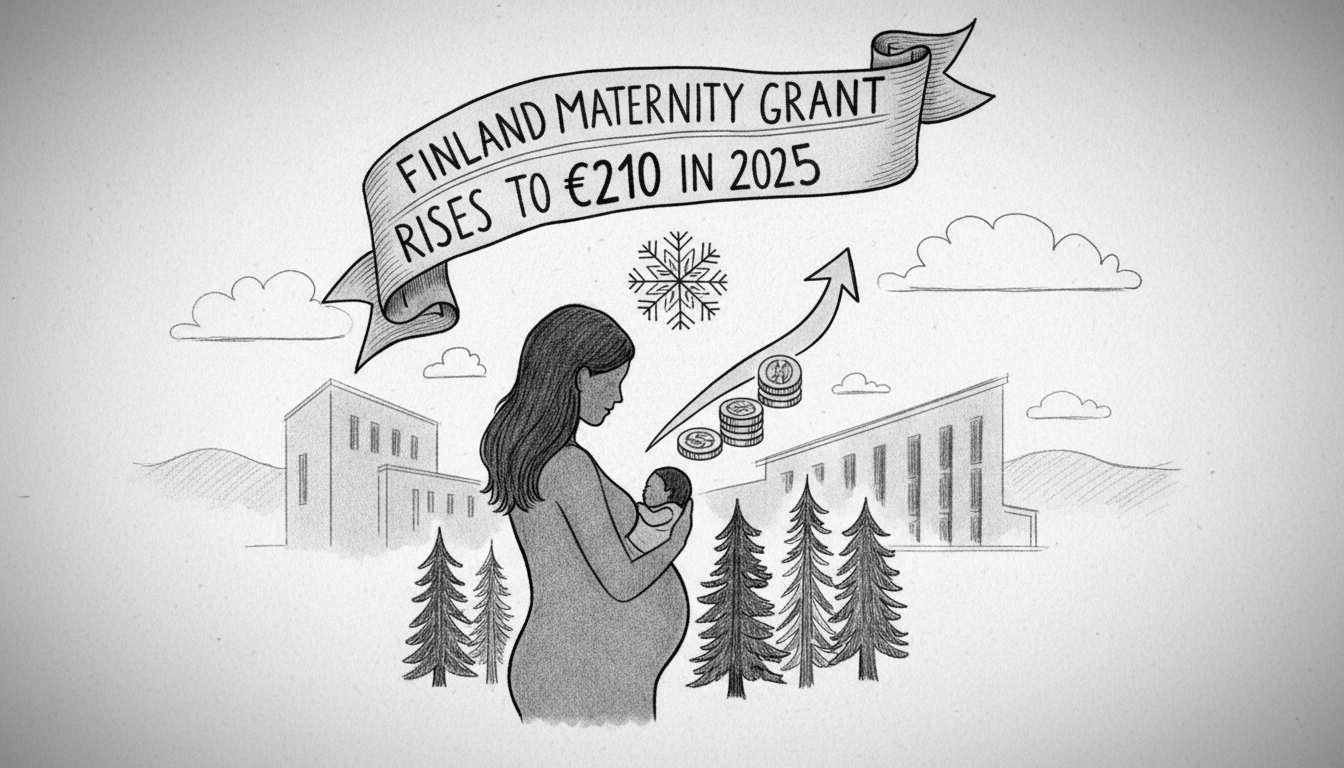
Finland's maternity grant value increases to 210 euros for families expecting from April 2025. This 40-euro rise from the current 170 euros offers tangible relief for new parents navigating rising living costs. The adjustment, announced by Kela, Finland's Social Insurance Institution, reflects ongoing government efforts to bolster family support systems. Eligible families include those with due dates or adoption placements on or after April 1, 2025. During a transition period, recipients choosing the physical maternity package will receive the current box plus a 40-euro cash supplement. Once the new 210-euro package enters distribution, the supplemental payment will cease. This policy change arrives amidst broader discussions in Helsinki about strengthening Finland's social safety net.
A Symbol of Finnish Equality
The maternity grant, established in 1938, is a cornerstone of Finland's welfare state. It embodies a national commitment to giving every child an equal start. Parents can select between a cash payment or the iconic maternity package, a box filled with essential baby clothes, bedding, and care items. In 2023, Kela distributed approximately 55,000 of these boxes. Notably, around two-thirds of first-time parents opt for the physical package over the money. The contents are carefully curated by experts to promote infant health and safety, including a mattress that allows the box to serve as a baby's first bed. This practice has garnered international attention, often dubbed the 'Finnish baby box' phenomenon.
Policy Mechanics and Political Backing
This increase was approved by the Finnish Parliament, the Eduskunta, as part of wider social security adjustments. The governing coalition, led by Prime Minister Petteri Orpo's National Coalition Party, has emphasized family policy despite fiscal constraints. Finance Minister Riikka Purra highlighted the need for targeted support in a recent budget debate. 'Investing in families is investing in our future,' she said during a parliamentary session. The 23.5% boost to the grant's value is indexed to general cost increases, a mechanism designed to preserve its purchasing power. This automatic adjustment prevents the benefit from eroding over time due to inflation, ensuring its continued relevance for Finnish households.
Expert Analysis on Family Support
Family policy experts view the increase as a positive but measured step. Professor Laura Kestilä from the University of Helsinki notes that while welcome, the rise must be seen in context. 'The real value of family benefits has faced pressure from inflation, particularly in urban areas like Helsinki,' Kestilä explains. 'This adjustment helps maintain the grant's symbolic and practical value as a universal gift from society to every newborn.' She points out that the maternity package itself serves a dual purpose: providing necessities and offering educational value through included materials on parenting and child health. The system is admired within the EU for its simplicity and universal eligibility, requiring no means testing.
EU Context and Nordic Comparisons
Finland's family policies operate within broader European Union frameworks on social inclusion and child welfare. The EU's European Pillar of Social Rights emphasizes support for children and access to essential services. Finland often exceeds these benchmarks, with the maternity grant serving as a prime example. Compared to other Nordic nations, Finland's cash-and-kind benefit is unique. Sweden offers a similar parental allowance but structured differently, while Denmark provides a universal child benefit. The Finnish model's blend of a tangible product and financial choice stands out. This increase aligns with Finland's reputation for proactive family policy, even as EU-level discussions continue on harmonizing certain social standards.
Economic Impact and Future Considerations
The raised grant value represents a direct injection into the economy, predominantly supporting retail sectors for baby products. With about 55,000 births annually, the total additional public expenditure is significant. However, long-term benefits include potential improvements in child health outcomes and reduced financial stress for parents. The current government coalition agreement includes provisions for reviewing all family benefits periodically. Future debates in the Eduskunta may focus on further increasing the grant or expanding eligibility. Some opposition parties, like the Social Democrats, have called for more substantial hikes to address child poverty rates more aggressively.
The Human Element for Finnish Families
For expecting parents in Espoo or Oulu, the increase means practical choices. Maria Lehtonen, a first-time mother due in May 2025, welcomed the news. 'Every euro helps when preparing for a baby,' she said. 'I plan to choose the box because it's a tradition, and the extra cash will go toward a stroller.' The maternity package's contents are updated regularly based on safety standards and parental feedback. Recent additions have included more sustainable materials and digital health resources. This evolution shows how a decades-old policy adapts to contemporary needs, balancing tradition with innovation.
Challenges and Criticisms
Despite broad support, some critics argue the increase is too modest given soaring costs for housing and childcare in Finnish cities. The Finnish Youth Research Society published a report suggesting that more targeted support for low-income families might be necessary. Additionally, the eligibility cutoff of April 1, 2025, creates a disparity between families with similar due dates. Kela acknowledges this but states that clear administrative dates are required for smooth implementation. The institution manages the logistics of packaging and distribution, a complex operation that serves the entire country efficiently.
Looking Ahead: Sustainability and Inclusion
The future of the maternity grant may involve deeper environmental considerations. Discussions are underway about making the package fully circular, with items designed for reuse or recycling. Furthermore, as Finland's population diversifies, ensuring the package meets the needs of all cultural backgrounds remains a priority. Kela consults with various community groups to achieve this. The grant's universality is its strength, symbolizing that every child born in Finland is equally valued. This principle continues to guide policy adjustments in Helsinki's government district.
Finland's decision to raise the maternity grant underscores a enduring commitment to its youngest citizens. In a Europe grappling with demographic challenges, such investments in family well-being are both pragmatic and principled. Will this model inspire further innovations in social policy across the Nordic region? Only time will tell, but for now, thousands of Finnish families will receive a slightly larger welcome for their new arrivals.