
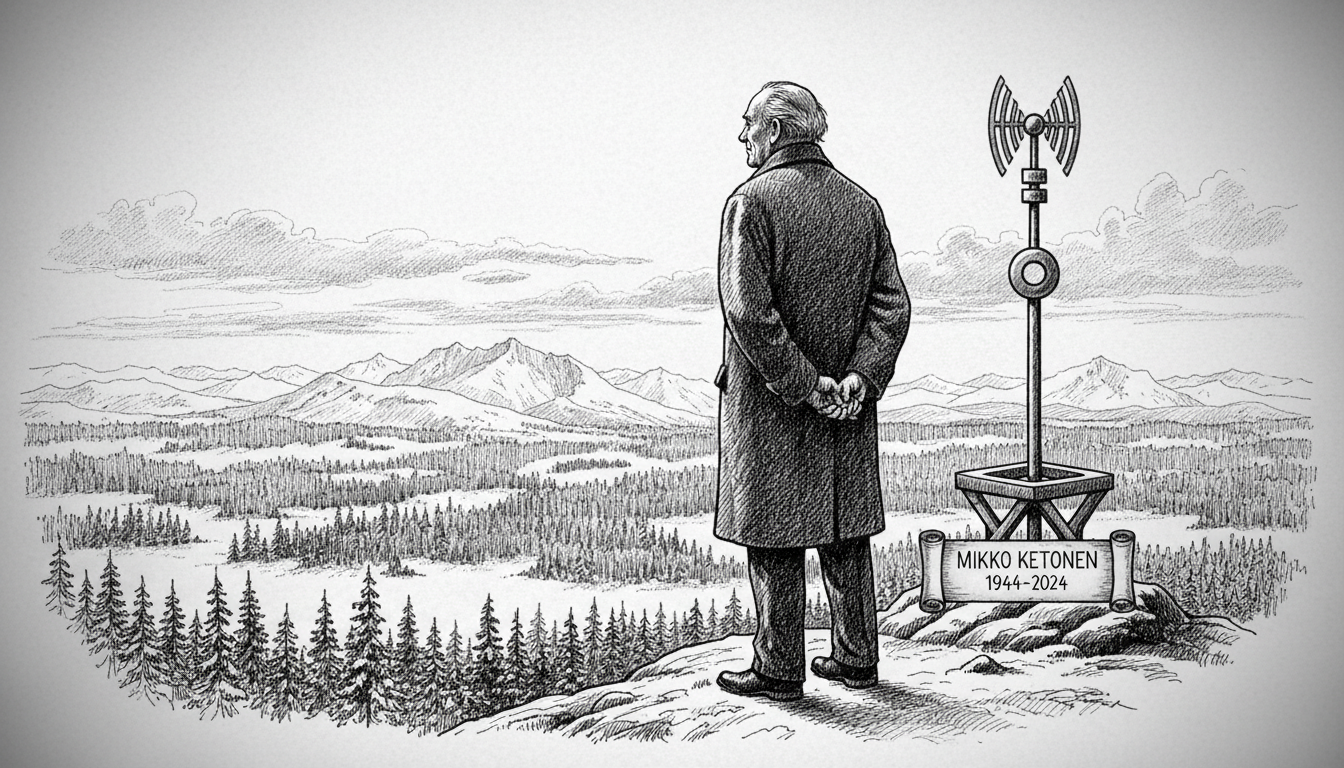
Finnish media executive and cultural patron Mikko Ketonen has died at the age of 80, marking the end of a defining era for regional journalism in Southwest Finland. Ketonen served in leadership roles at Turun Sanomat newspaper and its parent media group for over four decades, from 1969 until his retirement in 2012, while simultaneously building a formidable legacy in cultural and diplomatic circles. His death was confirmed by the newspaper he helped lead, closing a chapter on a family dynasty that shaped media in the Turku region for generations.
A Pillar of Turku's Media Landscape
Mikko Ketonen's career was inextricably linked to Turun Sanomat, one of Finland's most significant regional newspapers. He joined the paper's parent company, then known as TS-Yhtymä, in 1969 and ascended through its leadership ranks. His tenure spanned a period of tremendous change in Finnish media, from the heyday of print to the digital revolution. Under his guidance, Turun Sanomat maintained its position as a primary news source for the region surrounding Finland's oldest city. Analysts note that his leadership style was characterized by a deep commitment to the paper's regional identity and journalistic standards, even as media conglomerates grew elsewhere. His brother, Keijo Ketonen, also held long-term leadership positions within the same media group, underscoring the family's profound and sustained influence. The company, now known as Mediatalo ESA, remains a major player in Finnish regional media.
Beyond the Newsroom: Cultural and Diplomatic Service
Ketonen's impact extended far beyond the publisher's office. He was a dedicated holder of numerous positions of trust, particularly in culture, sports, and education. For years, he served as the Chairman of the Finnish Cultural Foundation's Southwest Finland fund, a role that placed him at the heart of philanthropic decision-making for the region's arts and cultural projects. This foundation is a critical financier for artists, researchers, and cultural institutions across Finland. His chairmanship meant he directly influenced which creative endeavors received support in his home region. In 1980, his standing in the community led to a prestigious diplomatic appointment: Swedish Consul for the Turku region. This role involved fostering economic and cultural ties between Finland and Sweden, a key relationship for both nations. These parallel careers demonstrated a model of civic engagement where business leadership was coupled with a responsibility to contribute to the broader societal fabric.
The End of a Regional Media Era
The passing of Mikko Ketonen is seen by industry observers as symbolic of a broader transition within Finnish and Nordic media. He represented a generation of publishers who were deeply rooted in their specific geographic areas, often leading family-influented enterprises that saw the newspaper as both a business and a public trust. "His death truly feels like the end of an era," said a Finnish media historian who requested anonymity. "The Ketones were part of that old guard of regional press barons whose identity was tied to a single city and its newspaper. Today's media landscape is dominated by nationwide chains and digital platforms where that deep local connection is harder to maintain." Ketonen's 43-year career witnessed the consolidation of media power, the rise of television and online news, and evolving readership habits. His leadership provided continuity and stability for Turun Sanomat through these disruptions.
Legacy in Turku and Finnish Society
Mikko Ketonen's legacy is multifaceted. Professionally, he stewarded a major media institution through decades of change. Civically, he channeled resources and attention toward cultural and educational causes, understanding their role in a vibrant society. His consular work strengthened international ties at a regional level. This combination of roles made him a central figure in Turku's elite, a connector between the worlds of commerce, culture, and public life. Unlike many modern executives, his profile was firmly regional; his power and influence were exercised primarily for the benefit of Southwest Finland. This model of localized leadership is increasingly rare in a globalized economy. His contributions will likely be remembered in the continued operations of the cultural foundation he helped guide, in the archives of the newspaper he led, and in the institutional memory of Turku itself.
The Future of Regional Media
Ketonen's death prompts reflection on the future he helped shape. Turun Sanomat, like all regional papers, now faces intense economic pressures from digital advertising giants and shifting consumer behavior. The challenge for his successors is to preserve the local journalistic mission and community connection he valued in a vastly more competitive information ecosystem. Can the next generation of media leaders maintain the deep regional commitment exemplified by figures like Ketonen? The answer will determine the vitality of local news not just in Turku, but across Finland and the Nordic region. Mikko Ketonen's career offers a benchmark of local engagement against which future media leadership will be measured, even as the tools and business models continue to evolve at a relentless pace.