
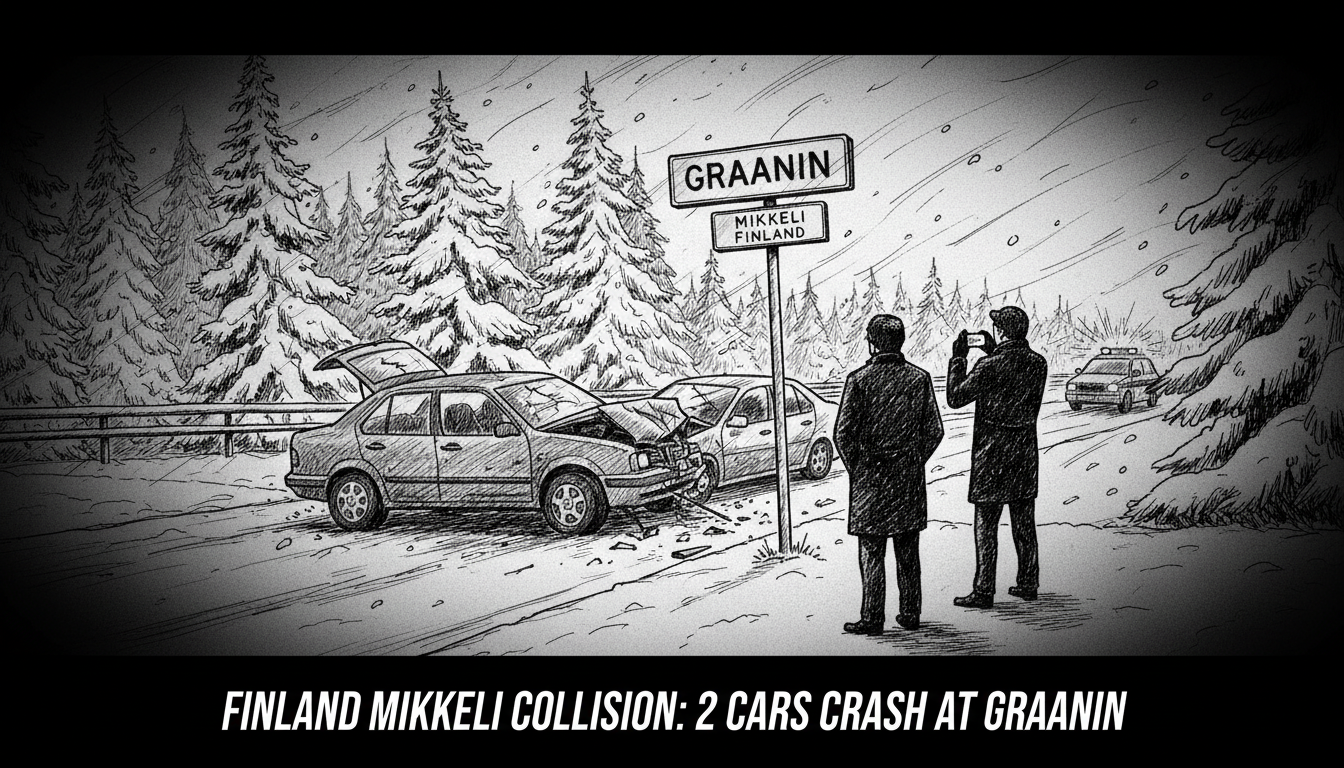
Mikkeli car accident rates are among Finland's lowest, yet Tuesday's collision at the Graanin shopping center intersection exemplifies a persistent national traffic safety challenge. At the busy junction of Tuppuralankatu and Graanintie, two passenger vehicles collided at low speed during the afternoon. No injuries were reported, the South Savo Rescue Department confirmed, but the incident caused local disruption and required a clean-up crew to clear debris and check for vehicle leaks.
For the drivers involved and witnesses, the event transformed a routine errand into a stressful encounter. The rescue service managed traffic flow at the scene, a standard procedure that nevertheless signals temporary breakdowns in the smooth functioning of a regional hub. Such incidents, while minor in outcome, ripple through smaller cities like Mikkeli where key commercial arteries handle significant daily traffic.
A Routine Day Interrupted
The collision occurred near the Graanin kauppakeskus, a central retail destination for Southern Savonia residents. This area typically sees steady vehicle and pedestrian movement, especially on a weekday afternoon. The precise cause of the low-speed impact remains unconfirmed, but it resulted in material damage to both cars. Finnish rescue services protocol, followed meticulously here, involves securing the scene, ensuring no hazardous leaks, and rapidly restoring normal traffic conditions to minimize congestion.
Local authorities have not indicated any suspicion of serious traffic violations. The efficient response highlights Finland's well-drilled emergency preparedness, even for minor incidents. However, the event still consumed public safety resources and briefly diverted the attention of police and rescue personnel. In a city of just over 52,000 people, each intervention by emergency services is a notable allocation of manpower and focus.
Intersections: Finland's Recurring Traffic Flashpoint
Traffic safety analysts consistently identify intersections as critical risk zones. Data from the Finnish Crash Data Institute (OTI) shows a significant portion of urban collisions occur at junctions, often due to misjudgment, distraction, or right-of-way confusion. "Even at low speeds, the complex decision-making required at intersections makes them vulnerable points," explains a senior advisor from the Finnish Transport Safety Agency (Trafi). The advisor emphasizes that modern safety systems like automatic braking are improving, but driver awareness remains paramount.
The Graanin intersection is not marked as a particularly high-risk location on official maps. This ordinariness makes the incident a useful case study. It underscores that accidents can happen anywhere, anytime, even in a nation renowned for its safe infrastructure and disciplined drivers. Finland's overarching traffic safety strategy, Vision Zero, aims to eliminate all fatal and serious injuries. While this incident aligns with the goal of zero severe outcomes, it represents the kind of frequent, non-fatal event the strategy also seeks to reduce through better road design and technology.
Urban Design and the Safety Trade-Off
Mikkeli, as a regional center, faces the classic urban planning challenge of balancing accessibility with safety. Commercial hubs like Graanin require convenient vehicle access to thrive, yet high traffic volumes naturally increase interaction conflicts. City planners across Finland are increasingly employing "traffic calming" measures near shopping areas, including clearer signage, optimized traffic light sequences, and pedestrian-priority zones. Evaluating whether such measures could be enhanced at the Tuppuralankatu and Graanintie junction may form part of the city's ongoing review processes.
The incident also touches on broader transport policy debates in Finland. As the government promotes a shift towards sustainable transport, the safety of all road users—cyclists, pedestrians, and motorists—around commercial centers is a key concern. The Finnish Ministry of Transport and Communications periodically updates guidelines for traffic management in urban areas, influencing how cities like Mikkeli plan their road networks. These guidelines increasingly advocate for designs that inherently reduce the possibility and severity of collisions.
The Human and Economic Cost of Minor Crashes
While thankfully devoid of physical injury, a collision like Tuesday's carries other costs. For the involved drivers, there is the immediate stress, potential insurance premium impacts, and time spent dealing with repairs and claims. For the city and rescue services, there is the resource expenditure for the response. For other citizens, it meant temporary traffic delays and disruption.
Economists studying traffic safety point out that the cumulative national cost of all property-damage-only crashes is substantial. These costs include emergency service deployment, insurance administration, vehicle repairs, and lost productivity. Reducing their frequency is not just a safety imperative but also an economic one, freeing up public and private resources for more productive uses. Every minor crash prevented contributes to broader societal efficiency.
A Look Ahead: Technology and Vigilance
The future of intersection safety in Finland lies in a combination of smarter infrastructure and vehicle technology. Pilot projects in other Finnish cities are testing connected vehicle systems that can warn drivers of potential cross-trajectory conflicts. Enhanced street lighting and sensor-based traffic management are also part of the toolkit. For now, the primary defense remains attentive, rule-abiding driving, especially in shared spaces outside bustling shopping centers.
Tuesday's event in Mikkeli serves as a low-stakes reminder of a high-stakes principle: constant vigilance saves lives and prevents loss. It reinforces the Finnish ethos of collective responsibility on the roads. As one Mikkeli resident remarked after witnessing the cleanup, 'It's a good reminder to put the phone away and pay full attention, especially when turning. It only takes a second.' This individual insight encapsulates the national safety message. Will Finland's blend of design, technology, and personal responsibility continue to drive its world-class safety record downward, even for minor incidents like the Graanin collision?