
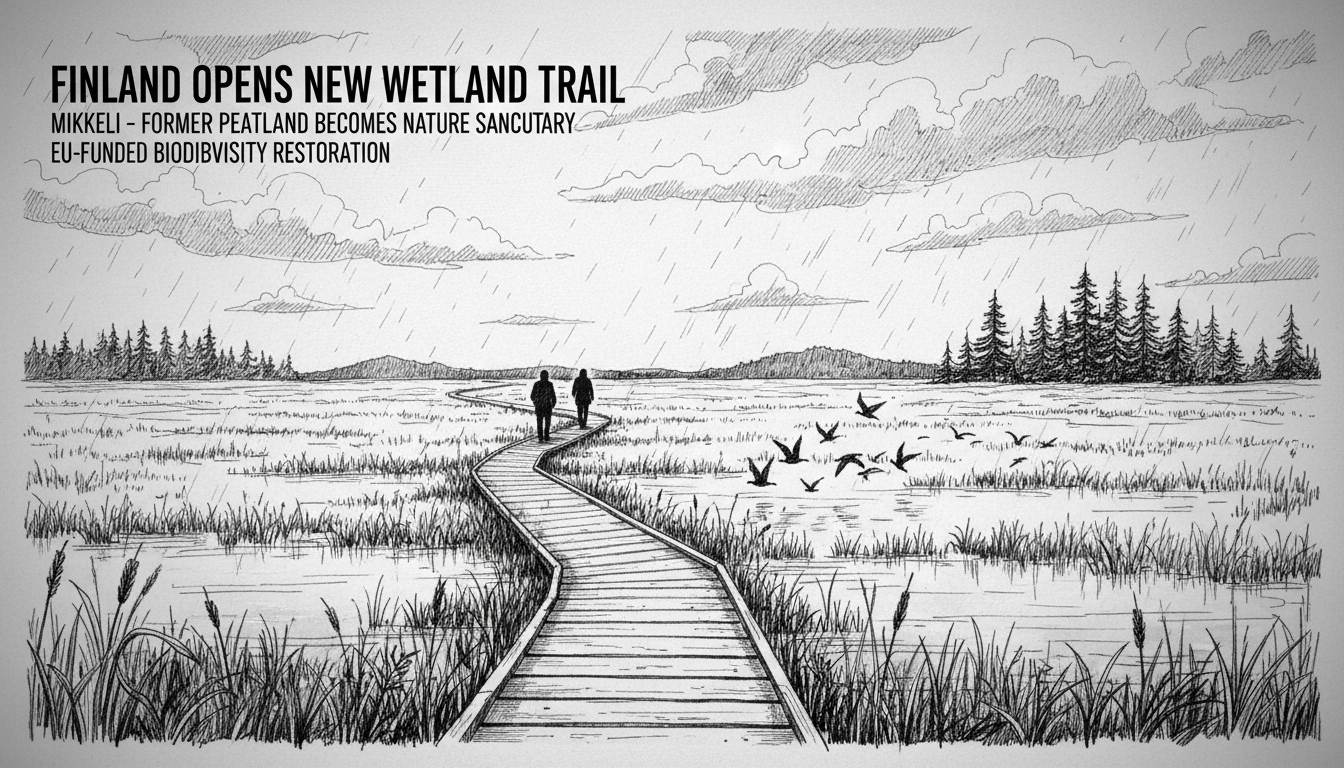
The city of Mikkeli is opening a new outdoor recreation route through the Kovalansuo wetland area this autumn. The official opening ceremony will take place next spring. This project transforms a former peat production site into a mosaic wetland with a 3.5-kilometer nature trail. The path features observation points for watching wetland birds and other wildlife. It starts at Kajaanintie 13 in Mikkeli and includes a parking area.
This development is part of a broader trend in Finnish regional environmental policy. Mikkeli has several other wetland projects underway or completed. A bird wetland and nature trail will be finished on Salonsaari island. The Ropolansuo area in Haukivuori already offers birdwatching trips with a wetland, a hut, and a bird tower built by the peat company Neova.
The Kovalansuo project received crucial funding from the European Union's Just Transition Fund (JTF). This EU financing mechanism supports regions moving away from carbon-intensive industries. The connection is clear. Finland's phase-out of peat energy production creates economic transitions in regions like South Savo. The JTF helps repurpose these industrial landscapes for biodiversity and public use.
The wetland is now linked to the national Sotka resting area network. These are voluntary refuges left outside waterfowl hunting zones. They allow different bird species to prepare for autumn migration in peace. The planning goals for Kovalansuo were specific. They aimed to reduce the nutrient load from the old peat extraction area on downstream water systems. The design also increases biodiversity by restoring near-natural habitats through water management.
The implemented solutions slow water flow rates. They increase the binding of solids to aquatic vegetation and submerged wood material. They also enhance the natural binding of dissolved nutrients by plants and microorganisms. For waders and dabbling ducks, the new wetland will provide abundant food, shelter, and breeding environments. Breeding protection can be improved with meandering shorelines and the shaping of islets.
The planning and impact area is owned by the city of Mikkeli. The excavated and dammed biodiversity ponds have no adverse effects on the drainage of neighboring properties. This is a critical point for local acceptance. The project shows how post-industrial land use change can benefit both nature and communities without creating new conflicts.
Finland has a long history of peat extraction for energy. The shift away from this practice is a core part of the nation's climate strategy. Projects like Kovalansuo demonstrate a practical model for just transition. They turn environmental liabilities into public assets. They provide new recreational spaces while actively repairing ecosystems. The EU funding link underscores how regional green transitions in Finland are increasingly coordinated with broader European climate and cohesion policies. The next steps will involve monitoring the wetland's ecological development and public use.