
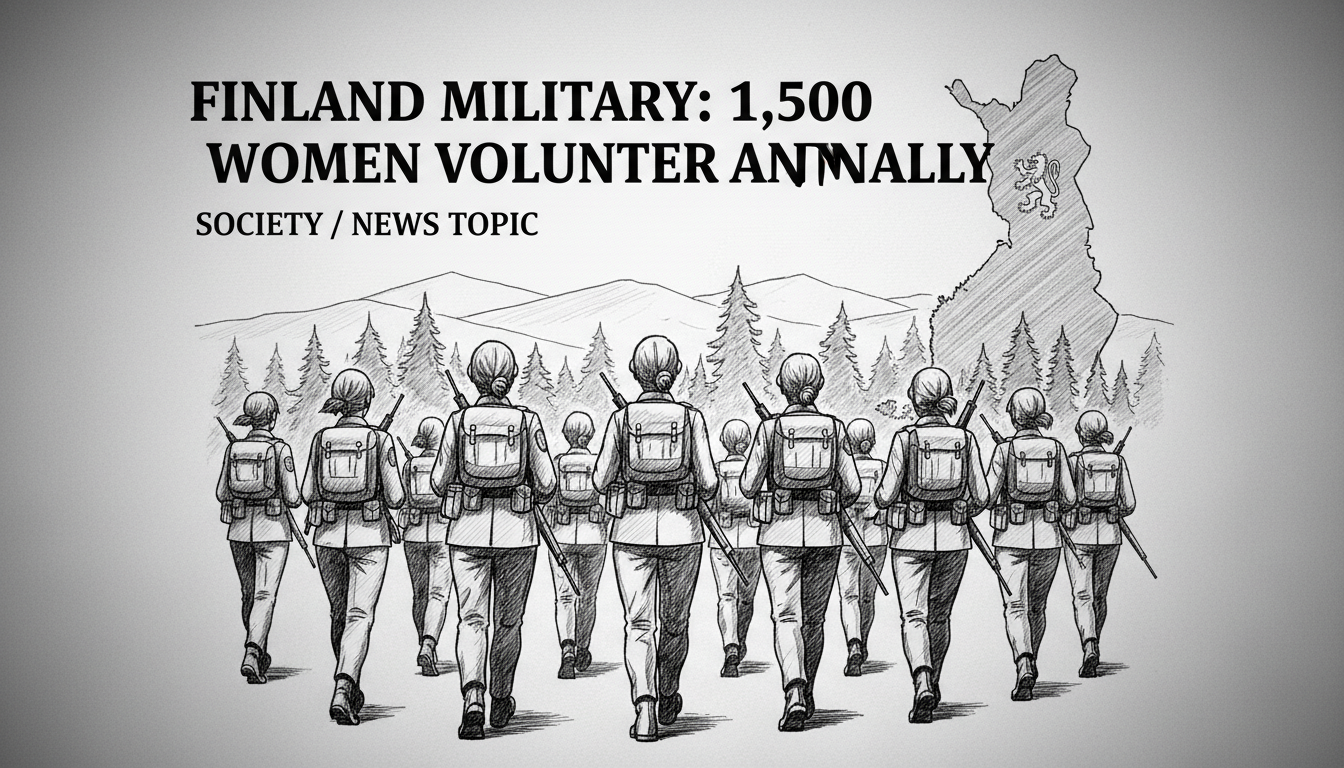
Finland's defense forces see approximately 1,500 women volunteer for service each year, a number that includes two new conscripts from Juva, Julia Sarell and Iiris Pirinen. The friends began their military training in July at the Vekaranjärvi garrison, home to the prominent Karjalan Prikaati (Karelian Brigade). Their commitment marks a year-long immersion into Finland's conscript system, a cornerstone of national defense that remains compulsory for men but open to women on a voluntary basis.
A Voluntary Choice for National Service
While their male counterparts receive mandatory conscription letters, Sarell and Pirinen actively applied to serve. Their training at Karjalan Prikaati, a key unit specializing in mechanized infantry and combat support, will last either 165, 255, or 347 days, depending on their assigned roles. This unit's strategic location and mission profile mean the women are preparing for demanding wartime tasks central to Finland's territorial defense doctrine. Their decision reflects a quiet but significant trend of increasing female participation in a traditionally male-dominated institution.
Gender Equality Meets Comprehensive Defense
Finland’s model of universal male conscription paired with female voluntarism presents a distinct approach to civic duty and gender equality. Nearly 80% of Finns still consider military service important for male citizens, underscoring its deep-rooted societal value. The Finnish Defence Forces have actively worked to become more attractive to women, not just as a matter of equity but to widen the talent pool for a capable and resilient military. This policy intertwines with the nation's concept of comprehensive security, where broad societal participation is deemed essential.
“National defense is a responsibility shared by all citizens,” Defense Minister Antti Häkkänen has stated in discussions about societal resilience. The volunteer path for women is a practical application of this principle. It allows the military to harness the skills and dedication of a broader segment of the population while aligning with progressive Nordic values. Experts note this gradual integration strengthens the defense forces by diversifying its ranks and adapting to modern operational needs.
The Training Ground at Vekaranjärvi
The Vekaranjärvi garrison in southeastern Finland is more than just a training base; it is a crucial node in the nation's defense architecture. For conscripts like Sarell and Pirinen, life here involves rigorous physical training, technical education, and field exercises designed to build cohesion and competence. The training emphasizes Finland's core defense strategy: leveraging terrain, mobility, and the skills of every soldier to counter a potential adversary. For voluntary female conscripts, succeeding in this demanding environment carries the additional weight of challenging stereotypes and paving the way for others.
Analysts point out that the experience of women in the military extends beyond basic training. It influences career opportunities within the professional defense forces and related security sectors. Success stories help normalize the presence of women in all defense roles, from frontline units to strategic command. This evolution is monitored closely in Helsinki's government district, where policies linking social progress with security outcomes are often formulated.
A Reflection of Broader Nordic Trends
Finland's experience, while unique due to its conscription model and geopolitical position, shares parallels with its Nordic neighbors. Sweden reintroduced conscription for both men and women in 2017, citing a changed security environment. Norway has had full gender-neutral conscription since 2015. Finland’s voluntary system for women represents a different point on the same spectrum, aiming to balance historical tradition, military necessity, and evolving social norms.
The choice made by individuals like Sarell and Pirinen contributes to a slow but measurable shift. Each annual cohort of approximately 1,500 female volunteers adds to a critical mass within the system. Their service is a personal test of endurance and a professional contribution to national preparedness. It also serves as a public indicator of how Finland navigates its dual identity as a militarily vigilant state and a society committed to gender equality.
The Road Ahead for Finland's Defense
The path of the voluntary female conscript is unlikely to become a major political issue in the Eduskunta, Finland's parliament, in the immediate term. There is a broad consensus on the current conscription model's effectiveness. However, the steady volunteer rate provides a steady stream of data and experience. This could inform future debates about the structure of national service, especially as demographic challenges and evolving security threats require optimal use of national talent.
The story of two friends from Juva is, in essence, a microcosm of a larger national project. It is about integrating modern values into a timeless duty. As Julia Sarell and Iiris Pirinen progress through their year of service, they will embody the practical realities of Finland's defense: voluntary commitment, rigorous training, and the silent integration of women into the very foundation of the nation's security. Their experience will answer whether further steps toward formal gender-neutral conscription are inevitable or if the voluntary model will remain the preferred Finnish solution.